


Simultaneous Natural Deep Eutectic Solvent-Based Ultrasonic-Assisted Extraction of Bioactive Compounds of Cinnamon Bark and Sappan Wood as a Dipeptidyl Peptidase IV Inhibitor
- PMID: 32842548
- PMCID: PMC7504365
- DOI: 10.3390/molecules25173832
Simultaneous Natural Deep Eutectic Solvent-Based Ultrasonic-Assisted Extraction of Bioactive Compounds of Cinnamon Bark and Sappan Wood as a Dipeptidyl Peptidase IV Inhibitor
Abstract
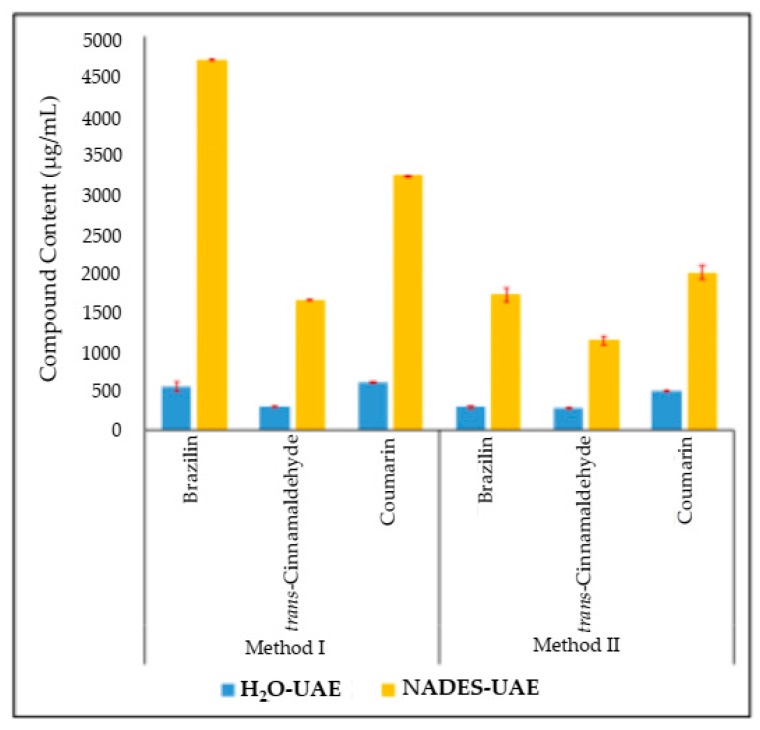
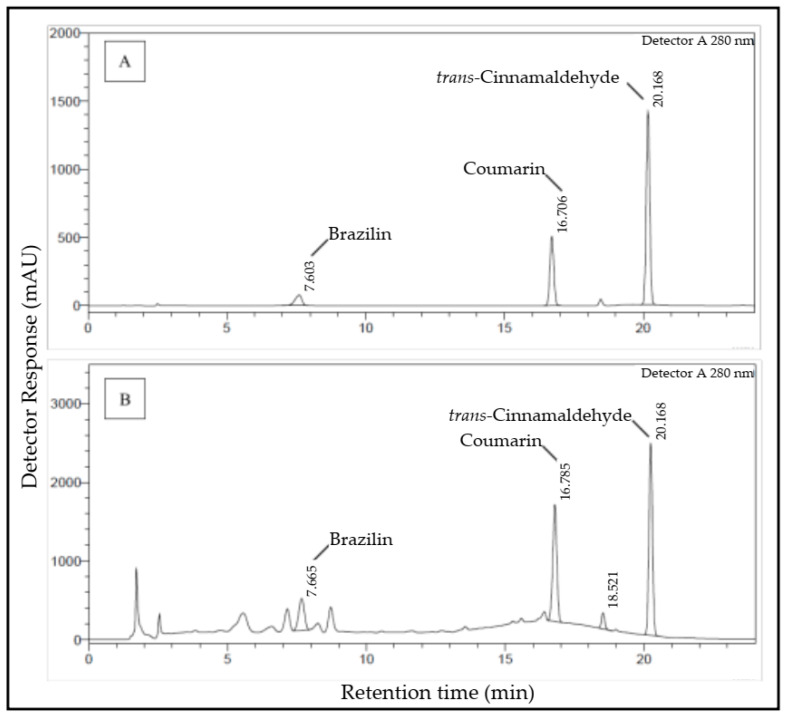
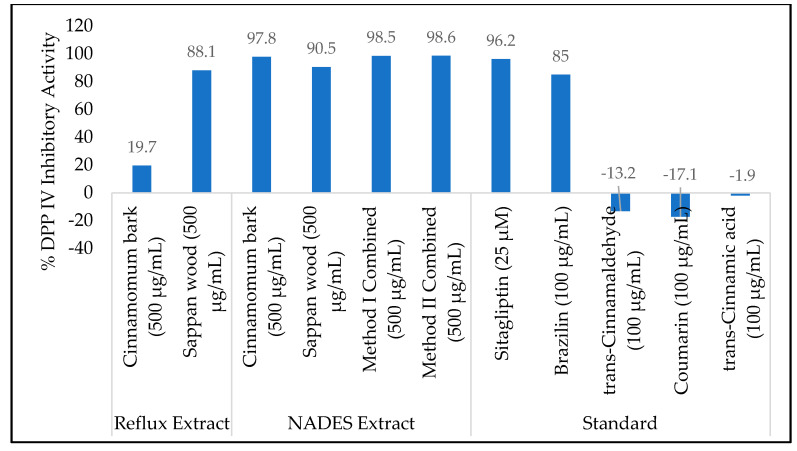
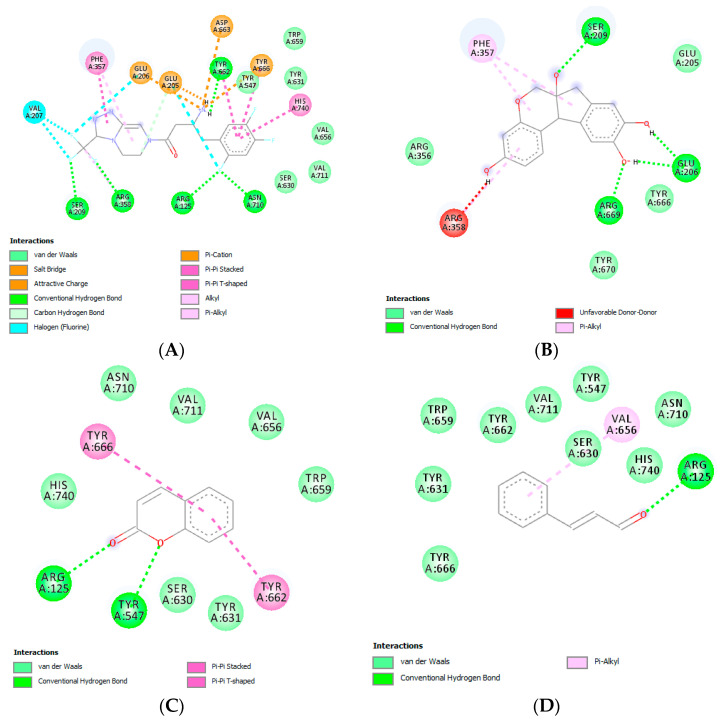
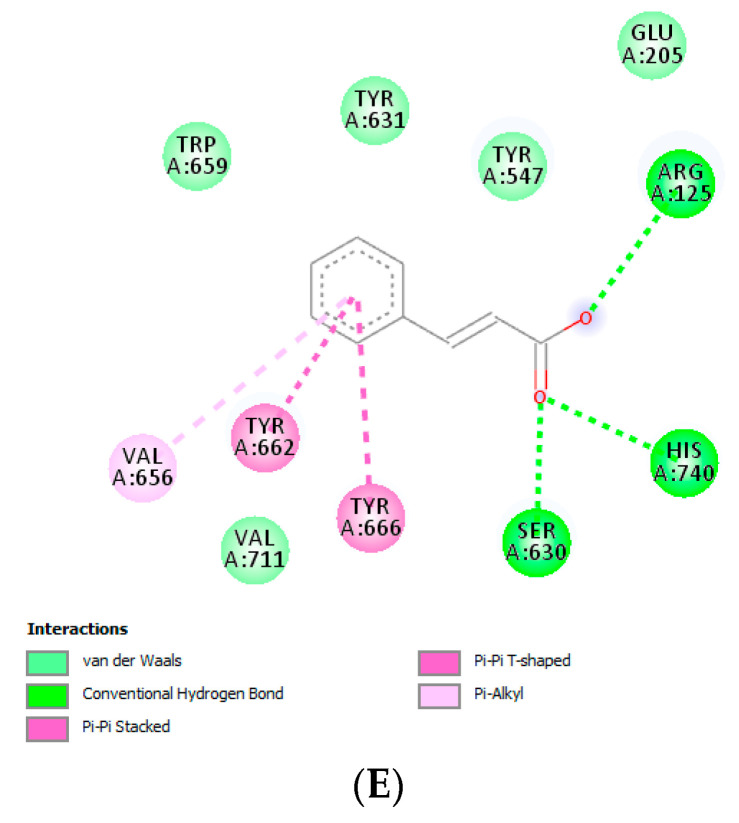
Cinnamon bark (Cinnamomum burmannii) and sappan wood (Caesalpinia sappan) have been reported to be beneficial for Type-2 Diabetes Mellitus (T2DM) and the combination is commonly used by Indonesian herbal industries. In the present study, the simultaneous extraction of bioactive compounds from both plants was conducted using natural deep eutectic solvent (NADES), their content analyzed using high-performance liquid chromatography (HPLC), and their dipeptidyl peptidase IV (DPP IV) inhibitory activity evaluated. An additional in silico molecular docking analysis was conducted to ensure their activity. The results showed that NADES (with a composition of choline chloride-glycerol) extraction from cinnamon and sappan wood had DPP IV inhibitory activity of 205.0 and 1254.0 µg/mL, respectively. Brazilin as a marker substance from sappan wood was responsible for the DPP IV inhibitory activity, while none of the marker substances chosen for cinnamon bark (trans-cinnamaldehyde, coumarin, and trans-cinnamic acid) were found to have significant DPP IV inhibitory activity. These results were confirmed by molecular docking conducted in brazilin, trans-cinnamaldehyde, coumarin, and trans-cinnamic acid.
Keywords: Cinnamon bark; dipeptidyl peptidase IV; natural deep eutectic solvent; sappan wood; ultrasonic-assisted extraction.
Conflict of interest statement
The authors declare no conflict of interest. The funders had no role in the design of the study; in the collection, analyses, or interpretation of data; in the writing of the manuscript; or in the decision to publish the results.
Figures
References
-
- Chaudhury A., Duvoor C., Dendi V.S.R., Kraleti S., Chada A., Ravilla R., Marco A., Shekhawat N.S., Montales M.T., Kuriakose K., et al. Clinical Review of Antidiabetic Drugs: Implications for Type 2 Diabetes Mellitus Management. Front. Endocrinol. 2017;8:1–12. doi: 10.3389/fendo.2017.00006. - DOI - PMC - PubMed
MeSH terms
Substances
Grants and funding
LinkOut - more resources
Full Text Sources
