


Alpha-1-antitrypsin: A possible host protective factor against Covid-19
- PMID: 32844538
- PMCID: PMC7461031
- DOI: 10.1002/rmv.2157
Alpha-1-antitrypsin: A possible host protective factor against Covid-19
Abstract
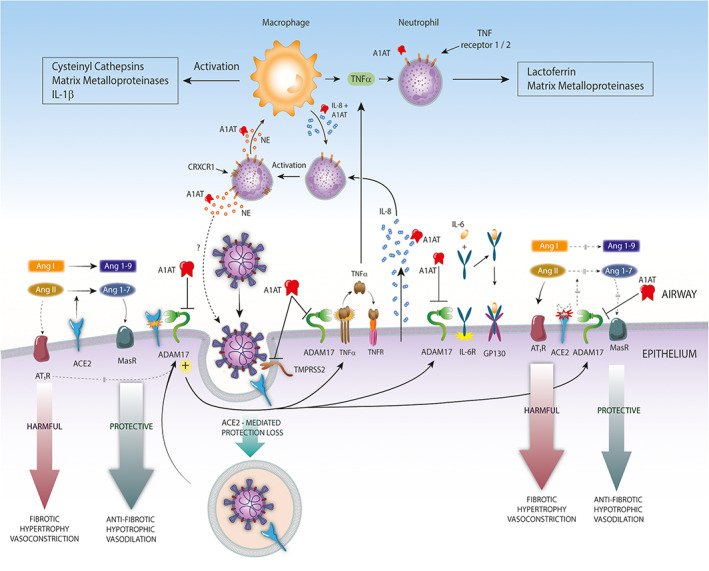
Understanding Covid-19 pathophysiology is crucial for a better understanding of the disease and development of more effective treatments. Alpha-1-antitrypsin (A1AT) is a constitutive tissue protector with antiviral and anti-inflammatory properties. A1AT inhibits SARS-CoV-2 infection and two of the most important proteases in the pathophysiology of Covid-19: the transmembrane serine protease 2 (TMPRSS2) and the disintegrin and metalloproteinase 17 (ADAM17). It also inhibits the activity of inflammatory molecules, such as IL-8, TNF-α, and neutrophil elastase (NE). TMPRSS2 is essential for SARS-CoV-2-S protein priming and viral infection. ADAM17 mediates ACE2, IL-6R, and TNF-α shedding. ACE2 is the SARS-CoV-2 entry receptor and a key component for the balance of the renin-angiotensin system, inflammation, vascular permeability, and pulmonary homeostasis. In addition, clinical findings indicate that A1AT levels might be important in defining Covid-19 outcomes, potentially partially explaining associations with air pollution and with diabetes. In this review, we focused on the interplay between A1AT with TMPRSS2, ADAM17 and immune molecules, and the role of A1AT in the pathophysiology of Covid-19, opening new avenues for investigating effective treatments.
Keywords: A1AT; ADAM17; Covid-19; SARS-CoV-2; TMPRSS2.
© 2020 John Wiley & Sons Ltd.
Conflict of interest statement
The authors declare that the research was conducted in the absence of any commercial or financial relationships that could be construed as a potential conflict of interest.
Figures
References
Publication types
MeSH terms
Substances
Grants and funding
LinkOut - more resources
Full Text Sources
Medical
Research Materials
Miscellaneous
