


The Impact of Nutrition-Specific and Nutrition-Sensitive Interventions on Hemoglobin Concentrations and Anemia: A Meta-review of Systematic Reviews
- PMID: 32845972
- PMCID: PMC7666908
- DOI: 10.1093/advances/nmaa070
The Impact of Nutrition-Specific and Nutrition-Sensitive Interventions on Hemoglobin Concentrations and Anemia: A Meta-review of Systematic Reviews
Abstract
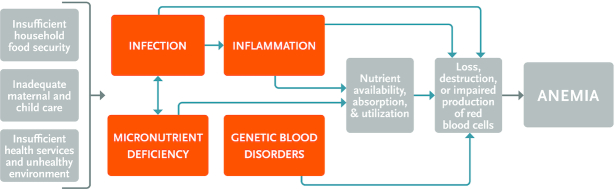
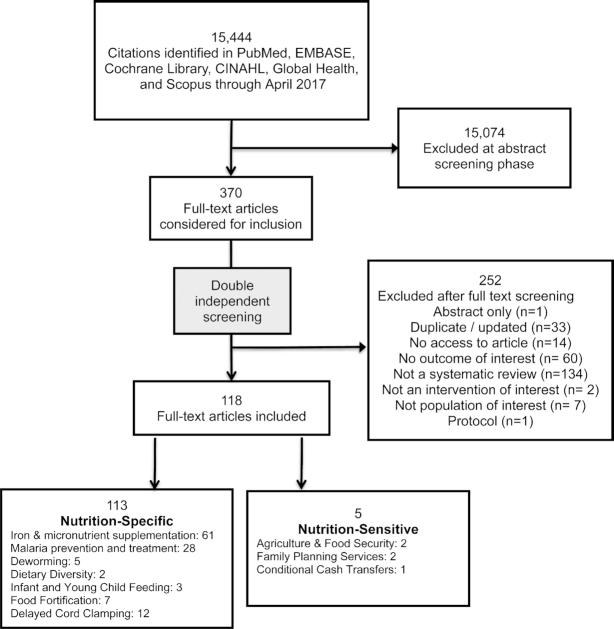
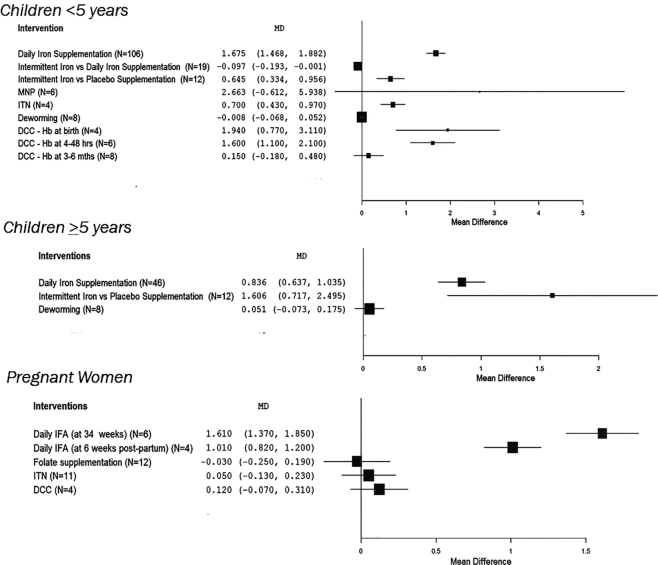
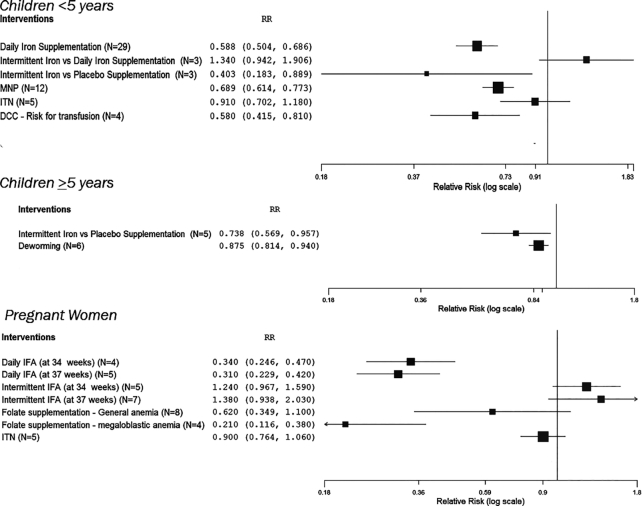
Anemia is a multifactorial condition arising from inadequate nutrition, infection, chronic disease, and genetic-related etiologies. Our aim was to assess the impact of nutrition-sensitive and nutrition-specific interventions on hemoglobin (Hb) concentrations and anemia to inform the prioritization and scale-up of interventions to address the multiple causes of anemia. We performed a meta-review synthesis of information by searching multiple databases for reviews published between 1990 and 2017 and used standard methods for conducting a meta-review of reviews, including double independent screening, extraction, and quality assessment. Quantitative pooling and narrative syntheses were used to summarize information. Hb concentration and anemia outcomes were pooled in specific population groups (children aged <5 y, school-age children, and pregnant women). Methodological quality of the systematic reviews was assessed using Assessing the Methodological Quality of Systematic Reviews (AMSTAR) criteria. Of the 15,444 records screened, we identified 118 systematic reviews that met inclusion criteria. Reviews focused on nutrition-specific interventions (96%). Daily and intermittent iron supplementation, micronutrient powders, malaria treatment, use of insecticide-treated nets (ITNs), and delayed cord clamping were associated with increased Hb concentration in children aged <5 y. Among children older than 5 y, daily and intermittent iron supplementation and deworming, and in pregnant women, daily iron-folic acid supplementation, use of ITNs, and delayed cord clamping, were associated with increased Hb concentration. Similar results were obtained for the reduced risk of anemia outcome. This meta-review suggests the importance of nutrition-specific interventions for anemia and highlights the lack of evidence to understand the influence of nutrition-sensitive and multifaceted interventions on the condition.
Keywords: anemia; hemoglobin concentration; meta-review; nutrition interventions; systematic review.
Copyright © The Author(s) on behalf of the American Society for Nutrition 2020.
Figures
References
-
- Stevens GA, Finucane MM, De-Regil LM, Paciorek CJ, Flaxman SR, Branca F, Peña-Rosas JP, Bhutta ZA, Ezzati M. Global, regional, and national trends in haemoglobin concentration and prevalence of total and severe anaemia in children and pregnant and non-pregnant women for 1995–2011: a systematic analysis of population-representative data. Lancet Glob Health. 2013;1:e16–25. - PMC - PubMed
-
- Black MM, Baqui AH, Zaman K, Persson LA, Arifeen SE, Le K, McNary SW, Parveen M, Hamadani JD, Black RE. Iron and zinc supplementation promote motor development and exploratory behavior among Bangladeshi infants. Am J Clin Nutr. 2004;80:903–10. - PubMed
-
- Balarajan Y, Ramakrishnan U, Ozaltin E, Shankar AH, Subramanian SV. Anaemia in low-income and middle-income countries. Lancet. 2011;378:2123–35. - PubMed
-
- Ruel MT, Alderman H. Nutrition-sensitive interventions and programmes: how can they help to accelerate progress in improving maternal and child nutrition?. Lancet. 2013;382:536–51. - PubMed
Publication types
MeSH terms
Substances
Grants and funding
LinkOut - more resources
Full Text Sources
Medical
Miscellaneous
