Meta-Analysis
. 2020 Aug 21;99(34):e21894.
doi: 10.1097/MD.0000000000021894.

The feasibility of Chinese massage as an auxiliary way of replacing or reducing drugs in the clinical treatment of adult type 2 diabetes: A systematic review and meta-analysis

Affiliations
Meta-Analysis

The feasibility of Chinese massage as an auxiliary way of replacing or reducing drugs in the clinical treatment of adult type 2 diabetes: A systematic review and meta-analysis

Xiaolin Zhang et al. Medicine (Baltimore). .

Abstract

Background: At present, metformin is mainly used in the treatment of type 2 diabetes mellitus (T2DM). When the therapeutic effect is achieved, there are side effects and secondary failure will occur if taken for a long time. It is of great significance to actively explore the clinical scheme of reducing drug use while ensuring the therapeutic effect of T2DM.

Objective: To evaluate the feasibility of Chinese massage (CM) in the treatment of T2DM.

Methods: Literature retrieval is divided into 2 aspects: Electronic Retrieval and Personal Check. We will search PubMed, EMBASE, CNKI, Cochrane Central, which were registered in international clinical trials registry platform systems, select all eligible studies published before November 2, 2019, and use Personal Check method to retrieve papers, conference papers, ongoing experiments, internal reports, and so on. With fasting blood glucose, 2-hour fasting blood glucose, glycosylated hemoglobin, and insulin index as the main observation indexes, we also pay attention to traditional Chinese medicine syndrome score scale, insulin resisting index, body mass index , serum total cholesterol, Curative effect and the occurrence of all adverse reactions in drug treatment.Of the research group 2 researchers respective selected literature, extracted data, and evaluated the risk of bias. After that we used Revman 5.7 and Stata 12.1 statistical software for meta-analysis.

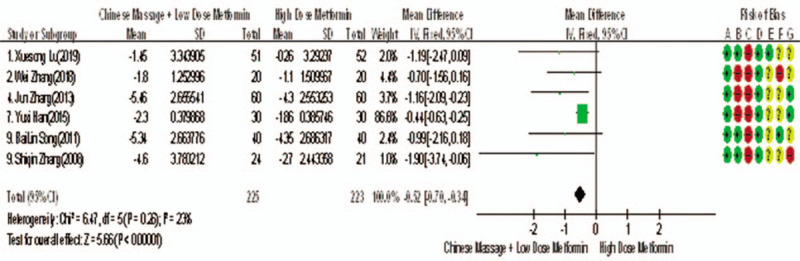
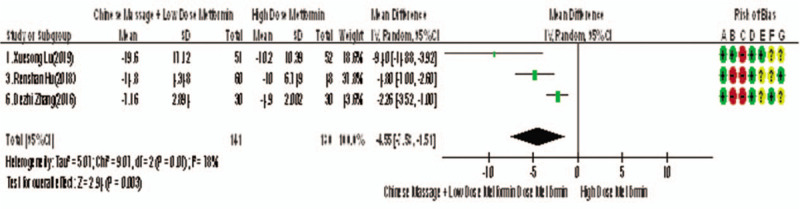
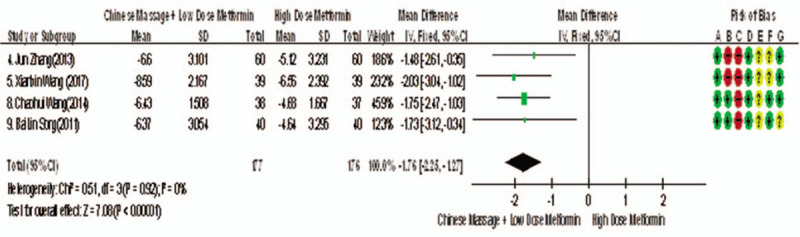
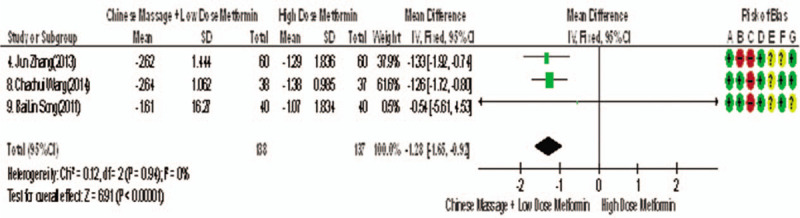
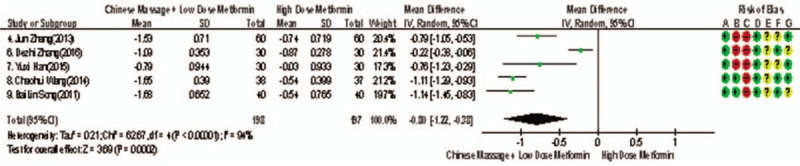
Results: A total of 769 subjects were included in 10 studies for meta-analysis. Compared with metformin hydrochloride tablets, CM plus baseline treatment can reduce fasting plasma glucose (weighted mean difference [WMD] = -0.33, 95% confidence interval [CI] [-0.54, -0.13], Z = 3.15, P = .002), 2 hours postprandial blood glucose (WMD = -0.52, 95% CI [-0.70, -0.34), Z = 5.66, P < .00001], hemoglobin A1c (WMD = 0.12, 95% CI [0.04, 0.20], Z = 2.94, P = .003), fasting insulin (WMD = -3.59, 95% CI [-5.56, -1.42], Z = 10.29,P < .00001), traditional Chinese medicine syndrome score scale (WMD = -4.55, 95% CI [-7.58, -1.51], Z = 2.94, P = .003),homeostasis model assessment of insulin resistance (WMD = -1.76, 95% CI [-2.25, -1.27), Z = 7.08, P < .00001),body mass index (WMD = -1.28, 95% CI [-1.65, -0.92], Z = 6.91, P < .00001), serum total cholesterol (WMD = -1.01, 95% CI [-1.14, -0.83], Z = 15.51, P < .00001), meanwhile, the effective rate was increased (risk ratio [RR] = 1.31, 95% CI [1.21, 1.42], Z = 6.57, P < .00001).

Conclusion: CM combined with metformin hydrochloride tablet has a synergistic effect. It can not only be used as an auxiliary treatment of T2DM, but also as an important reference way of reducing drug treatment of T2DM, improving Clinical Efficacy and reducing adverse reactions.

Systematic review registration: PROSPERO CRD42020158839.


Conflict of interest statement

The authors have no conflicts of interest to disclose.

Figures
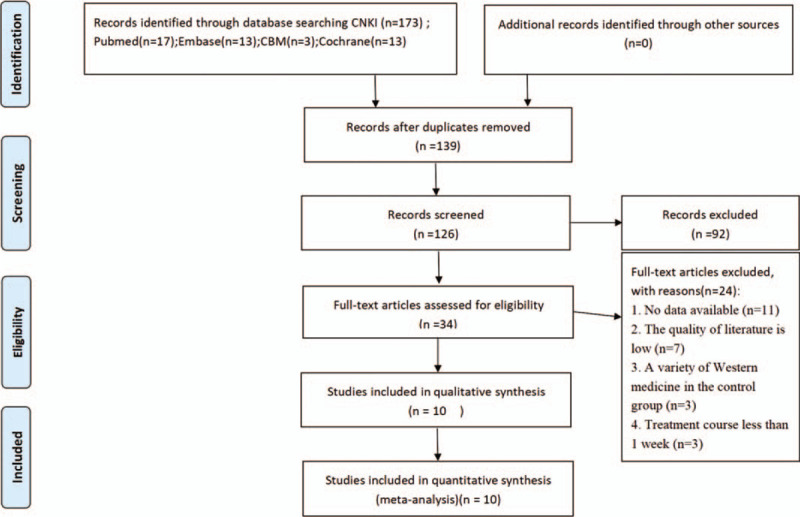
Figure 1
Figure 1
PRISMA flow diagram of study and exclusion.
Figure 2
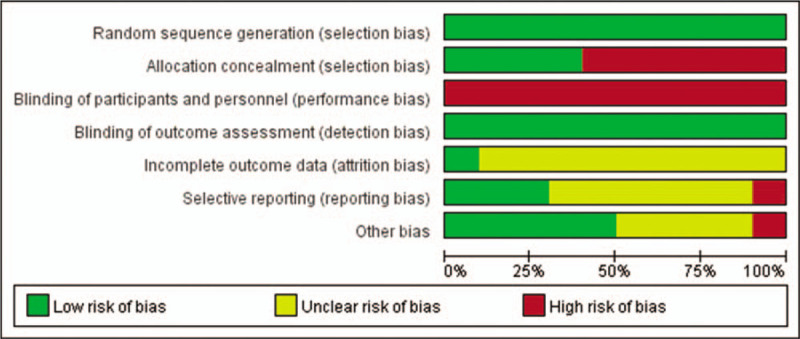
Figure 2
Risk chart of literature deviation for the feasibility of CM assisted drug reduction in adult T2DM mellitus patients. CM = Chinese massage, T2DM = type 2 diabetes mellitus.
Figure 3
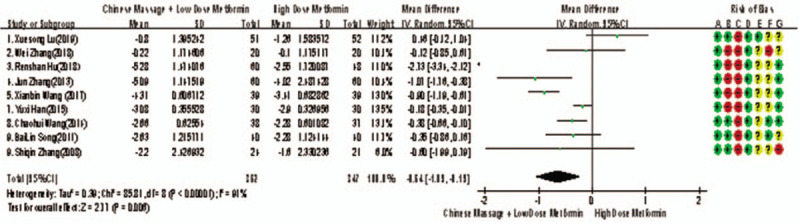
Figure 3
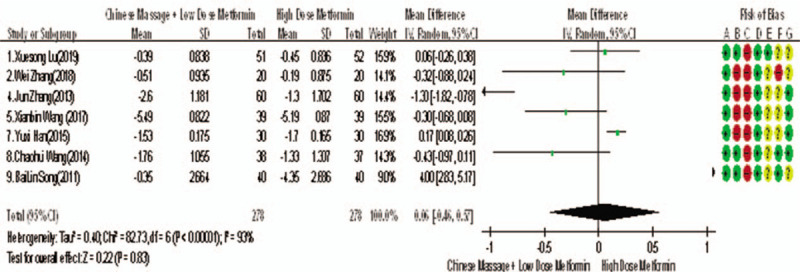
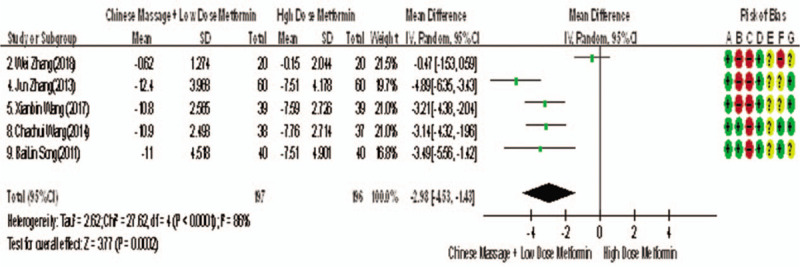
The meta-analysis forest chart of the feasibility of improving FPG by reducing drug treatment in adult T2DM patients assisted by CM. CM = Chinese massage, FPG = fasting plasma glucose, T2DM = type 2 diabetes mellitus.
Figure 4
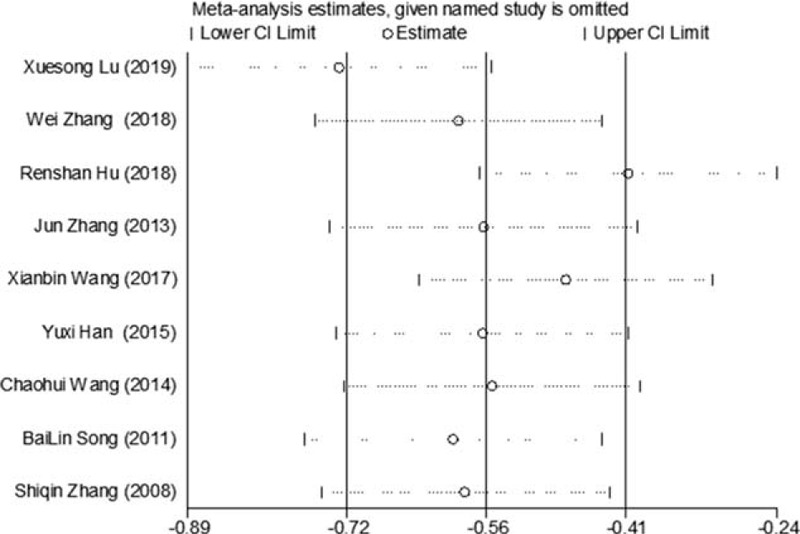
Figure 4
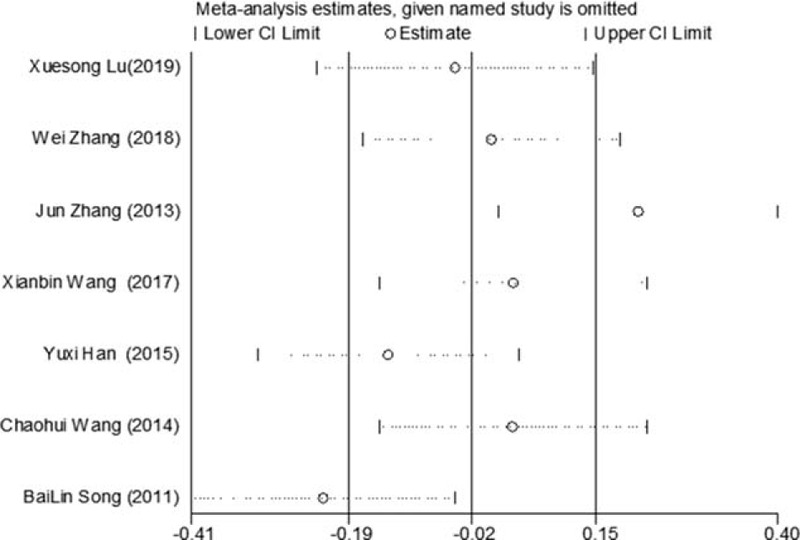
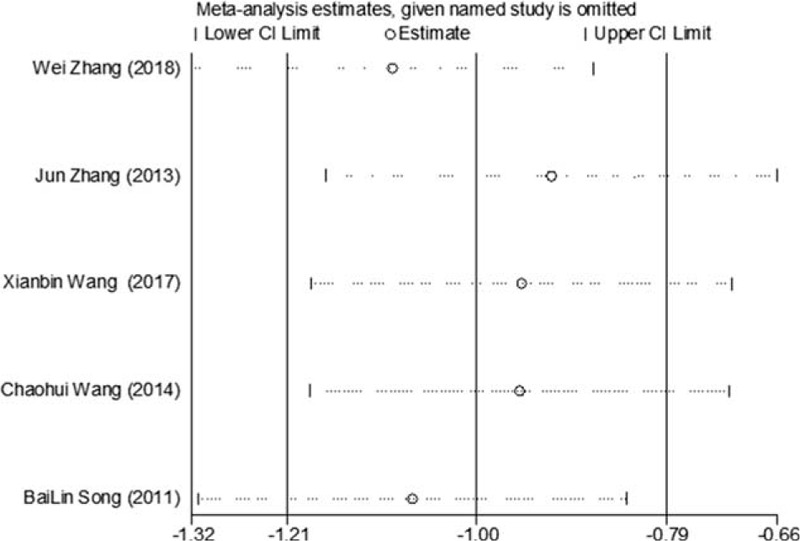
Sensitivity analysis of the feasibility of improving FPG by CM assisted with drug reduction in adult patients with T2DM. CM = Chinese massage, FPG = fasting plasma glucose, T2DM = type 2 diabetes mellitus.
Figure 5
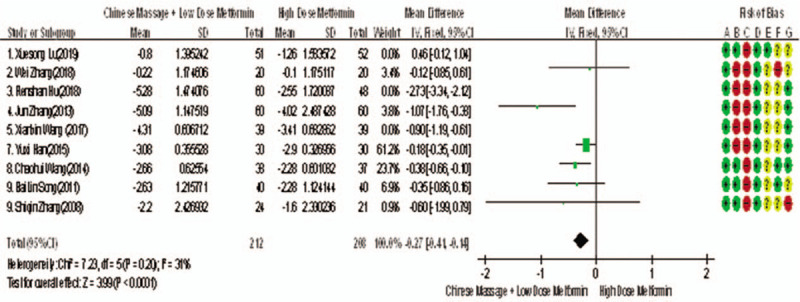
Figure 5
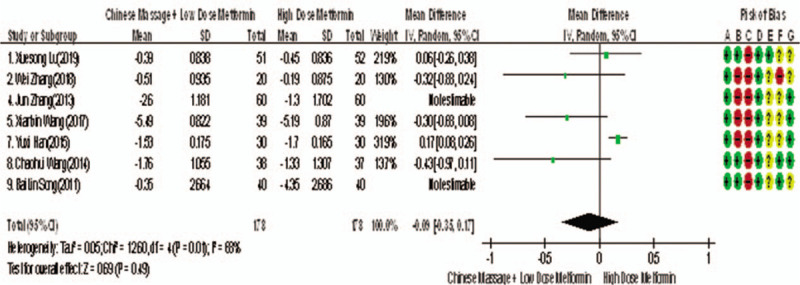
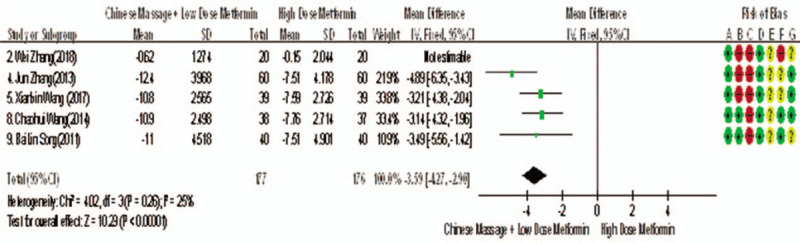
The forest map of meta-analysis on the feasibility of improving FPG removal by reducing drug treatment in adult T2DM patients assisted by CM. CM = Chinese massage, FPG = fasting plasma glucose, T2DM = type 2 diabetes mellitus.
Figure 6
Figure 6
Meta-analysis forest chart of the feasibility of CM to assist the adult patients with T2DM mellitus to improve 2 hPG. 2hPG = 2 hours postprandial blood glucose, CM = Chinese massage, T2DM = type 2 diabetes mellitus.
Figure 7
Figure 7
The forest map of meta-analysis on the feasibility of improving HbA1c with CM and reducing drug treatment in adult type 2 diabetic patients. CM = Chinese massage, HbA1c = hemoglobin A1c.
Figure 8
Figure 8
Sensitivity analysis of the feasibility of reducing drug treatment to improve HbA1c in adults with T2DM mellitus assisted by CM. CM = Chinese massage, HbA1c = hemoglobin A1c, T2DM = type 2 diabetes mellitus.
Figure 9
Figure 9
The meta-analysis forest chart of the feasibility of improving HbA1c after elimination by CM assisted with reducing drug treatment in adult patients with T2DM. CM = Chinese massage, HbA1c = hemoglobin A1c, T2DM = type 2 diabetes mellitus.
Figure 10
Figure 10
The forest map of meta-analysis on the feasibility of improving FINs by CM in the treatment of reducing drugs for adult T2DM. CM = Chinese massage, FINs = fasting insulin, T2DM = type 2 diabetes mellitus.
Figure 11
Figure 11
Sensitivity analysis of the feasibility of traditional CM assisted with reducing drug treatment to improve FINs in adults with T2DM mellitus. CM = Chinese massage, FINs = fasting insulin, T2DM = type 2 diabetes mellitus.
Figure 12
Figure 12
The forest map of meta-analysis on the feasibility of improving FINs after removal by CM in the treatment of T2MD. CM = Chinese massage, FINs = fasting insulin, T2DM = type 2 diabetes mellitus.
Figure 13
Figure 13
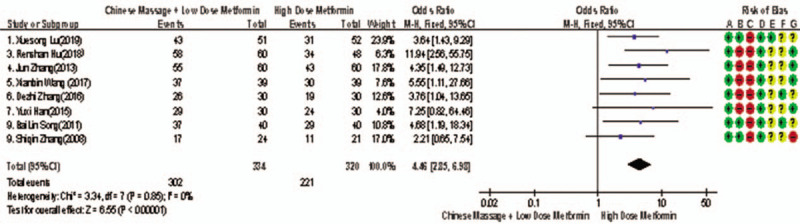
Meta-analysis forest chart of the feasibility of improving the efficiency of CM assisted treatment of T2MD in adults. CM = Chinese massage, T2DM = type 2 diabetes mellitus.
Figure 14
Figure 14
Meta-analysis forest chart of the feasibility of CM assisted with the reduction of TCM treatment for the improvement of TCMSSS in adult type 2 diabetic patients. CM = Chinese massage, TCMSSS = traditional Chinese medicine syndrome score scale.
Figure 15
Figure 15
The meta-analysis forest chart of the feasibility of CM assisted with the reduction of TCM treatment and improvement of TCMSSS in adult T2MD patients. CM = Chinese massage, TCMSSS = traditional Chinese medicine syndrome score scale, T2DM = type 2 diabetes mellitus.
Figure 16
Figure 16
Meta-analysis forest chart of the feasibility of CM assisted with reducing drug treatment to improve BMI index in adult T2MD patients. BMI = body mass index, CM = Chinese massage, T2DM = type 2 diabetes mellitus.
Figure 17
Figure 17
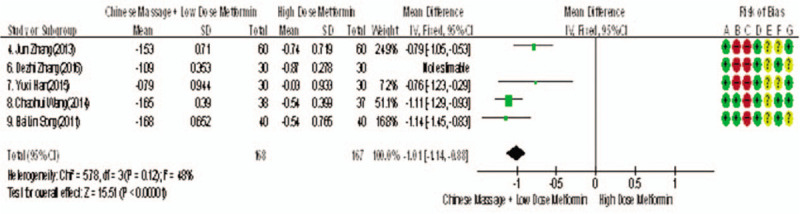
The meta-analysis forest chart of the feasibility of CM assisted with reducing drug treatment to improve TC in adults with T2MD. CM = Chinese massage, T2DM = type 2 diabetes mellitus.
Figure 18
Figure 18
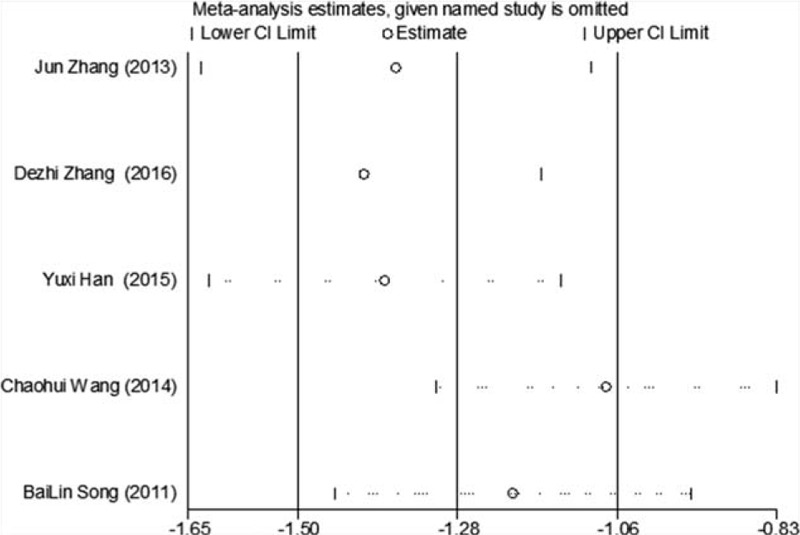
Sensitivity analysis of the feasibility of traditional Chinese medicine massage assisted with reducing drug treatment to improve FINs in adults with T2MD. FINs = fasting insulin, T2DM = type 2 diabetes mellitus.
Figure 19
Figure 19
Meta-analysis forest chart of the feasibility of CM assisted with reducing drug treatment to improve TC in adults with T2MD. CM = Chinese massage, T2DM = type 2 diabetes mellitus.
Figure 20
Figure 20
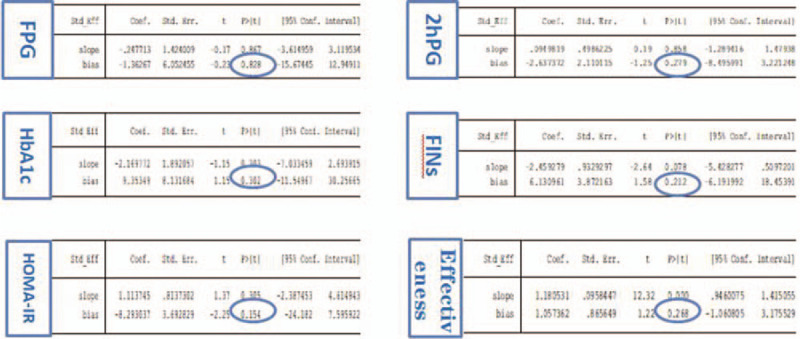
Data chart of bias analysis of Egger regression table.

References

    1. Seuring T, Archangelidi O, Suhrcke M. The economic costs of type 2 diabetes: a global systematic review. Pharmacoeconomics 2015;33:811–31. - PMC - PubMed
    1. Hu C, Jia W. Diabetes in China: epidemiology and genetic risk factors and their clinical utility in personalized medication. Diabetes 2018;67:3–11. - PubMed
    1. Mostafavinia A, Amini A, Ghorishi SKJ, et al. The effects of dosage and the routes of administrations of streptozotocin and alloxan on induction rate of type l diabetes mellitus and mortality rate in rats. Lab Anin Res 2016;32:160–5. - PMC - PubMed
    1. GBD 2015 Disease and Injury Incidence and Prevalence Collaborators. Global regional, and national incidence, prevalence, and years lived with disability for 310 diseases and injuries, 1990-2015: asystematic analysis for the Global Burden of Disease Study 2015 [published correction appears in Lancet. 2017 Jan 7;389(10064):e1]. Lancet 2016;388:1545–602. - PMC - PubMed
    1. Chinese Diabetes Society. Guidelines for the prevention and treatment of type 2 diabetes in China (2017). J Pract Med 2018;38:292–344.

MeSH terms