Review
. 2020 Aug 24;21(17):6080.
doi: 10.3390/ijms21176080.

Chemical Reactivities of ortho-Quinones Produced in Living Organisms: Fate of Quinonoid Products Formed by Tyrosinase and Phenoloxidase Action on Phenols and Catechols

Affiliations
Review

Chemical Reactivities of ortho-Quinones Produced in Living Organisms: Fate of Quinonoid Products Formed by Tyrosinase and Phenoloxidase Action on Phenols and Catechols

Shosuke Ito et al. Int J Mol Sci. .

Abstract

Tyrosinase catalyzes the oxidation of phenols and catechols (o-diphenols) to o-quinones. The reactivities of o-quinones thus generated are responsible for oxidative browning of plant products, sclerotization of insect cuticle, defense reaction in arthropods, tunichrome biochemistry in tunicates, production of mussel glue, and most importantly melanin biosynthesis in all organisms. These reactions also form a set of major reactions that are of nonenzymatic origin in nature. In this review, we summarized the chemical fates of o-quinones. Many of the reactions of o-quinones proceed extremely fast with a half-life of less than a second. As a result, the corresponding quinone production can only be detected through rapid scanning spectrophotometry. Michael-1,6-addition with thiols, intramolecular cyclization reaction with side chain amino groups, and the redox regeneration to original catechol represent some of the fast reactions exhibited by o-quinones, while, nucleophilic addition of carboxyl group, alcoholic group, and water are mostly slow reactions. A variety of catecholamines also exhibit side chain desaturation through tautomeric quinone methide formation. Therefore, quinone methide tautomers also play a pivotal role in the fate of numerous o-quinones. Armed with such wide and dangerous reactivity, o-quinones are capable of modifying the structure of important cellular components especially proteins and DNA and causing severe cytotoxicity and carcinogenic effects. The reactivities of different o-quinones involved in these processes along with special emphasis on mechanism of melanogenesis are discussed.

Keywords: amines; catechols; dopaquinone; melanization; o-quinones; phenols; quinone methides; sclerotization; thiols; tyrosinase.


Conflict of interest statement

The authors declare no conflict of interest.

Figures
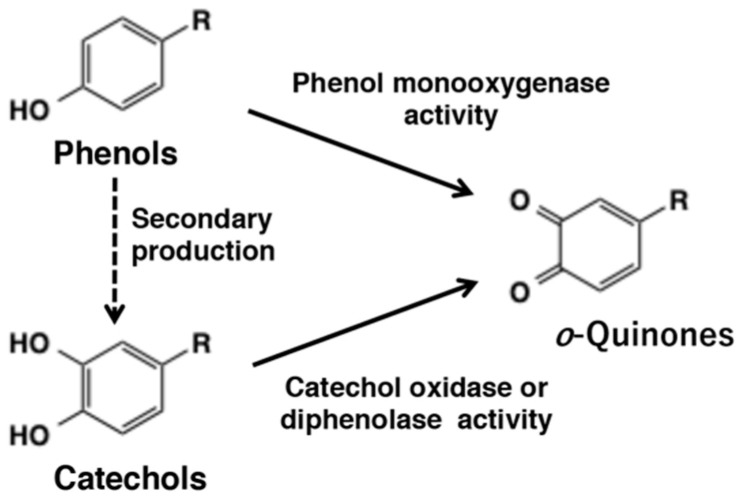
Figure 1
Figure 1
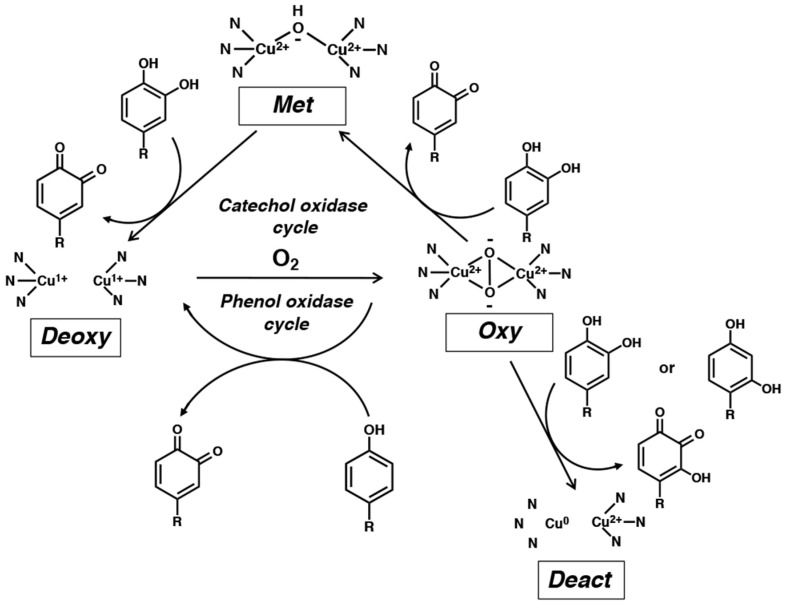
Tyrosinase-catalyzed oxidation of 4-substituted phenols and the corresponding catechols producing o-quinones. Note that catechols are not produced directly from phenols [7].
Figure 2
Figure 2
Relationship among the four oxidative states of tyrosinase [7].
Figure 3
Figure 3
Tyrosinase-catalyzed oxidation of N,N-dimethyltyramine [11]. This reaction requires a catalytic amount of L-dopa. The o-quinone rapidly gives the indolium salt in a spontaneous reaction. This salt does not have an activity to activate met-tyrosinase and, thus, the oxidation stops at this stage.
Figure 4
Figure 4
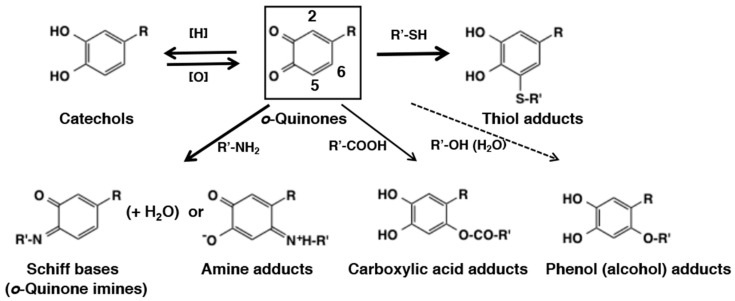
Summary of intrinsic chemical reactivity of o-quinones. The relative reactivity is shown in the thickness of the arrows. Note that the reactions with carboxylic acids and alcohol (water) are possible only when the functional groups are present in the side chain of o-quinones. For the sake of simplicity, the numbering on the o-quinone ring is made so that R- is attached to the C1 position. The addition of thiols proceeds mostly at the C5 (major) and C2 (minor) positions (1,6-Michael addition) while the addition of other nucleophiles proceeds mostly at the C6 position (1,4-Michael addition).
Figure 5
Figure 5
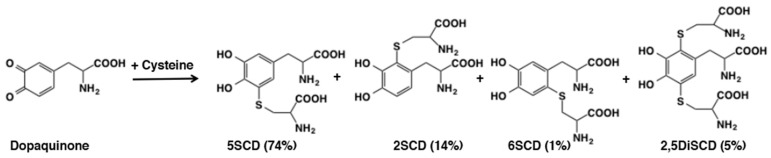
Reaction of dopaquinone with cysteine. 5-S-Cysteinyldopa (5SCD) is the major isomer [26] and serves as a biochemical marker of malignant melanoma [28].
Figure 6
Figure 6
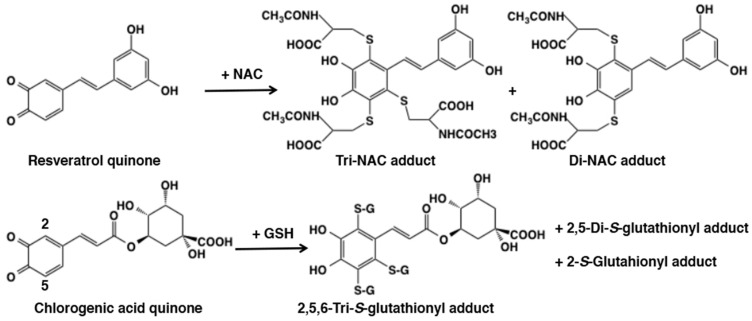
Reaction of resveratrol quinone and chlorogenic acid quinone with thiols [35,37]. Note that the C2 position is most reactive.
Figure 7
Figure 7
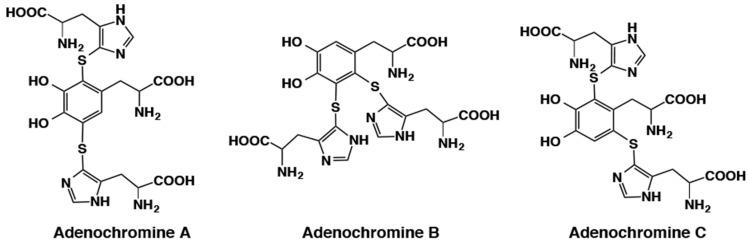
Three structural isomers of di-adducts of 5-thiohistidine to dopa isolated from Octopus vulgaris [39,40]. Note that adenochromine A, B, and C correspond to the 2,5-, 5,6-, and 2,6-adducts, respectively.
Figure 8
Figure 8
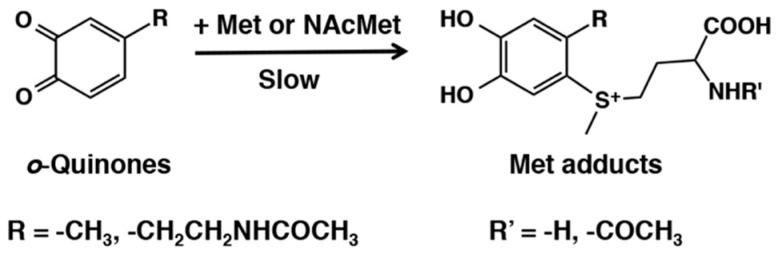
Reaction of o-quinones with methionine and N-acetylmethionine [46]. Note that the position of attachment of thio-ether group has not been confirmed.
Figure 9
Figure 9
Intramolecular addition of amino group to o-quinone group to form aminochromes. A unique example of the intramolecular addition of amino group to form a six-membered ring is presented for 4SCAP quinone [50].
Figure 10
Figure 10
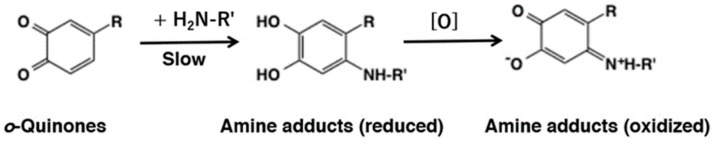
Reaction of o-quinones with amines. Note that the oxidized form of amine adducts are more stable than the reduced form [54].
Figure 11
Figure 11
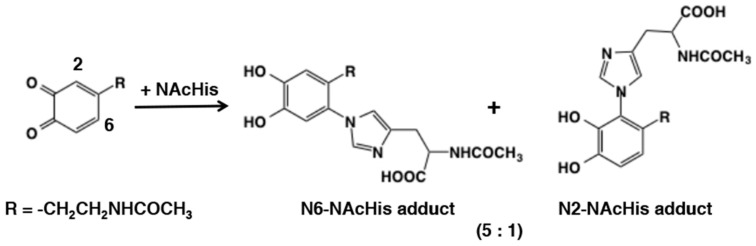
Reaction of o-quinones with N-acetylhistidine. Note that the position of attachment of the imidazole group was confirmed [57].
Figure 12
Figure 12
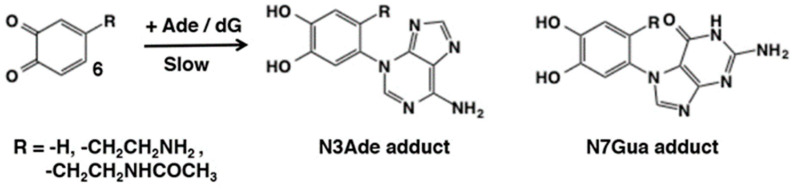
Reaction of o-quinones with DNA bases [58]. These adducts are isolated in the reduced form.
Figure 13
Figure 13
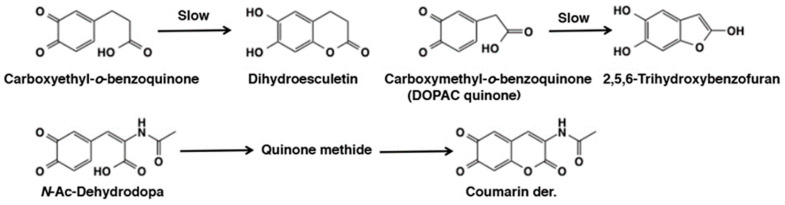
Intramolecular addition of carboxylate group to o-quinone group to form lactones [60,61,62].
Figure 14
Figure 14
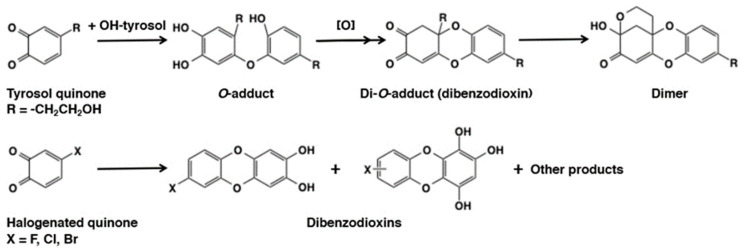
Self-coupling of tyrosol quinone with hydroxytyrosol (HT) to form a dibenzodioxin [64]. An isomer differing in the position of the substituent (R-) was also isolated. An efficient formation of dibenzodioxins was reported for 4-halogenated quinones [65].
Figure 15
Figure 15
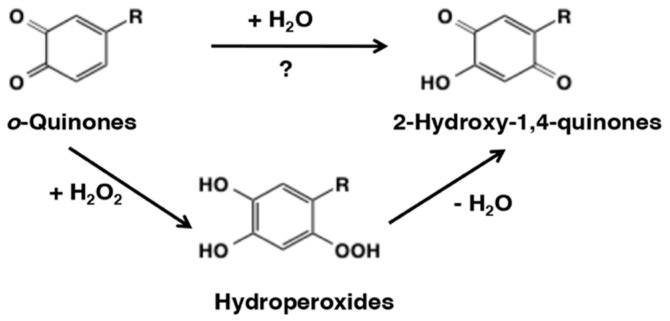
Reaction of o-quinones with hydrogen peroxide leading the production of 2-hydroxy-1,4-quinones [67,68]. Note that the direct addition of water molecule to o-quinone is unlikely to occur.
Figure 16
Figure 16
Reaction of rhododendrol (RD) quinone to form RD-cyclic catechol [71]. Note that this cyclization reaction is less likely to proceed [72,74].
Figure 17
Figure 17
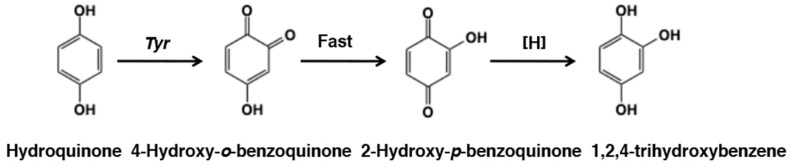
Reaction of hydroquinone in the tyrosinase-catalyzed oxidation [77,80,81].
Figure 18
Figure 18
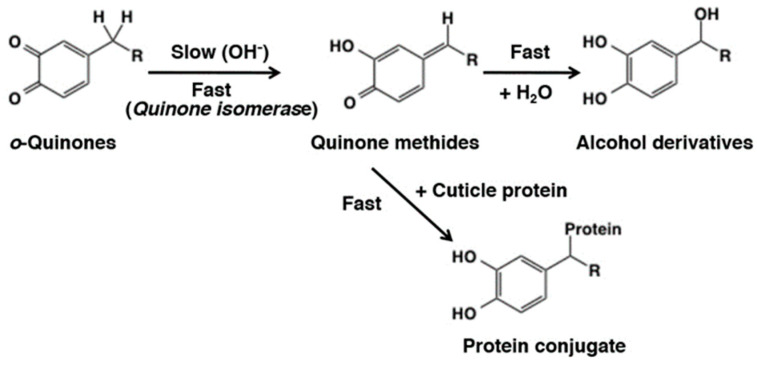
Quinone methide formation from o-quinones and the subsequent addition of water molecule to form alcohol derivatives [84].
Figure 19
Figure 19
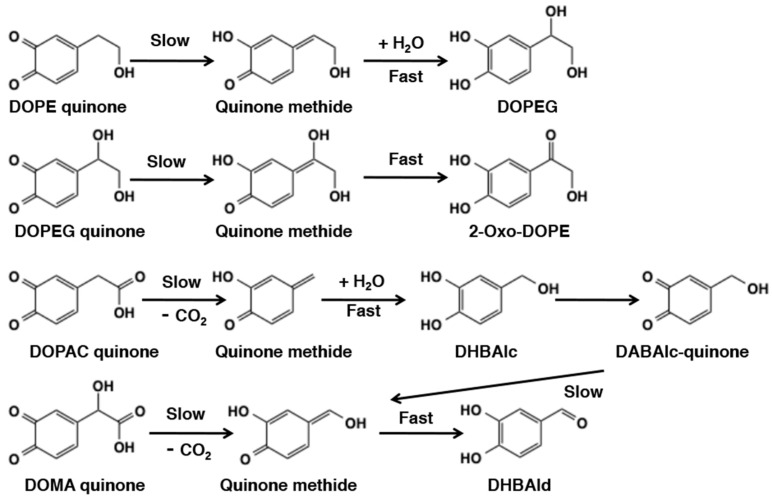
Reaction of o-quinone products from catecholamine metabolites 3,4-Dihydroxyphenylethanol (DOPE), 3,4-dihydroxyphenylethyleneglycol (DOPEG), 3,4-dihydroxyphenylacetic acid (DOPAC), and 3,4-dihydroxymandelic acid (DOMA) [94]. Tyrosinase-catalyzed oxidation of the catechols was terminated by the addition of ascorbic acid. Note that the formation of quinone methides proceeds slowly, which is quickly followed by the addition of water molecule or the formation of carbonyl group.
Figure 20
Figure 20
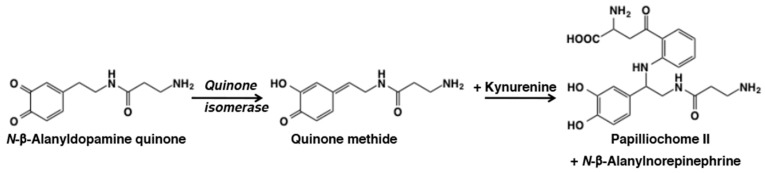
Reaction of N-β-alanyldopamine quinone with kynurenine to form papilliochrome II [99,100,101]. Note that quinone isomerase was required for the production of papilliochrome II and that N-β-alanylnorepinephrine was also produced through addition of water.
Figure 21
Figure 21
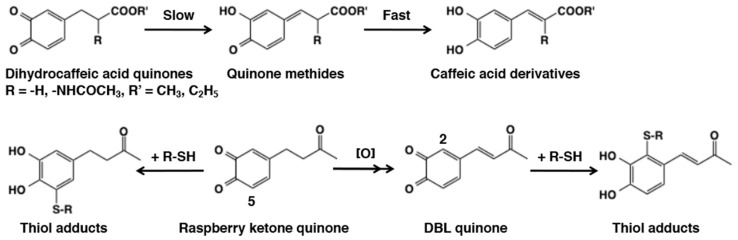
Side chain desaturation from quinone methides from dihydrocaffeic acid quinones [60] and raspberry ketone quinone [111]. Note that dihydrocaffeic acid (caffeic acid) with the N-acetyl group can be considered as dopa (dehydrodopa) derivative. The position of thiol addition differs between raspberry ketone quinone and DBL quinone.
Figure 22
Figure 22
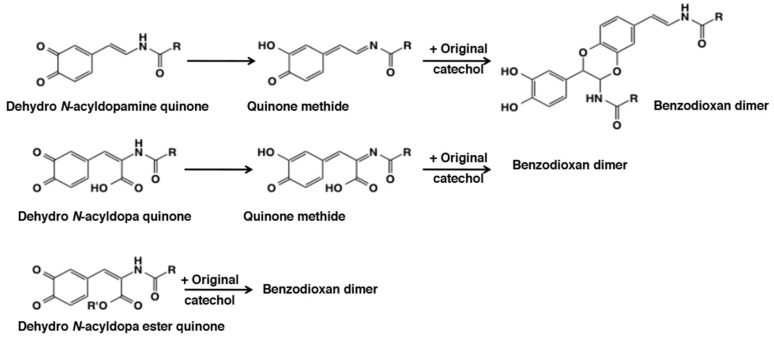
Reaction of side chain desaturated quinones producing benzodioxan dimers [19,62,113,114,115,116,117].
Figure 23
Figure 23
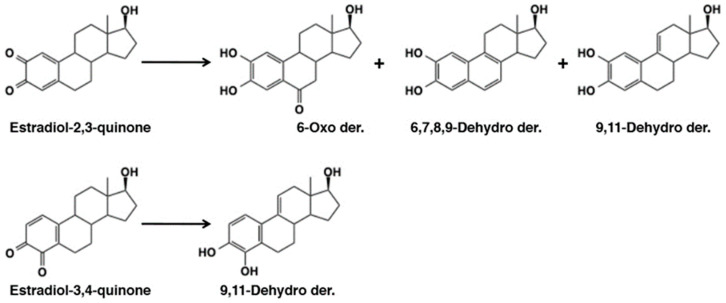
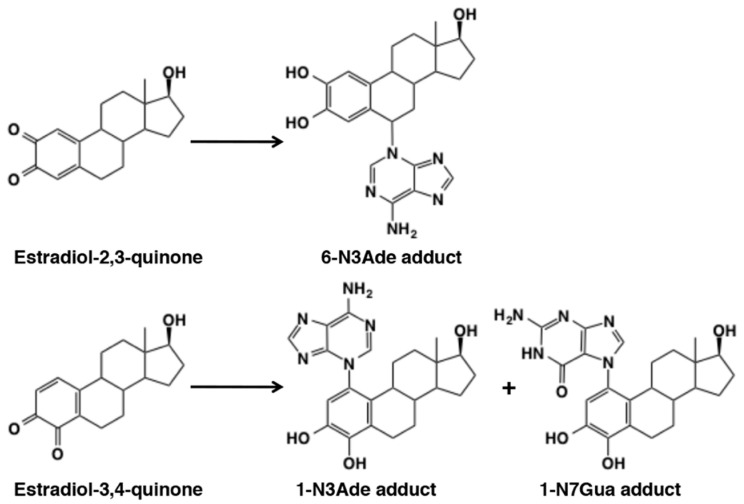
Reaction of β-estradiol quinones [118]. Note that those quinones undergo tautomerization to quinone methides which give rise to the secondary products.
Figure 24
Figure 24
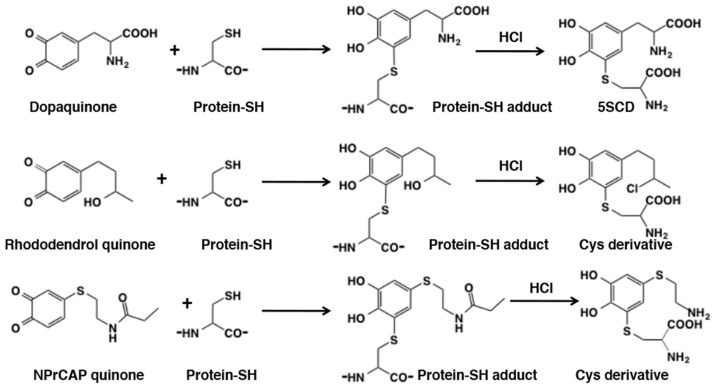
Reaction of o-quinones with protein-SH and acid hydrolysis of the adducts to liberate cysteinyl derivatives [30,120,121,122].
Figure 25
Figure 25
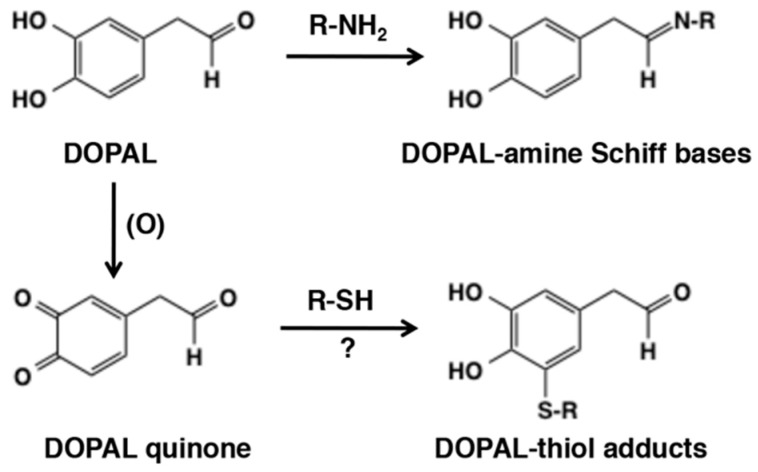
Reaction of 3,4-Dihydroxybenzaldehyde (DOPAL) and its quinone with amines and thiols [131]. Note that the reaction with thiols requires oxidation to the quinone form.
Figure 26
Figure 26
Reaction of β-estradiol quinones with DNA to produce depurinating products [134].
Figure 27
Figure 27
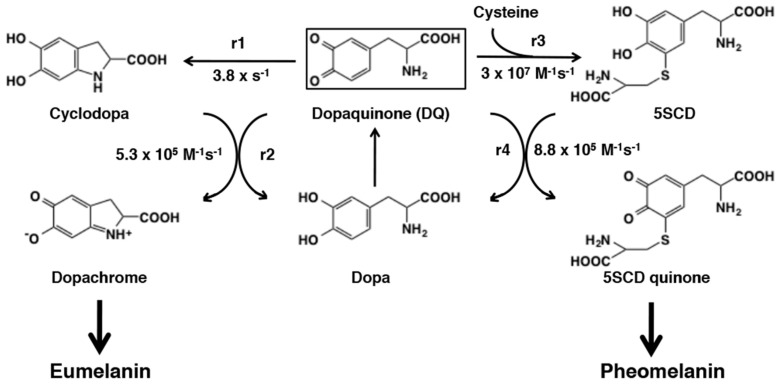
Kinetics of early stages of mixed melanogenesis. Note that the rate constants r1–r4 are controlled by the intrinsic chemical reactivity of dopaquinone (DQ) [17,148,149,150].
Figure 28
Figure 28
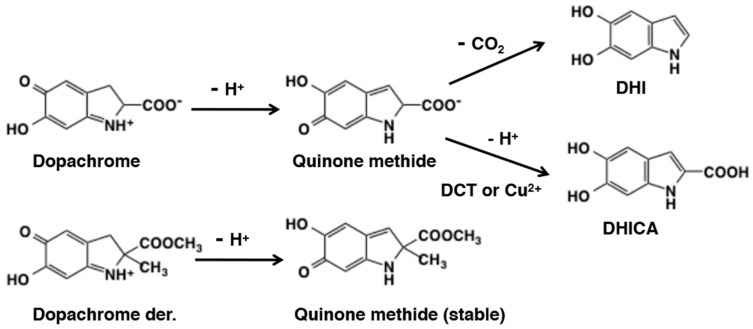
Reaction of dopachrome to produce 5,6-dihydroxyindole (DHI) and 5.6-dihydroxyindole-2-carboxylic acid (DHICA) and roles of dopachrome tautomerase (DCT) and Cu2+ ions [102,151,152,153,155].
Figure 29
Figure 29
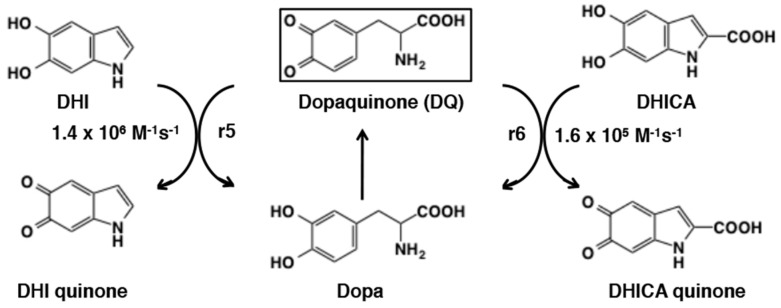
Kinetics of late stages of eumelanogenesis from DHI and DHICA. Note that dopaquinone (DQ) acts again here as a redox exchanger [156].
Figure 30
Figure 30
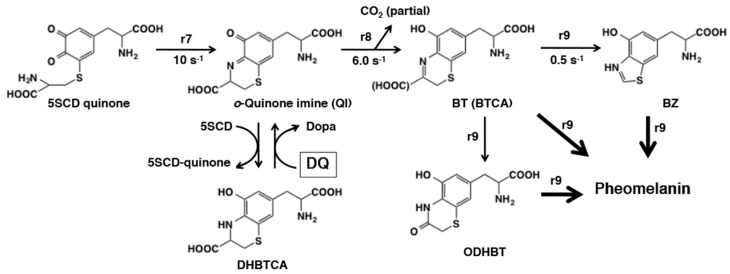
Kinetics of late stages of pheomelanogenesis from 5-S-cysteinyldopa (5SCD) quinone [166]. Note that dihydro-1,4-benzothiazine-3-carboxylic acid (DHBTCA) is produced via redox exchange while benzothiazine intermediates are generated by rearrangement of quinone imine intermediate (with/without decarboxylation). Rate constants are from Napolitano et al. [167]. Note that dopaquinone chemically controls pheomelanogenesis at a critical stage of DHBTCA oxidation.
Figure 31
Figure 31
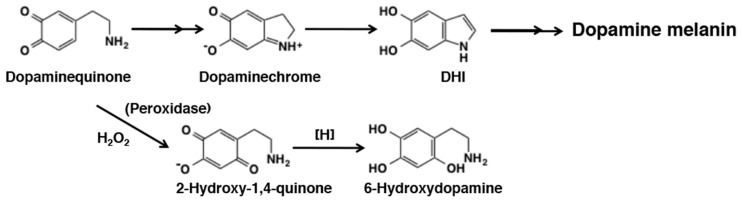
Reaction of dopaminequinone leading to the production of dopamine melanin through dopaminechrome [129,179]. Note that oxidation of dopamine with peroxidase/H2O2 gives 6-hydroxydopamine after reduction [67].
Figure 32
Figure 32
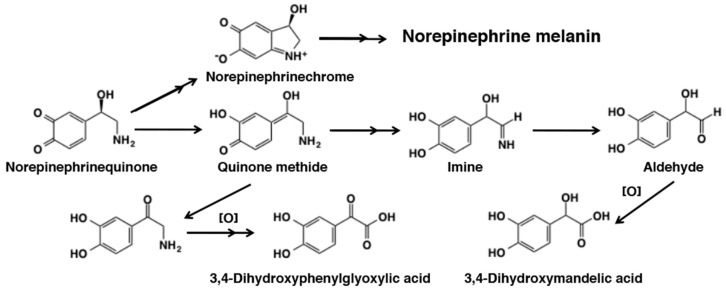
Reaction norepinephrinequinone [186]. The quinone methide pathway leads to the production of 3,4-dihydroxymandelic acid (DOMA), 3,4-dihydroxybenzaldehyde (DHBAld), 3,4-dihydroxybenzoic acid (DHBA), and 3,4-dihydroxyphenylglyoxylic acid. DHBAld and DHBA arise from DOMA (see Figure 17). Another pathway leads to the production of norepinephrine melanin through norepinephrinechrome.
Figure 33
Figure 33
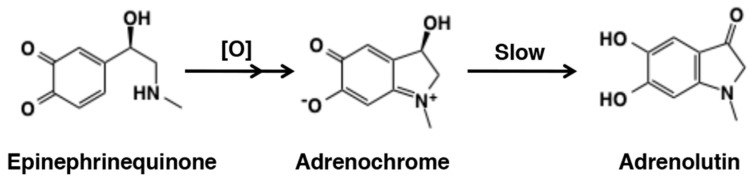
Reaction of epinephrinequinone [190]. The product adrenochrome gradually rearrange to adrenolutin (3,5,6-trihydroxy-N-methylindole).

References

    1. Ito S., Wakamatsu K. Chemistry of mixed melanogenesis—pivotal roles of dopaquinone. Photochem. Photobiol. 2008;84:582–592. doi: 10.1111/j.1751-1097.2007.00238.x. - DOI - PubMed
    1. Zecca L., Bellei C., Costi P., Albertini A., Monzani E., Casella L., Gallorini M., Bergamaschi L., Moscatelli A., Turro N.J., et al. New melanic pigments in the human brain that accumulate in aging and block environmental toxic metals. Proc. Natl. Acad. Sci. USA. 2008;105:17567–17572. doi: 10.1073/pnas.0808768105. - DOI - PMC - PubMed
    1. Zucca F.A., Basso E., Francesca A., Cupaioli F.A., Ferrari E., Sulzer D., Casella L., Zecca L. Neuromelanin of the human substantia nigra: An update. Neurotox. Res. 2014;25:13–23. doi: 10.1007/s12640-013-9435-y. - DOI - PubMed
    1. Waite J.H. Mussel adhesion—Essential footwork. J. Exp. Biol. 2017;220:517–530. doi: 10.1242/jeb.134056. - DOI - PMC - PubMed
    1. Kuang Q.F., Abebe A., Evans J., Sugumaran M. Oxidative transformation of tunichromes—Model studies with 1,2-dehydro-N-acetyldopamine and N-acetylcysteine. Bioorg. Chem. 2017;73:53–62. doi: 10.1016/j.bioorg.2017.05.013. - DOI - PubMed