


SGLT2 Inhibitors and Kidney Outcomes in Patients with Chronic Kidney Disease
- PMID: 32846935
- PMCID: PMC7564486
- DOI: 10.3390/jcm9092723
SGLT2 Inhibitors and Kidney Outcomes in Patients with Chronic Kidney Disease
Abstract
Globally, diabetes mellitus is a leading cause of kidney disease, with a critical percent of patients approaching end-stage kidney disease. In the current era, sodium-glucose co-transporter 2 inhibitors (SGLT2i) have emerged as phenomenal agents in halting the progression of kidney disease. Positive effects of SGLT2i are centered on multiple mechanisms, including glycosuric effects, tubule-glomerular feedback, antioxidant, anti-fibrotic, natriuretic, and reduction in cortical hypoxia, alteration in energy metabolism. Concurrently, multiple kidney and cardiovascular outcome studies have reported remarkable advantages of SGLT2i including mortality benefits. Additionally, the superiority of combination therapies (SGLT2I along with metformin/DDP-4 Inhibitors) in treatment-naïve diabetic patients is further looked into with potential signal towards glycemic and blood pressure control. Reported promising results initiate a gateway for future research targeting kidney outcomes with combination therapies as an initial approach. In the current paper, we summarize leading cardiovascular and kidney outcome trials in patients with type 2 diabetes, the role of SGLT2i in non-diabetic proteinuric kidney disease, and the potential mechanisms of action of SGLT2i with special focus on combination therapy as an initial therapeutic approach in treatment-naïve diabetic patients.
Keywords: Diabetes mellitus; SGLT2; SGLT2i; cardiology; endocrinology; nephrology; sodium glucose co-transporter 2 inhibitors.
Conflict of interest statement
The authors deny any conflict of interest.
Figures
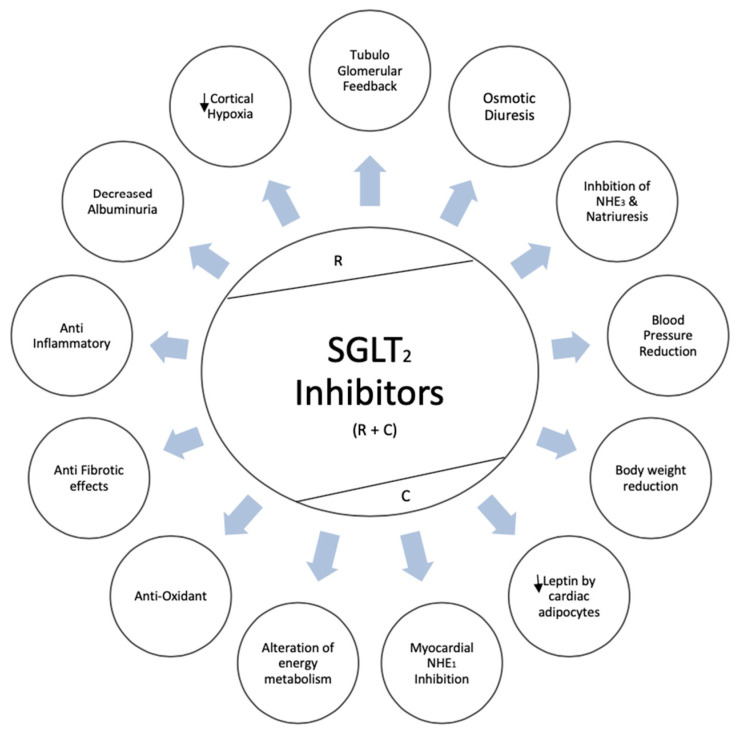
 - decreased.
References
-
- Kaewput W., Thongprayoon C., Rangsin R., Bathini T., Torres-Ortiz A., Mao M.A., Cheungpasitporn W. Incidence and risk factors associated with outpatient hypoglycemia in patients with type 2 diabetes and chronic kidney disease: A nationwide study. Endocr. Res. 2020:1–9. doi: 10.1080/07435800.2020.1792921. - DOI - PubMed
-
- Kaewput W., Thongprayoon C., Chewcharat A., Rangsin R., Satirapoj B., Kaewput C., Suwannahitatorn P., Bathini T., Mao M.A., Cato L.D., et al. Rate of kidney function decline and factors predicting progression of kidney disease in type 2 diabetes mellitus patients with reduced kidney function: A nationwide retrospective cohort study. Ther. Apher.Dial. 2020 doi: 10.1111/1744-9987.13480. - DOI - PubMed
-
- Kaewput W., Thongprayoon C., Varothai N., Sirirungreung A., Rangsin R., Bathini T., Mao M.A., Cheungpasitporn W. Prevalence and associated factors of hospitalization for dysglycemia among elderly type 2 diabetes patients: A nationwide study. World J. Diabetes. 2019;10:212–223. doi: 10.4239/wjd.v10.i3.212. - DOI - PMC - PubMed
Publication types
LinkOut - more resources
Full Text Sources
