


COVID-19 vaccines: ethical framework concerning human challenge studies
- PMID: 32851596
- PMCID: PMC7449865
- DOI: 10.1007/s40199-020-00371-8
COVID-19 vaccines: ethical framework concerning human challenge studies
Abstract
Background: The pandemic associated with the new SARS-CoV-2 coronavirus continues to spread worldwide. The most favorable epidemic control scenario, which provides long-term protection against COVID-19 outbreak, is the development and distribution of an effective and safe vaccine. The need to develop a new COVID-19 vaccine is pressing; however, it is likely to take a long time, possibly several years. This is due to the time required to demonstrate the safety and efficacy of the proposed vaccine. and the time required to manufacture and distribute millions of doses.
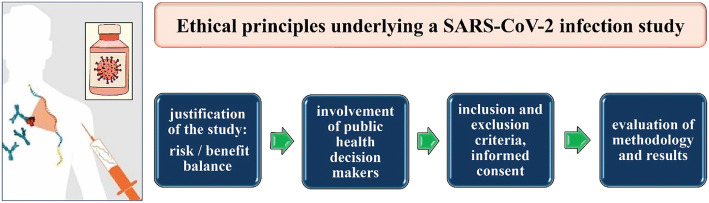
Objectives: To accelerate this development and associated safety testing, the deliberate infection of healthy volunteers has been suggested. The purpose of this short communication is to describe the ethical aspects of this type of testing, RESULTS: Deliberate infection of volunteers with a dangerous virus such as SARS-CoV-2 was initially considered unethical by researchers; but the current pandemic is so different from previous ones that these studies are considered ethical if certain criteria are met. Participants in human challenge studies must be relatively young, in good health and must receive the highest quality medical care, with frequent monitoring. Tests should also be performed with great caution and specialized medical supervision. Besides, the fact that obtaining vaccines faster through deliberate infection studies of healthy people has greater benefits than risks, has been demonstrated by obtaining other vaccines in other historical pandemics such as: smallpox, influenza, malaria, typhoid fever, Dengue fever and Zika.
Conclusions: One possibility to shorten the time required for the development of COVID-19 vaccines is to reduce clinical phases II and III by using human challenge studies through eliberate infection of healthy volunteers with SARS-CoV-2 after administration of the candidate vaccine. Accelerating the development of a COVID-19 vaccine even for a few weeks or months would have a great beneficial impact on public health by saving many lives.
Keywords: COVID-19 vaccines; Human challenge studies; Randomized clinical trials; Risk taking.
Figures
References
-
- Nitulescu G, Paunescu H, Moschos S, Petrakis D, Nitulescu G, Ion GN, Spandidos D, Nikolouzakis T, Drakoulis N, Tsatsakis A. Comprehensive analysis of drugs to treat SARS-CoV-2 infection: mechanistic insights into current COVID-19 therapies (review) Int J Mol Med. 2020;46:467–488. doi: 10.3892/ijmm.2020.4608. - DOI - PMC - PubMed
-
- Tsatsakis A, Petrakis D, Nikolouzakis TK, Docea AO, Calina D, Vinceti M, Goumenou M, Kostoff RN, Mamoulakis C, Aschner M, Hernández AF. COVID-19, an opportunity to reevaluate the correlation between long-term effects of anthropogenic pollutants on viral epidemic/pandemic events and prevalence. Food Chem Toxicol. 2020;141:111418. doi: 10.1016/j.fct.2020.111418. - DOI - PMC - PubMed
-
- Arsene AL, Dumitrescu IB, Dragoi CM, Udeanu DI, Lupuliasa D, Jinga V, et al. A new era for the therapeutic management of the ongoing COVID-19 pandemic. Farmacia. 2020;68:185–196. doi: 10.31925/farmacia.2020.2.1. - DOI
MeSH terms
Substances
LinkOut - more resources
Full Text Sources
Medical
Miscellaneous
