


Measuring health promotion: translating science into policy
- PMID: 32852581
- PMCID: PMC7497380
- DOI: 10.1007/s00394-020-02359-1
Measuring health promotion: translating science into policy
Abstract
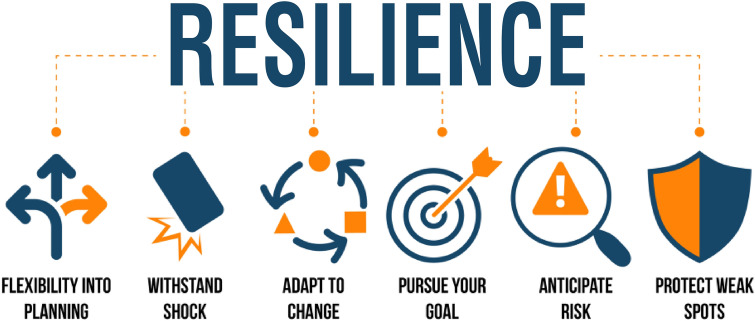
Commonly, it is the end of life when our health is deteriorating, that many will make drastic lifestyle changes to improve their quality of life. However, it is increasingly recognized that bringing good health-promoting behaviors into practice as early in life as possible has the most significant impact across the maximal healthspan. The WHO has brought clarity to health promotion over the last fifteen years, always centering on language relating to a process of enabling people to increase control over, and to improve, their physical, mental and social health. A good healthspan is not just freedom from morbidity and mortality, it is that joie de vivre ("joy of living") that should accompany every day of our lifespan. Therefore, health promotion includes not only the health sector, but also needs individual commitment to achieve that target of a healthspan aligned with the lifespan. This paper explores health promotion and health literacy, and how to design appropriate nutritional studies to characterize contributors to a positive health outcome, the role the human microbiome plays in promoting health and addressing and alleviating morbidity and diseases, and finally how to characterize phenotypic flexibility and a physiologic resilience that we must maintain as our structural and functional systems are bombarded with the insults and perturbations of life.
Keywords: Ageing; Health promotion; Healthspan; Lifespan; Microbiome; Nutrition.
Conflict of interest statement
J de Vries, MI McBurney, S Wopereis and JC Griffiths had their travel expenses reimbursed by CRN-I. DS Marsman and S Serttas are employees of their respective companies, Procter & Gamble Health and Herbalife International. MI McBurney consults for several companies in the field of foods, and food and nutritional ingredients. S Wopereis works for TNO and work was supported by grants to TNO from the Dutch government for several Public Private Partnerships. JC Griffiths is an employee of CRN-International. None of the authors declares any conflict of interest in providing their solely scientific opinion for this review.
Figures
References
-
- Adams SH, Anthony JC, Carvajal R, Chae L, Khoo CSH, Latulippe ME, Matusheski NV, McClung HL, Rozga M, Schmid CH, Wopereis S, Yan W. Perspective: guiding principles for the implementation of personalized nutrition approaches that benefit health and function. Adv Nutr. 2020;11(1):25–34. doi: 10.1093/advances/nmz086. - DOI - PMC - PubMed
-
- Aggett PJ, Hathcock J, Jukes D, Richardson DP, Calder PC, Bischoff-Ferrari H, Nicklas T, Mühlebach S, Kwon O, Lewis J, Lugard MJF, Prock P. Nutrition issues at Codex: health claims, nutrient reference values and WTO agreements: a conference report. Eur J Nutr. 2012;51:S1–7. doi: 10.1007/s00394-012-0306-8. - DOI - PMC - PubMed
MeSH terms
LinkOut - more resources
Full Text Sources
