


Theoretical knowledge and self-assessed ability to perform cardiopulmonary resuscitation: a survey among 3044 healthcare professionals in Sweden
- PMID: 32852925
- PMCID: PMC7448834
- DOI: 10.1097/MEJ.0000000000000692
Theoretical knowledge and self-assessed ability to perform cardiopulmonary resuscitation: a survey among 3044 healthcare professionals in Sweden
Abstract
Objective: Theoretical knowledge and ability to perform cardiopulmonary resuscitation (CPR) are unknown with regard to provided training. The aim of this study was to evaluate in-hospital healthcare professionals' (HCPs) theoretical knowledge of CPR and their self-assessed ability to perform CPR and also to assess possible affecting factors.
Method: A questionnaire was sent to n = 5323 HCPs containing a nine-question knowledge test and a Likert scale measuring self-assessed ability. A factor score of self-assessed ability and a ratio scale of correct answers were dependent variables in multiple linear regression.
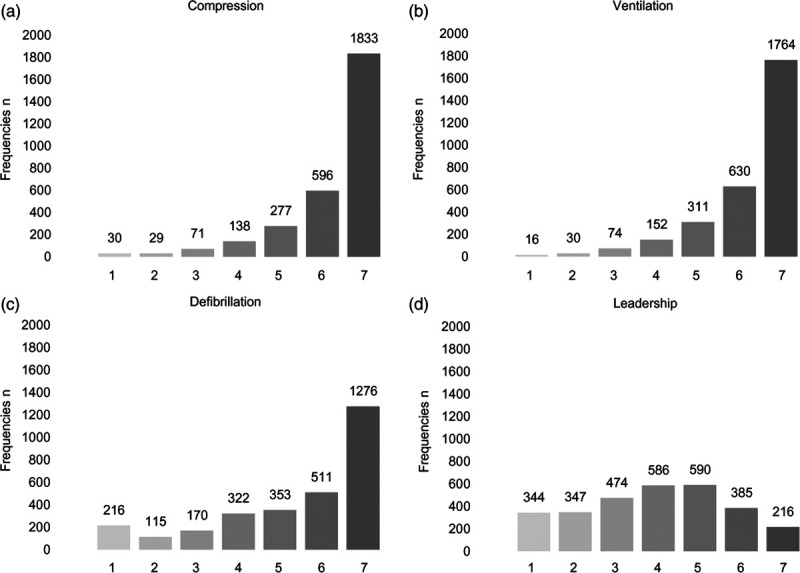
Results: Only 41% of the responding HCPs passed the knowledge test with seven or more correct answers. Nurses had the highest pass rate (50%) and the highest attendance rate at CPR training (56%). The ability to perform defibrillation was strongly agreed by 43% and the ability of leadership by only 7%. Working on a monitored ward, CPR training 0-6 months ago and being a nurse or physician were factors associated with more correct answers and higher ratings of abilities.
Conclusion: The overall theoretical knowledge was poor and ratings of self-assessed abilities to perform CPR were low. Working on a monitored ward, recently attended CPR training and being a nurse or physician were factors associated with higher theoretical knowledge and higher ratings of self-assessed ability to perform CPR. These findings imply prioritisation of CPR training.
Conflict of interest statement
There are no conflicts of interest.
Figures
References
-
- Passali C, Pantazopoulos I, Dontas I, Patsaki A, Barouxis D, Troupis G, Xanthos T. Evaluation of nurses’ and doctors’ knowledge of basic & advanced life support resuscitation guidelines. Nurse Educ Pract. 2011; 11:365–369 - PubMed
-
- Xanthos T, Akrivopoulou A, Pantazopoulos I, Aroni F, Datsis A, Iacovidou N. Evaluation of nurses’ theoretical knowledge in basic life support: a study in a district Greek hospital. Int Emerg Nurs. 2012; 20:28–32 - PubMed
-
- Price CS, Bell SF, Janes SE, Ardagh M. Cardio-pulmonary resuscitation training, knowledge and attitudes of newly-qualified doctors in New Zealand in 2003. Resuscitation. 2006; 68:295–299 - PubMed
-
- Greif R, Lockey AS, Conaghan P, Lippert A, De Vries W, Monsieurs KG; Education and implementation of resuscitation section Collaborators; Collaborators. European Resuscitation Council Guidelines for Resuscitation 2015: section 10. Education and implementation of resuscitation. Resuscitation. 2015; 95:288–301 - PubMed
MeSH terms
LinkOut - more resources
Full Text Sources
Medical
