


Hierarchical Pathways from Sensory Processing to Cognitive, Clinical, and Functional Impairments in Schizophrenia
- PMID: 32856089
- PMCID: PMC7965084
- DOI: 10.1093/schbul/sbaa116
Hierarchical Pathways from Sensory Processing to Cognitive, Clinical, and Functional Impairments in Schizophrenia
Abstract
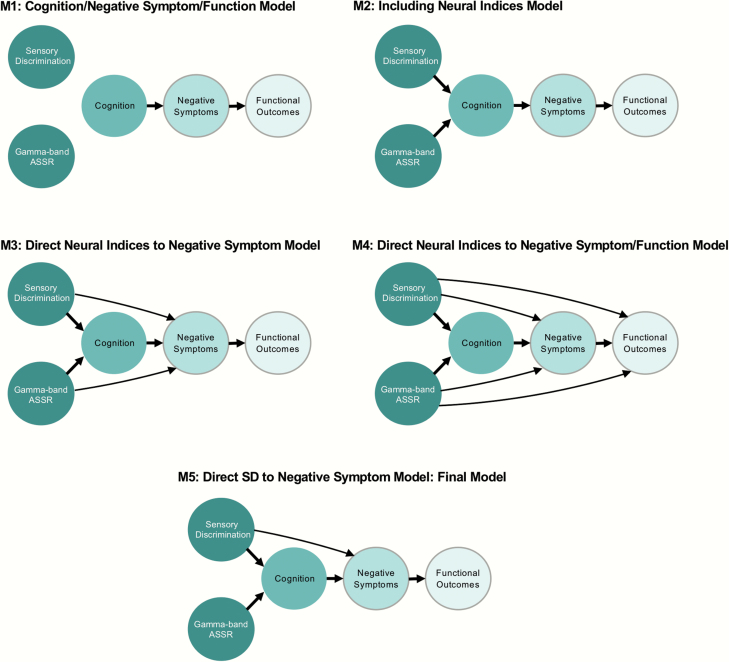
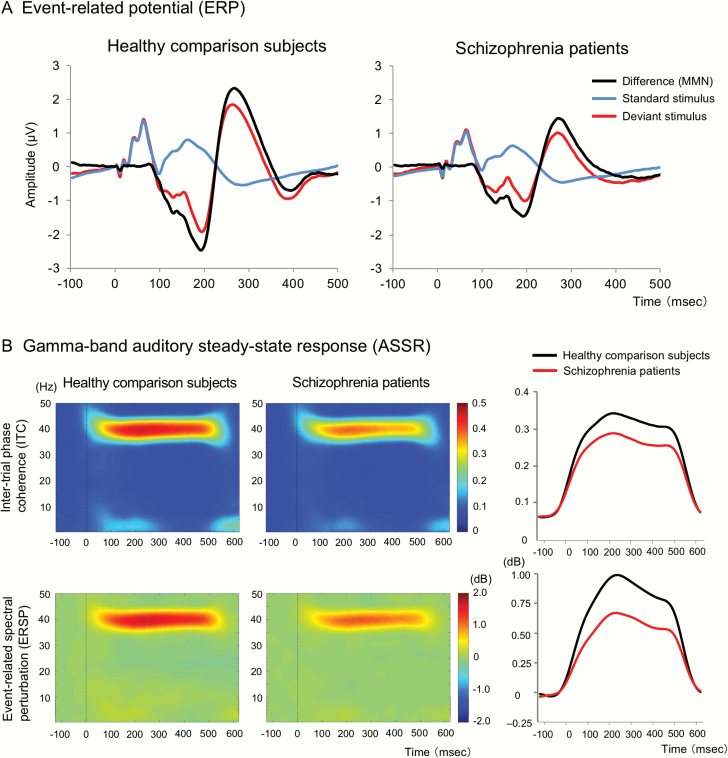
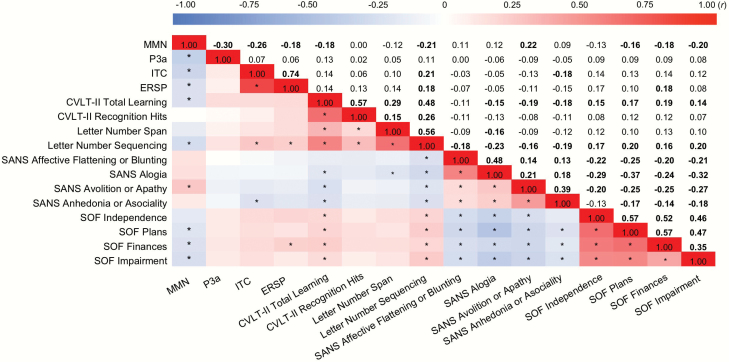
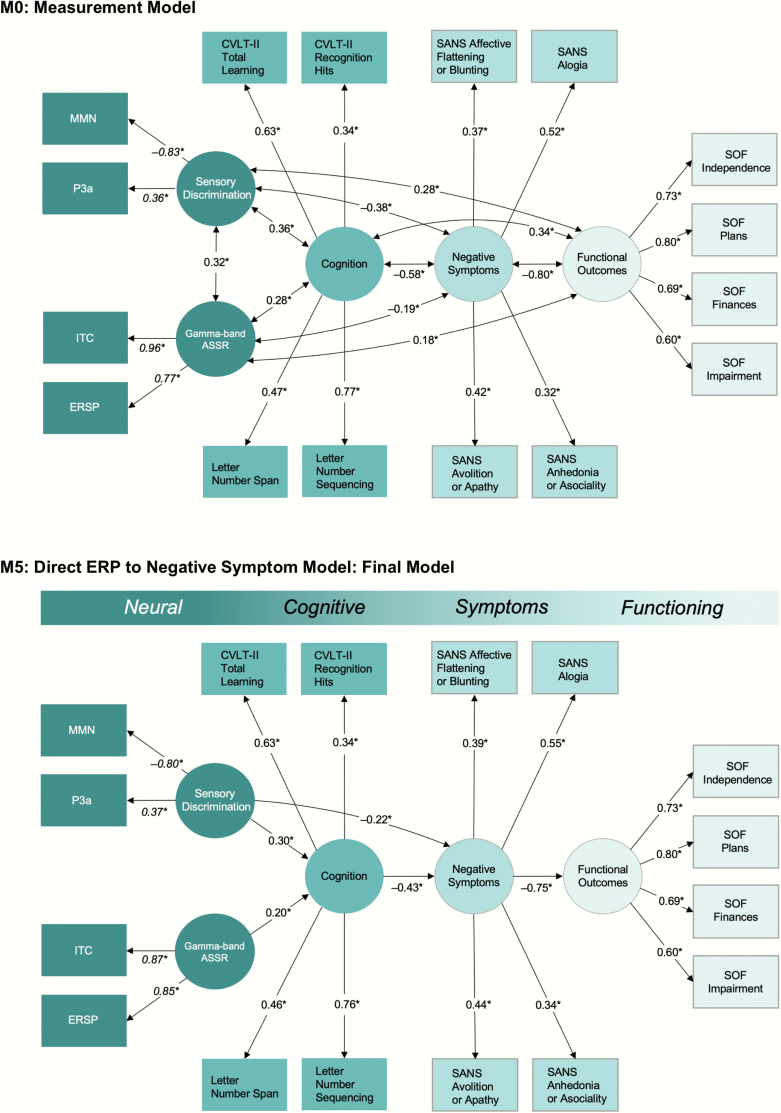
Cognitive impairment is a hallmark of schizophrenia and a robust predictor of functional outcomes. Impairments are found in all phases of the illness and are only moderately attenuated by currently approved therapeutics. Neurophysiological indices of sensory discrimination (ie, mismatch negativity (MMN) and P3a amplitudes) and gamma-band auditory steady-state response (ASSR; power and phase locking) are translational biomarkers widely used in the development of novel therapeutics for neuropsychiatric disorders. It is unclear whether laboratory-based EEG measures add explanatory power to well-established models that use only cognitive, clinical, and functional outcome measures. Moreover, it is unclear if measures of sensory discrimination and gamma-band ASSR uniquely contribute to putative causal pathways linking sensory discrimination, neurocognition, negative symptoms, and functional outcomes in schizophrenia. To answer these questions, hierarchical associations among sensory processing, neurocognition, clinical symptoms, and functional outcomes were assessed via structural equation modeling in a large sample of schizophrenia patients (n = 695) and healthy comparison subjects (n = 503). The results showed that the neurophysiologic indices of sensory discrimination and gamma-band ASSR both significantly contribute to and yield unique hierarchical, "bottom-up" effects on neurocognition, symptoms, and functioning. Measures of sensory discrimination showed direct effects on neurocognition and negative symptoms, while gamma-band ASSR had a direct effect on neurocognition in patients. Continued investigation of the neural mechanisms underlying abnormal networks of MMN/P3a and gamma-band ASSR is needed to clarify the pathophysiology of schizophrenia and the development of novel therapeutic interventions.
Keywords: cognitive function; functional outcomes; gamma-band auditory steady-state response (ASSR); mismatch negativity (MMN); schizophrenia.
© The Author(s) 2020. Published by Oxford University Press on behalf of the Maryland Psychiatric Research Center. All rights reserved. For permissions, please email: journals.permissions@oup.com.
Figures
References
-
- Green MF. What are the functional consequences of neurocognitive deficits in schizophrenia? Am J Psychiatry. 1996;153(3):321–330. - PubMed
-
- Green MF, Kern RS, Braff DL, Mintz J. Neurocognitive deficits and functional outcome in schizophrenia: are we measuring the “right stuff”? Schizophr Bull. 2000;26(1):119–136. - PubMed
-
- Lieberman JA, Perkins D, Belger A, et al. The early stages of schizophrenia: speculations on pathogenesis, pathophysiology, and therapeutic approaches. Biol Psychiatry. 2001;50(11):884–897. - PubMed
