


Gaining "The Quarantine 15:" Perceived versus observed weight changes in college students in the wake of COVID-19
- PMID: 32856752
- PMCID: PMC7461524
- DOI: 10.1002/eat.23375
Gaining "The Quarantine 15:" Perceived versus observed weight changes in college students in the wake of COVID-19
Abstract
Objective: Amidst restrictions to reduce the spread of COVID-19, jokes have surfaced regarding weight gain during the pandemic. The current study documents perceived changes since COVID-19 and compares these to observed longitudinal changes in reported weight, BMI, and how college students described their weight from January to April 2020.
Method: Undergraduates (N = 90; 88% female) completed on-line assessments before and after students were required to leave campus due to COVID-19. Time 1 and Time 2 surveys collected demographic information, height, weight, and a Likert-scale rating to describe perceived weight, ranging from 1 = very underweight to 5 = very overweight (weight description). Time 2 surveys added questions for perceived changes since COVID-19 in body weight, eating, physical activity, various forms of screen time, and concerns about weight, shape, and eating.
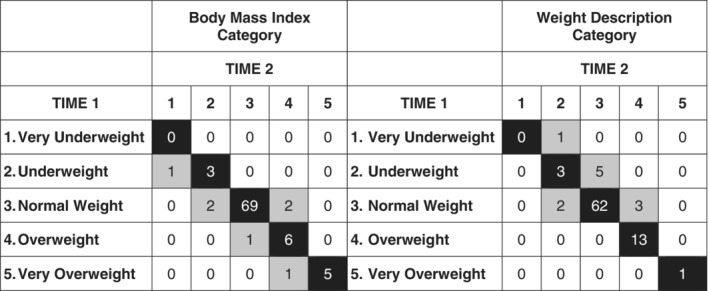
Results: Time 2 surveys indicated perceived increases in body weight, eating, and screen time, and decreases in physical activity along with increased concerns about weight, shape and eating since COVID-19. Longitudinal data indicated no significant change in weight, body mass index (BMI), or BMI category, but how participants described their weight changed significantly from January to April 2020. Compared to longitudinal changes in BMI category, students' weight description was significantly more likely to fall into a higher category from Time 1 to Time 2.
Discussion: Shifts in how body weight is experienced in the wake of COVID-19 that do not align with observed changes in reported weight may reflect cognitive distortions that could increase risk for disordered eating in some individuals.
Keywords: COVID-19; body mass index; eating concerns; weight concerns; weight gain.
© 2020 Wiley Periodicals LLC.
Conflict of interest statement
The authors declare that there is no conflict of interest that could be perceived as prejudicing the impartiality of the research reported.
Figures
References
-
- American Psychiatric Association . (2013). Diagnostic and statistical manual of mental disorders fifth edition (DSM‐5). Arlington, VA: American Psychiatric Association.
Publication types
MeSH terms
Grants and funding
LinkOut - more resources
Full Text Sources
Miscellaneous
