Mechanisms of Environment-Induced Autoimmunity
- PMID: 32857688
- PMCID: PMC8166384
- DOI: 10.1146/annurev-pharmtox-031320-111453
Mechanisms of Environment-Induced Autoimmunity
Abstract
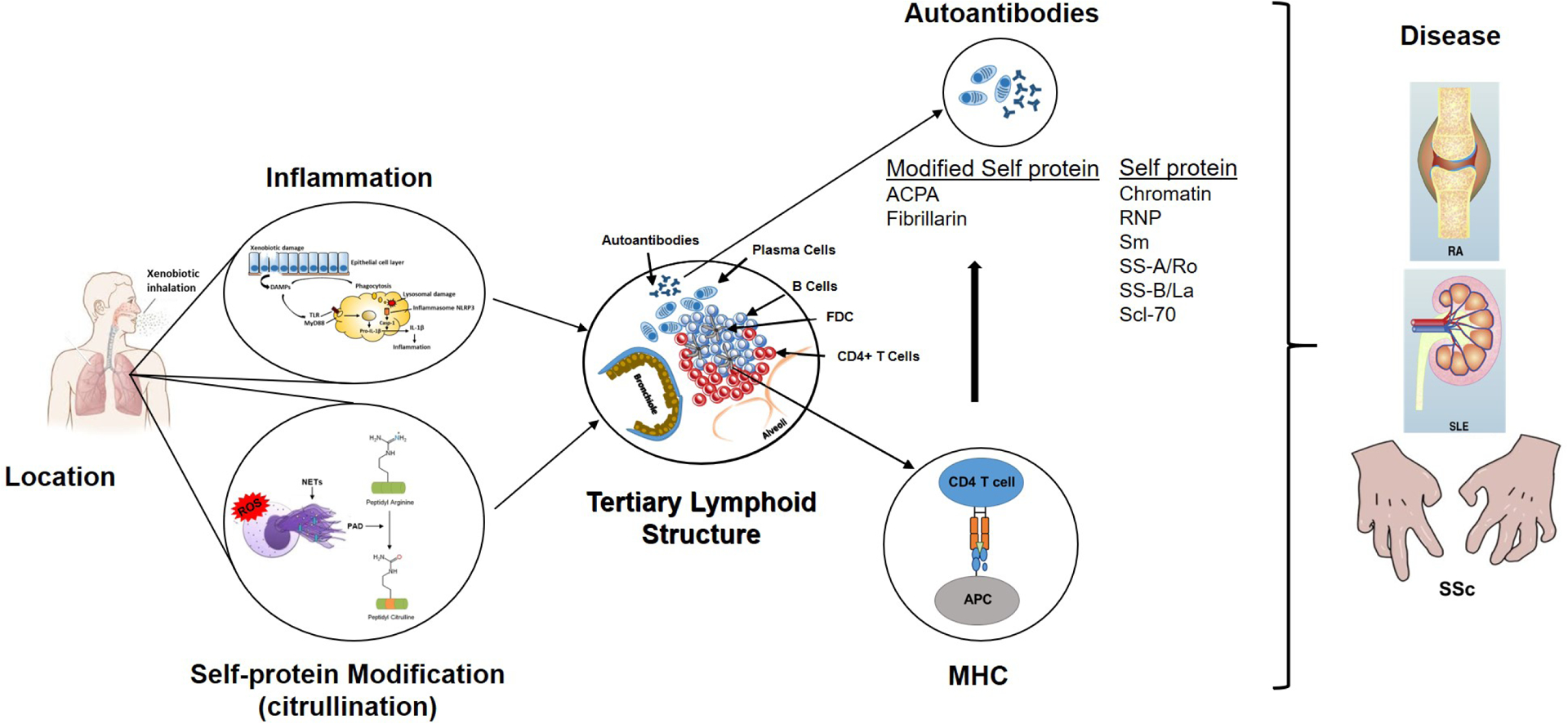
Although numerous environmental exposures have been suggested as triggers for preclinical autoimmunity, only a few have been confidently linked to autoimmune diseases. For disease-associated exposures, the lung is a common site where chronic exposure results in cellular toxicity, tissue damage, inflammation, and fibrosis. These features are exacerbated by exposures to particulate material, which hampers clearance and degradation, thus facilitating persistent inflammation. Coincident with exposure and resulting pathological processes is the posttranslational modification of self-antigens, which, in concert with the formation of tertiary lymphoid structures containing abundant B cells, is thought to promote the generation of autoantibodies that in some instances demonstrate major histocompatibility complex restriction. Under appropriate gene-environment interactions, these responses can have diagnostic specificity. Greater insight into the molecular and cellular requirements governing this process, especially those that distinguish preclinical autoimmunity from clinical autoimmunedisease, may facilitate determination of the significance of environmental exposures in human autoimmune disease.
Keywords: adaptive; animal model; autoimmunity; environment; inflammation; innate; xenobiotic.
Figures
References
-
- Crowe W, Allsopp PJ, Watson GE, Magee PJ, Strain JJ, et al. 2017. Mercury as an environmental stimulus in the development of autoimmunity - A systematic review. Autoimmun Rev 16:72–80 - PubMed
Publication types
MeSH terms
Substances
Grants and funding
LinkOut - more resources
Full Text Sources
Other Literature Sources
Medical