


Nano-Vesicle (Mis)Communication in Senescence-Related Pathologies
- PMID: 32859053
- PMCID: PMC7564330
- DOI: 10.3390/cells9091974
Nano-Vesicle (Mis)Communication in Senescence-Related Pathologies
Abstract
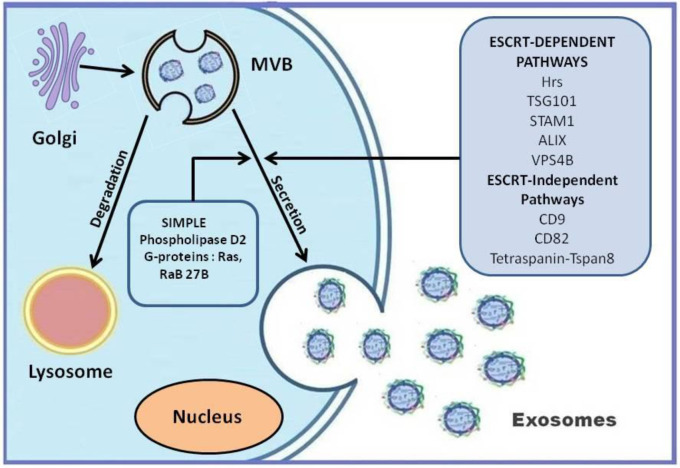
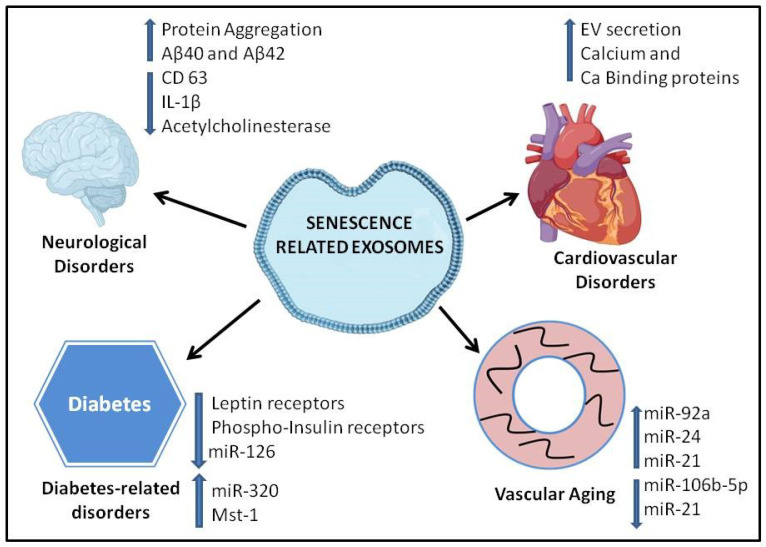
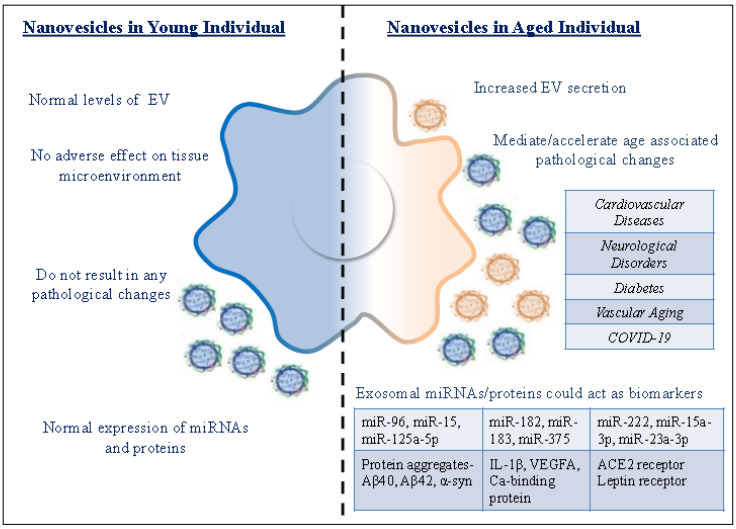
Extracellular vesicles are a heterogeneous group of cell-derived membranous structures comprising of exosomes, apoptotic bodies, and microvesicles. Of the extracellular vesicles, exosomes are the most widely sorted and extensively explored for their contents and function. The size of the nanovesicular structures (exosomes) range from 30 to 140 nm and are present in various biological fluids such as saliva, plasma, urine etc. These cargo-laden extracellular vesicles arise from endosome-derived multivesicular bodies and are known to carry proteins and nucleic acids. Exosomes are involved in multiple physiological and pathological processes, including cellular senescence. Exosomes mediate signaling crosstalk and play a critical role in cell-cell communications. Exosomes have evolved as potential biomarkers for aging-related diseases. Aging, a physiological process, involves a progressive decline of function of organs with a loss of homeostasis and increasing probability of illness and death. The review focuses on the classic view of exosome biogenesis, biology, and age-associated changes. Owing to their ability to transport biological information among cells, the review also discusses the interplay of senescent cell-derived exosomes with the aging process, including the susceptibility of the aging population to COVID-19 infections.
Keywords: COVID-19; aging; exosomes; extracellular vesicles; miRNA.
Conflict of interest statement
The named authors have no conflict of interest, financial or otherwise.
Figures
References
-
- van der Pol E., Coumans F.A.W., Grootemaat A.E., Gardiner C., Sargent I.L., Harrison P., Sturk A., van Leeuwen T.G., Nieuwland R. Particle size distribution of exosomes and microvesicles determined by transmission electron microscopy, flow cytometry, nanoparticle tracking analysis, and resistive pulse sensing. J. Thromb. Haemost. 2014;12:1182–1192. doi: 10.1111/jth.12602. - DOI - PubMed
Publication types
MeSH terms
Substances
Grants and funding
LinkOut - more resources
Full Text Sources
Medical
