Antigen processing and presentation in cancer immunotherapy
- PMID: 32859742
- PMCID: PMC7454179
- DOI: 10.1136/jitc-2020-001111
Antigen processing and presentation in cancer immunotherapy
Abstract
Background: Knowledge about and identification of T cell tumor antigens may inform the development of T cell receptor-engineered adoptive cell transfer or personalized cancer vaccine immunotherapy. Here, we review antigen processing and presentation and discuss limitations in tumor antigen prediction approaches.
Methods: Original articles covering antigen processing and presentation, epitope discovery, and in silico T cell epitope prediction were reviewed.
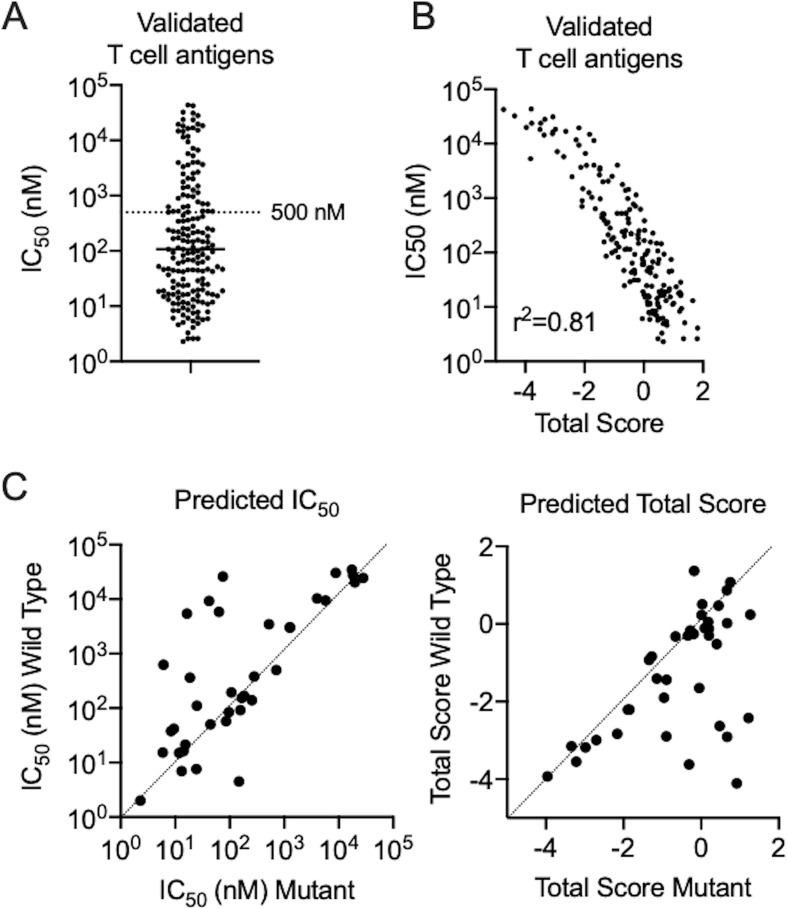
Results: Natural processing and presentation of antigens is a complex process that involves proteasomal proteolysis of parental proteins, transportation of digested peptides into the endoplasmic reticulum, loading of peptides onto major histocompatibility complex (MHC) class I molecules, and shuttling of peptide:MHC complexes to the cell surface. A number of T cell tumor antigens have been experimentally validated in patients with cancer. Assessment of predicted MHC class I binding and total score for these validated T cell antigens demonstrated a wide range of values, with nearly one-third of validated antigens carrying an IC50 of greater than 500 nM.
Conclusions: Antigen processing and presentation is a complex, multistep process. In silico epitope prediction techniques can be a useful tool, but comprehensive experimental testing and validation on a patient-by-patient basis may be required to reliably identify T cell tumor antigens.
Keywords: T-lymphocytes; antigen presentation; antigens; immunotherapy; neoplasm.
© Author(s) (or their employer(s)) 2020. Re-use permitted under CC BY-NC. No commercial re-use. See rights and permissions. Published by BMJ.
Conflict of interest statement
Competing interests: None declared.
Figures
References
-
- Burtness B, Harrington KJ, Greil R, et al. . Pembrolizumab alone or with chemotherapy versus cetuximab with chemotherapy for recurrent or metastatic squamous cell carcinoma of the head and neck (KEYNOTE-048): a randomised, open-label, phase 3 study. Lancet 2019;394:1915–28. 10.1016/S0140-6736(19)32591-7 - DOI - PubMed
Publication types
MeSH terms
Grants and funding
LinkOut - more resources
Full Text Sources
Other Literature Sources
Medical
Research Materials