


Incorporating hydrology into climate suitability models changes projections of malaria transmission in Africa
- PMID: 32859908
- PMCID: PMC7455692
- DOI: 10.1038/s41467-020-18239-5
Incorporating hydrology into climate suitability models changes projections of malaria transmission in Africa
Abstract
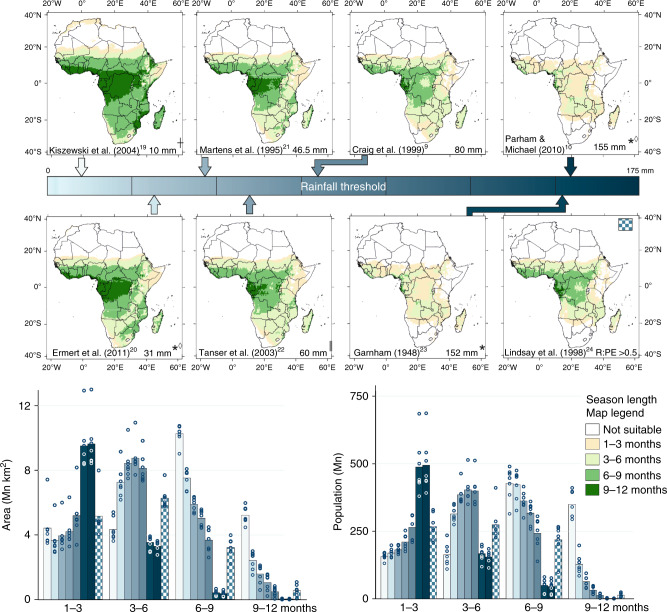
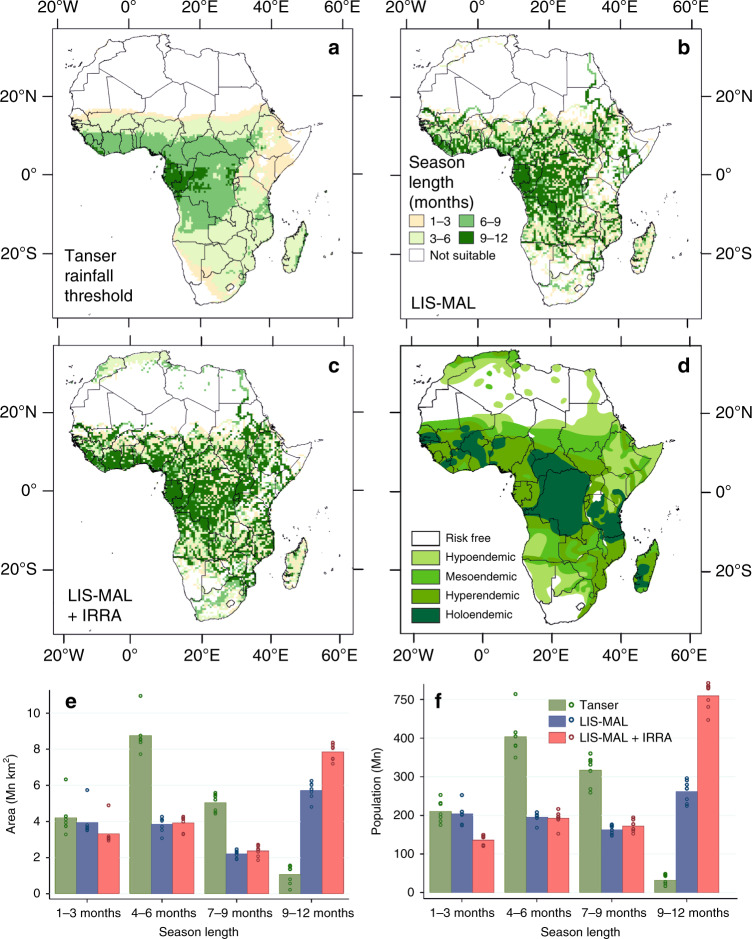
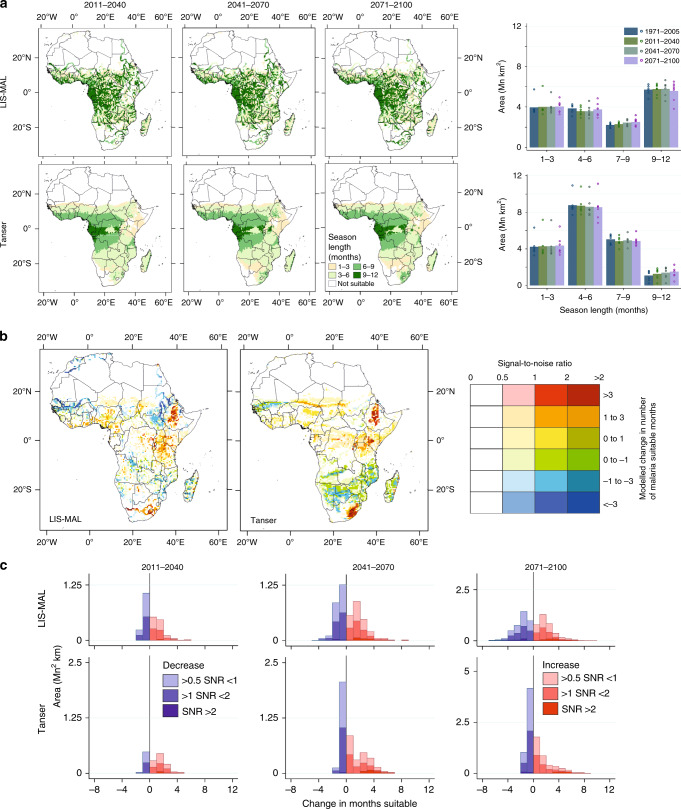
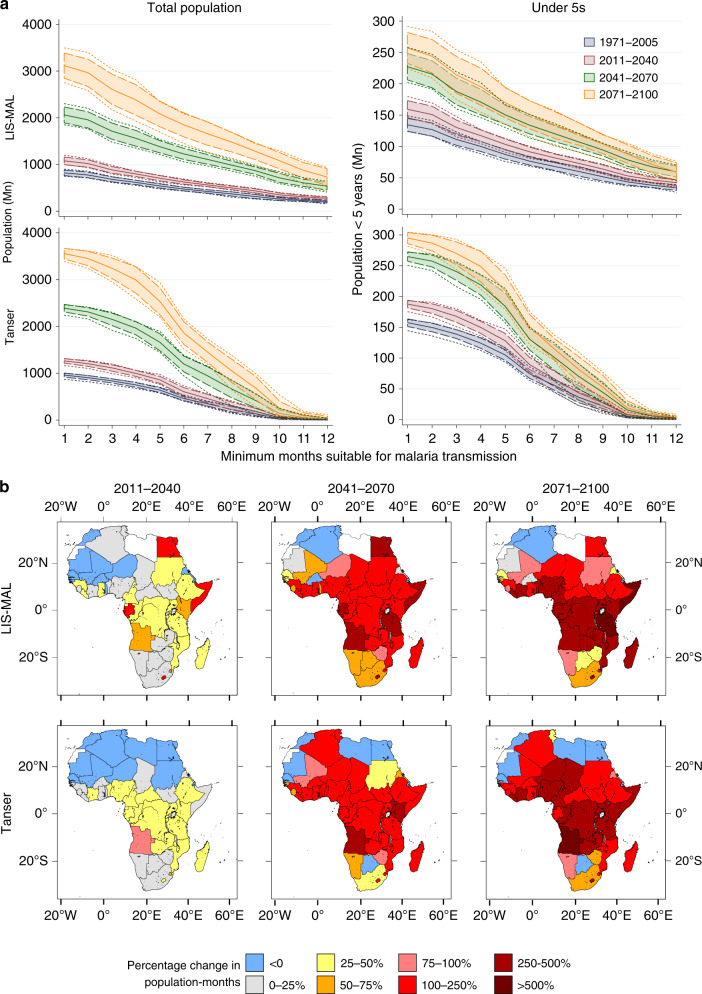
Continental-scale models of malaria climate suitability typically couple well-established temperature-response models with basic estimates of vector habitat availability using rainfall as a proxy. Here we show that across continental Africa, the estimated geographic range of climatic suitability for malaria transmission is more sensitive to the precipitation threshold than the thermal response curve applied. To address this problem we use downscaled daily climate predictions from seven GCMs to run a continental-scale hydrological model for a process-based representation of mosquito breeding habitat availability. A more complex pattern of malaria suitability emerges as water is routed through drainage networks and river corridors serve as year-round transmission foci. The estimated hydro-climatically suitable area for stable malaria transmission is smaller than previous models suggest and shows only a very small increase in state-of-the-art future climate scenarios. However, bigger geographical shifts are observed than with most rainfall threshold models and the pattern of that shift is very different when using a hydrological model to estimate surface water availability for vector breeding.
Conflict of interest statement
The authors declare no competing interests.
Figures
References
-
- World Health Organisation. World Malaria Report 2018 (World Health Organization, Geneva, 2018).
-
- Jepson WF, Moutia A, Courtois C. The malaria problem in Mauritius: the binomics of Mauritian anophelines. Bull. Entomol. Res. 1947;38:177–208. - PubMed
Publication types
MeSH terms
LinkOut - more resources
Full Text Sources
Medical
