


Donor myeloid derived suppressor cells (MDSCs) prolong allogeneic cardiac graft survival through programming of recipient myeloid cells in vivo
- PMID: 32859934
- PMCID: PMC7455707
- DOI: 10.1038/s41598-020-71289-z
Donor myeloid derived suppressor cells (MDSCs) prolong allogeneic cardiac graft survival through programming of recipient myeloid cells in vivo
Abstract
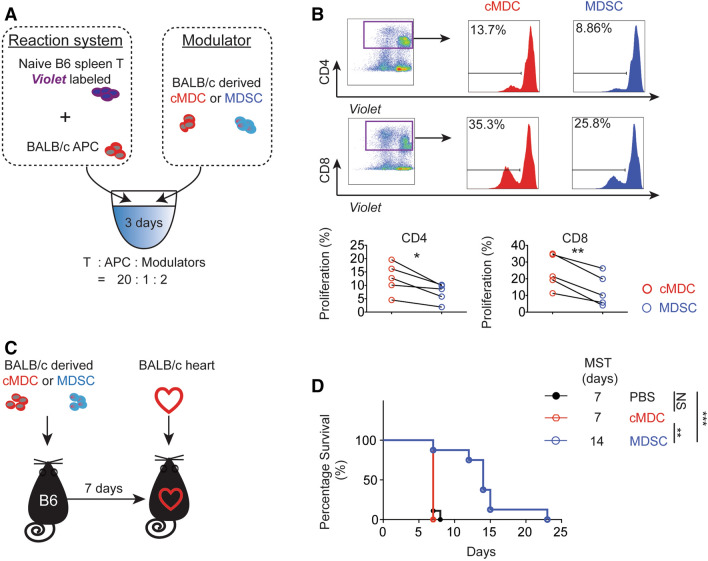
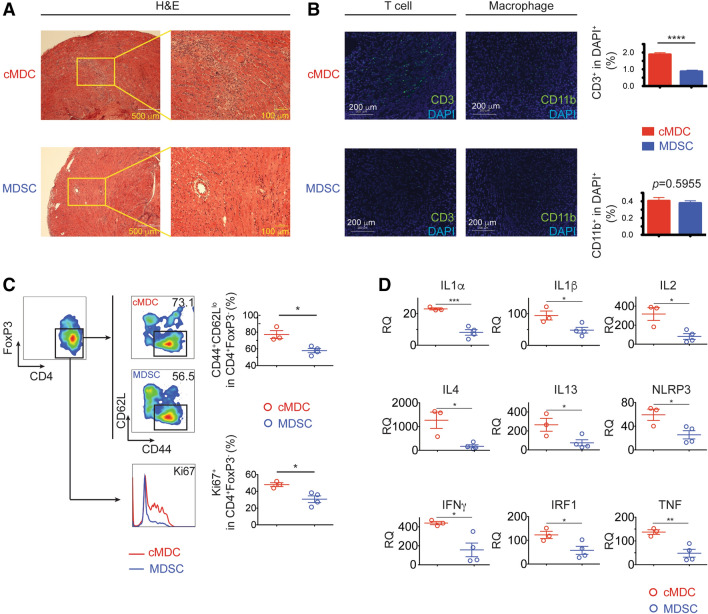
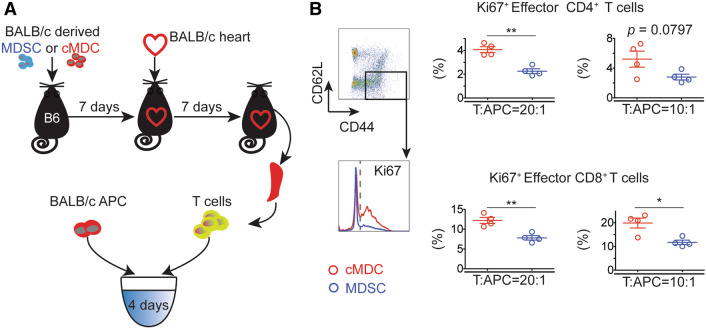
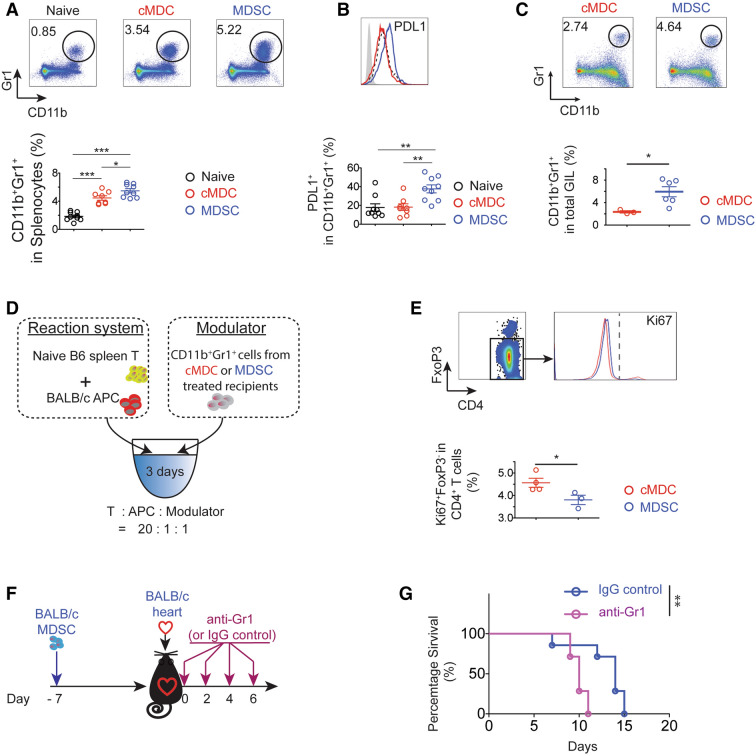
Solid organ transplantation is a lifesaving therapy for patients with end-organ disease. Current immunosuppression protocols are not designed to target antigen-specific alloimmunity and are uncapable of preventing chronic allograft injury. As myeloid-derived suppressor cells (MDSCs) are potent immunoregulatory cells, we tested whether donor-derived MDSCs can protect heart transplant allografts in an antigen-specific manner. C57BL/6 (H2Kb, I-Ab) recipients pre-treated with BALB/c MDSCs were transplanted with either donor-type (BALB/c, H2Kd, I-Ad) or third-party (C3H, H2Kk, I-Ak) cardiac grafts. Spleens and allografts from C57BL/6 recipients were harvested for immune phenotyping, transcriptomic profiling and functional assays. Single injection of donor-derived MDSCs significantly prolonged the fully MHC mismatched allogeneic cardiac graft survival in a donor-specific fashion. Transcriptomic analysis of allografts harvested from donor-derived MDSCs treated recipients showed down-regulated proinflammatory cytokines. Immune phenotyping showed that the donor MDSCs administration suppressed effector T cells in recipients. Interestingly, significant increase in recipient endogenous CD11b+Gr1+ MDSC population was observed in the group treated with donor-derived MDSCs compared to the control groups. Depletion of this endogenous MDSCs with anti-Gr1 antibody reversed donor MDSCs-mediated allograft protection. Furthermore, we observed that the allogeneic mixed lymphocytes reaction was suppressed in the presence of CD11b+Gr1+ MDSCs in a donor-specific manner. Donor-derived MDSCs prolong cardiac allograft survival in a donor-specific manner via induction of recipient's endogenous MDSCs.
Conflict of interest statement
The authors declare no competing interests.
Figures


References
-
- Hart A, Smith JM, Skeans MA, Gustafson SK, Wilk AR, Castro S, Robinson A, Wainright JL, Snyder JJ, Kasiske BL, Israni AK. OPTN/SRTR 2017 annual data report: kidney. Am. J. Transplant. 2019;19(Suppl 2):19–123. - PubMed
-
- Kim WR, Lake JR, Smith JM, Schladt DP, Skeans MA, Noreen SM, Robinson AM, Miller E, Snyder JJ, Israni AK, Kasiske BL. OPTN/SRTR 2017 annual data report: liver. Am. J. Transplant. 2019;19(Suppl 2):184–283. - PubMed
-
- Valapour M, Lehr CJ, Skeans MA, Smith JM, Uccellini K, Lehman R, Robinson A, Israni AK, Snyder JJ, Kasiske BL. OPTN/SRTR 2017 annual data report: lung. Am. J. Transplant. 2019;19(Suppl 2):404–484. - PubMed
-
- Colvin M, Smith JM, Hadley N, Skeans MA, Uccellini K, Lehman R, Robinson AM, Israni AK, Snyder JJ, Kasiske BL. OPTN/SRTR 2017 annual data report: heart. Am. J. Transplant. 2019;19(Suppl 2):323–403. - PubMed
-
- Kandaswamy R, Stock PG, Gustafson SK, Skeans MA, Urban R, Fox A, Odorico JS, Israni AK, Snyder JJ, Kasiske BL. OPTN/SRTR 2017 annual data report: pancreas. Am. J. Transplant. 2019;19(Suppl 2):124–183. - PubMed
Publication types
MeSH terms
Grants and funding
LinkOut - more resources
Full Text Sources
Medical
Research Materials
