


Recently acquired infection among HIV-seropositive donors in the US from 2010-2018
- PMID: 32860262
- PMCID: PMC11630110
- DOI: 10.1111/trf.16032
Recently acquired infection among HIV-seropositive donors in the US from 2010-2018
Abstract
Background: Monitoring of transfusion-transmissible infections in the blood supply is essential for blood safety, as the donor population is not static, and changes in policy, donor behavior, or other factors could increase the risk of recipient infection. We assessed patterns of recently acquired HIV infection in US blood donors, including before and after the implementation of the 12-month deferral for men who have sex with men (MSM).
Study design and methods: A large convenience sample of donations from donors testing HIV-1 nucleic acid testing (NAT) and serology-reactive were further tested with the Sedia HIV-1 Limiting Antigen enzyme immunoassay. Samples were analyzed across available demographic and donation data to provide an assessment of recently acquired HIV infection in US blood donors from 2010 to 2018.
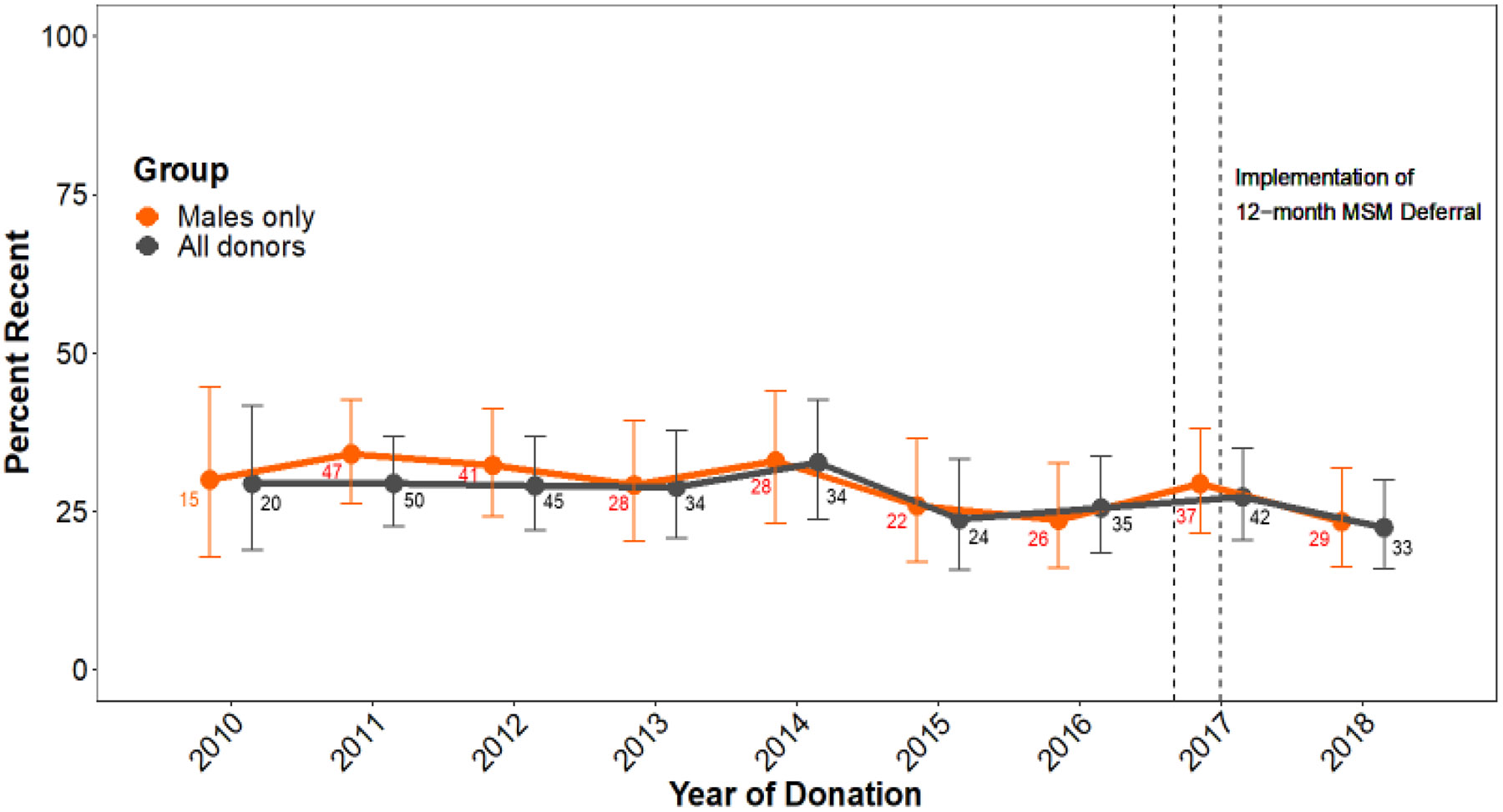
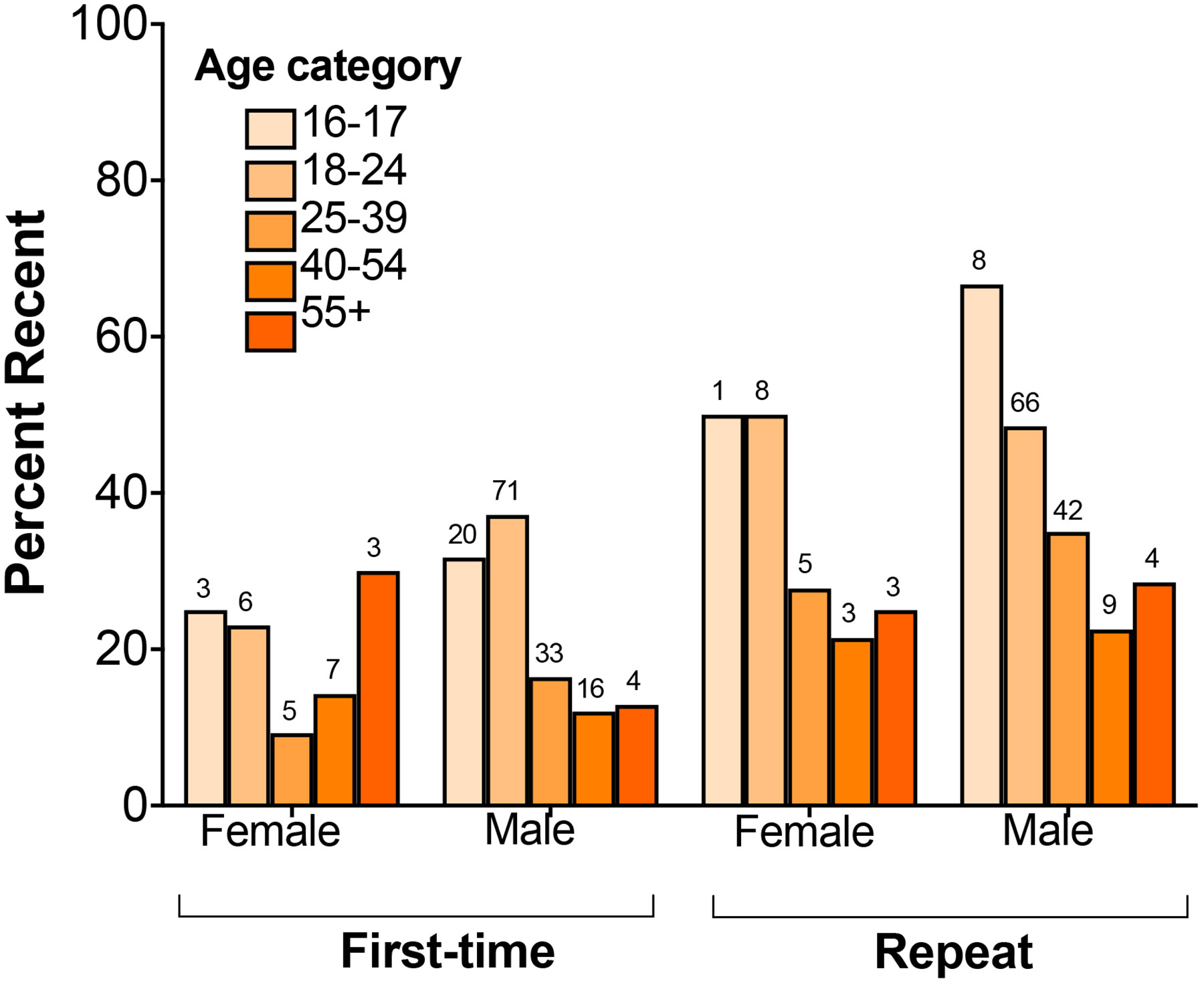
Results: Overall, 317 of 1154 (27.5%; 95% confidence interval, 24.9%-30.1%) donations from HIV NAT and serology-reactive donors had recently acquired HIV infection. There was no evidence of change in the percentages of recent HIV infection by year over the study period, either in all donors or in male donors, including after the MSM policy change. In multivariable logistic regression analysis, donors aged 24 years or younger were over 2.7 times more likely and repeat donors 2.2 times more likely to have recently acquired HIV infection compared to donors aged 55 years or older and first-time donors, respectively.
Conclusion: Patterns of recently acquired HIV infection varied by demographics but not over time. These findings suggest no impact of the MSM policy change on recently acquired HIV infection in US blood donors.
© 2020 AABB.
Conflict of interest statement
Figures
References
-
- AuBuchon JP. Safety of the Blood Supply in the United States: Opportunities and Controversies. Annals of Internal Medicine 1997;127: 904. - PubMed
-
- Dodd RY, Notari EP, Stramer SL. Current prevalence and incidence of infectious disease markers and estimated window-period risk in the American Red Cross blood donor population. Transfusion 2002;42: 975–9. - PubMed
-
- Centers for Disease Control and Prevention. HIV Transmission Through Transfusion — Missouri and Colorado, 2008. Morbidity and Mortality Weekly Report (MMWR) 2010;59: 1335. - PubMed
-
- Seed CR, Yang H, Lee JF. Blood safety implications of donors using HIV pre-exposure prophylaxis. Vox Sang 2017;112: 473–6. - PubMed
