


Sunlight ultraviolet radiation dose is negatively correlated with the percent positive of SARS-CoV-2 and four other common human coronaviruses in the U.S
- PMID: 32861186
- PMCID: PMC7437529
- DOI: 10.1016/j.scitotenv.2020.141816
Sunlight ultraviolet radiation dose is negatively correlated with the percent positive of SARS-CoV-2 and four other common human coronaviruses in the U.S
Abstract
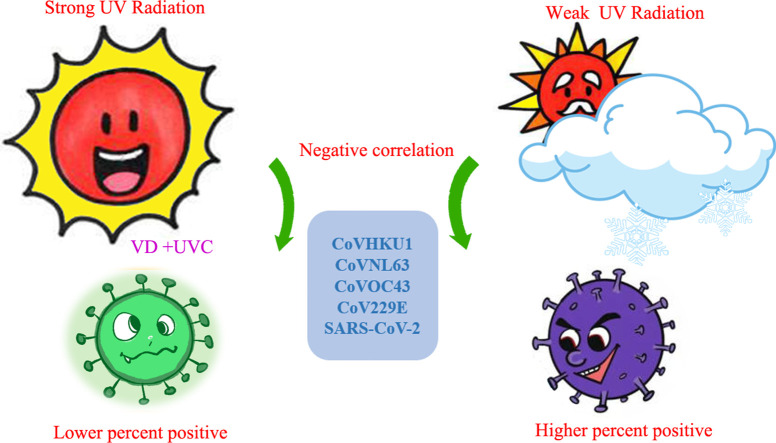
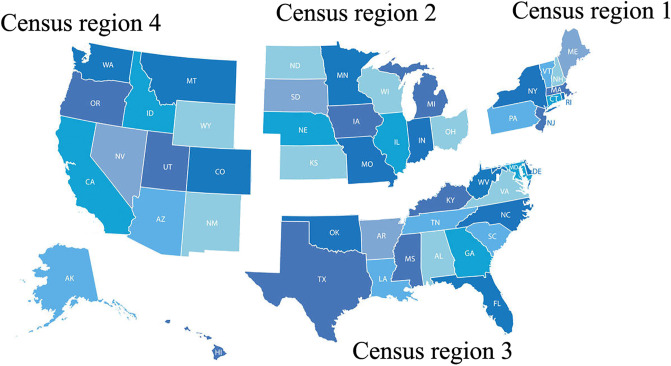
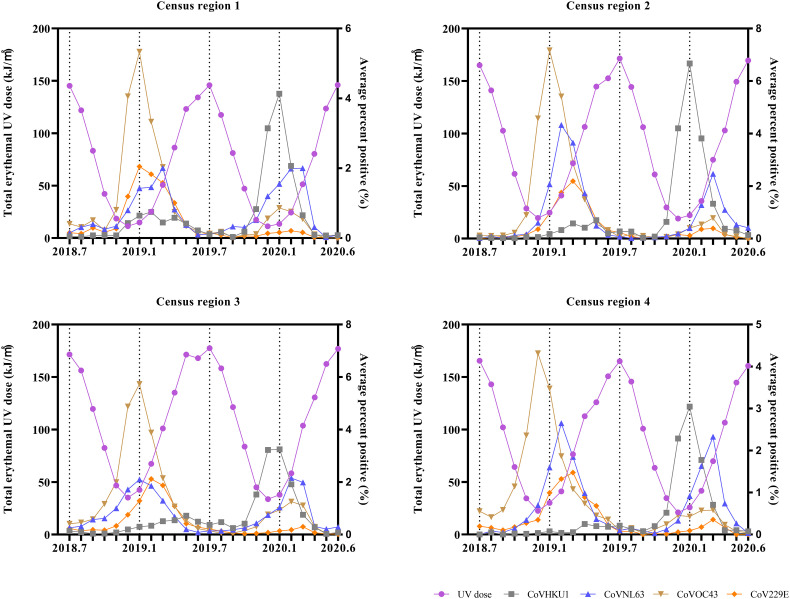
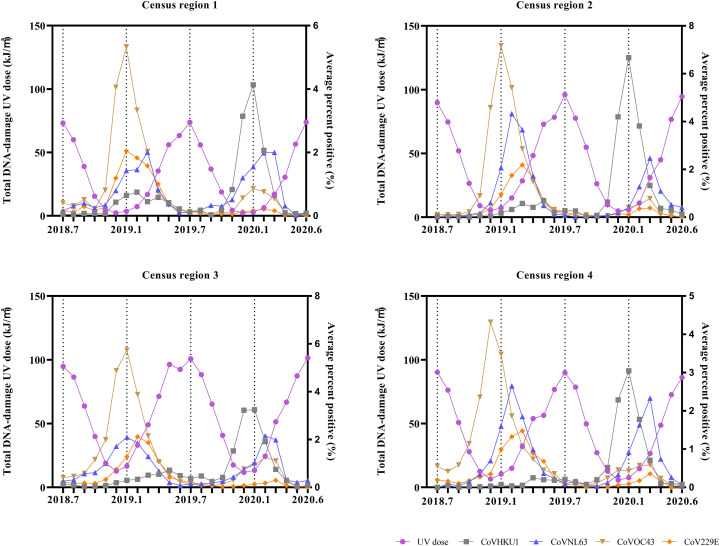
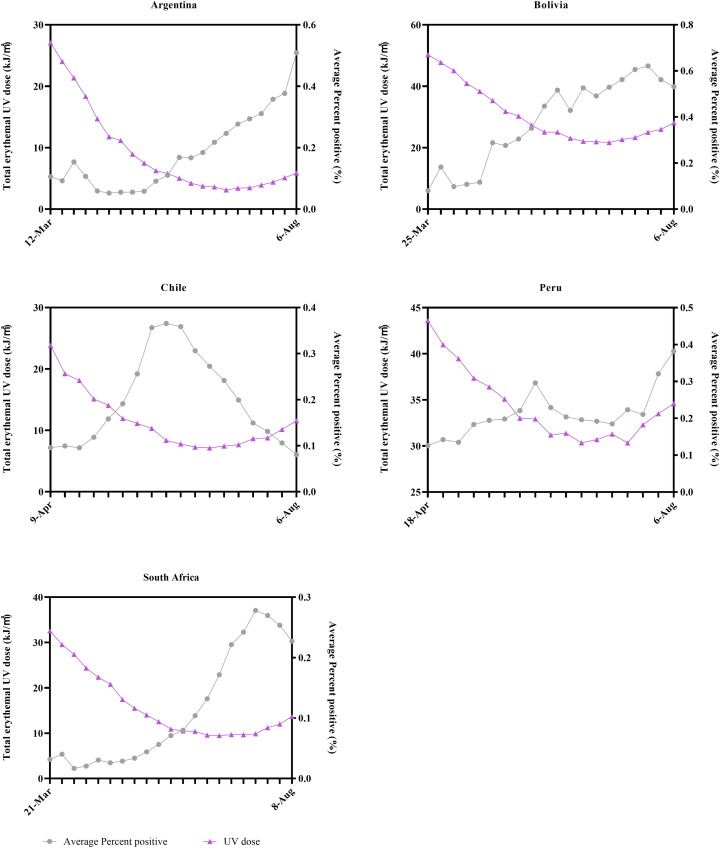
Human coronaviruses are RNA viruses that are sensitive to ultraviolet (UV) radiation. Sunlight contains UVA (320-400 nm), UVB (260-320 nm) and UVC (200-260 nm) action spectra. UVC can inactivate coronaviruses, including severe acute respiratory syndrome-coronavirus-2 (SARS-CoV-2). The incidence and mortality of coronavirus disease 2019 (COVID-19) are considered to be correlated with vitamin D levels. Vitamin D synthesis in human skin is closely related to exposure to UVB radiation. Therefore, the incidence and mortality of COVID-19 are also considered to be correlated with Vitamin D levels. In this study, Spearman and Kendall rank correlation analysis tests were used to analyze the correlation between the average percent positive of five human coronaviruses (SARS-CoV-2, CoVHKU1, CoVNL63, CoVOC43, and CoV229E) in the U.S. and the corresponding sunlight UV radiation dose The results indicated that the monthly average percent positive of four common coronaviruses was significantly negatively correlated with the sunlight UV radiation dose. The weekly percent positive of SARS-CoV-2 during April 17, 2020 to July 10, 2020 showed a significant negative correlation with the sunlight UV radiation dose in census regions 1 and 2 of the U.S. while no statistical significance in the other regions. Additionally, sunlight UV radiation also showed some negative effects with respect to the early SARS-CoV-2 transmission.
Keywords: COVID-19; Correlation; Human coronaviruses; Sunlight UV radiation.
Copyright © 2020 Elsevier B.V. All rights reserved.
Conflict of interest statement
Declaration of competing interest We declare that we have no financial and personal relationships with other people or organizations that can inappropriately influence our work, there is no professional or other personal interest of any nature or kind in any product, service and/or company that could be construed as influencing the position presented in, or the review of, the manuscript entitled.
Figures
References
-
- Babu S.R., Rao N.N., Kumar S.V., Paul S., Pani S.K. Plausible role of environmental factors on COVID-19 transmission in the Megacity Delhi, India. Aerosol Air Qual. Res. 2020;20
-
- Bonett D.G., Wright T.A. Sample size requirements for estimating Pearson, Kendall and Spearman correlations. Psychometrika. 2000;65:23–28.
-
- Dalmay F., Preux P.M., Druet-Cabanac M., Vergnenegre A. What is a non-parametric test? Rev. Mal. Respir. 2003;20:955–958. - PubMed
-
- Duan S.M., Zhao X.S., Wen R.F., Huang J.J., Pi G.H., Zhang S.X., et al. Stability of SARS coronavirus in human specimens and environment and its sensitivity to heating and UV irradiation. Biomed. Environ. Sci. 2003;16:246–255. - PubMed
MeSH terms
LinkOut - more resources
Full Text Sources
Other Literature Sources
Miscellaneous
