


Hemolytic Membrane Vesicles of Group B Streptococcus Promote Infection
- PMID: 32861213
- PMCID: PMC8064051
- DOI: 10.1093/infdis/jiaa548
Hemolytic Membrane Vesicles of Group B Streptococcus Promote Infection
Abstract
Background: Group B streptococci (GBS) are β-hemolytic, Gram-positive bacteria associated with fetal injury, preterm birth, spontaneous abortion, and neonatal infections. A key factor promoting GBS virulence is the β-hemolysin/cytolysin, a pigmented ornithine rhamnolipid (also known as granadaene) associated with the bacterial surface.
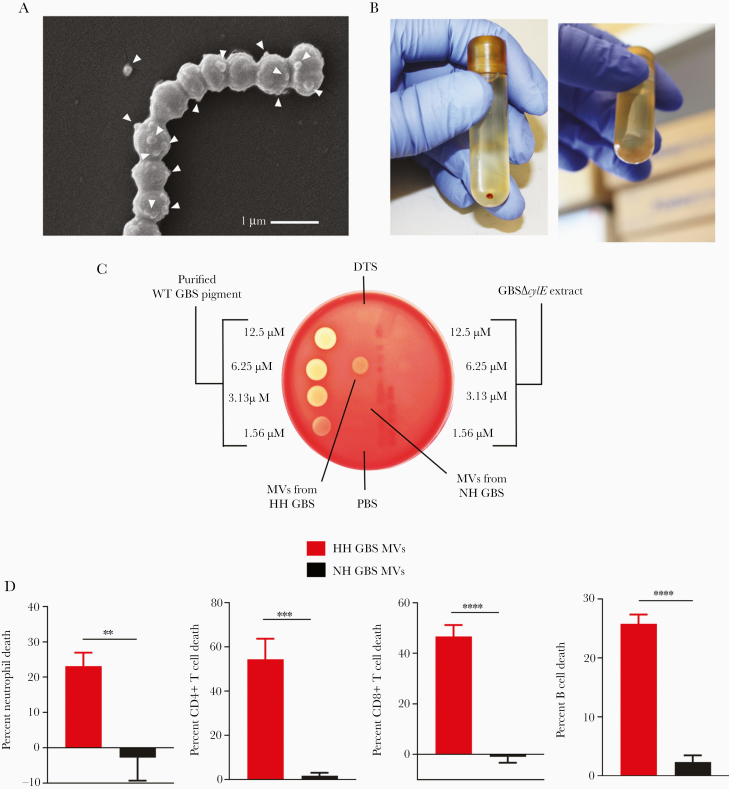
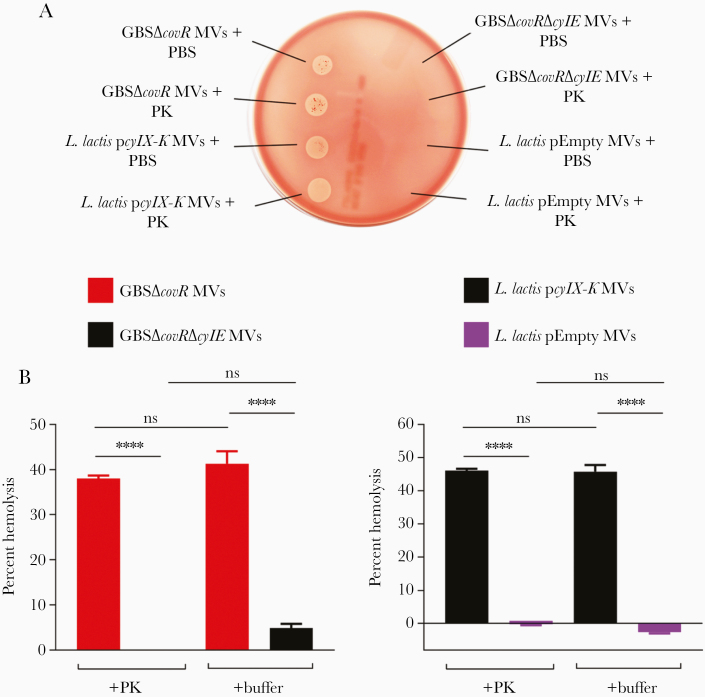
Methods: A previous study indicated that GBS produce small structures known as membrane vesicles (MVs), which contain virulence-associated proteins. In this study, we show that GBS MVs are pigmented and hemolytic, indicating that granadaene is functionally active in MVs.
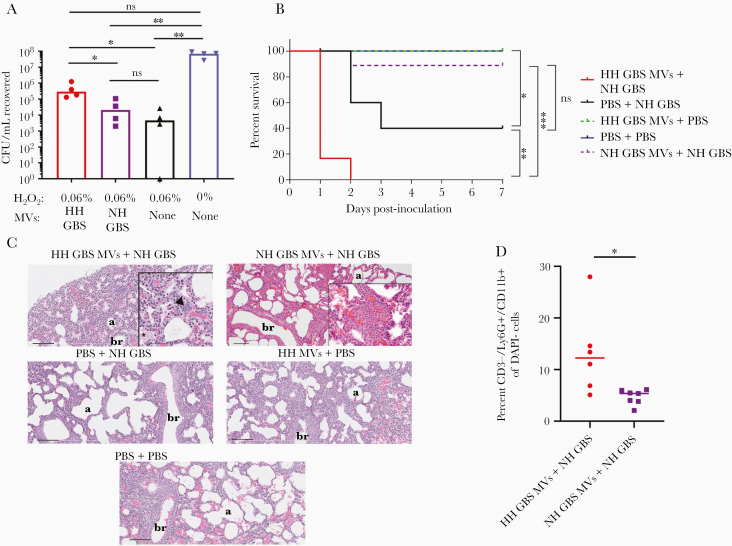
Results: In addition, MVs from hyperhemolytic GBS induced greater cell death of neutrophils, T cells, and B cells compared with MVs from isogenic nonhemolytic GBS, implicating MVs as a potential mechanism for granadaene-mediated virulence. Finally, hemolytic MVs reduced oxidative killing of GBS and aggravated morbidity and mortality of neonatal mice infected with GBS.
Conclusions: These studies, taken together, reveal a novel mechanism by which GBS deploy a crucial virulence factor to promote bacterial dissemination and pathogenesis.
Keywords: granadaene; group B streptococcus; hemolysin; immune evasion; membrane vesicles.
© The Author(s) 2020. Published by Oxford University Press for the Infectious Diseases Society of America. All rights reserved. For permissions, e-mail: journals.permissions@oup.com.
Figures
References
-
- Edmond KM, Kortsalioudaki C, Scott S, et al. . Group B streptococcal disease in infants aged younger than 3 months: systematic review and meta-analysis. Lancet 2012; 379:547–56. - PubMed
Publication types
MeSH terms
Substances
Grants and funding
LinkOut - more resources
Full Text Sources
Other Literature Sources
Medical
