


Peripherally-sourced myeloid antigen presenting cells increase with advanced aging
- PMID: 32861719
- PMCID: PMC8169202
- DOI: 10.1016/j.bbi.2020.08.023
Peripherally-sourced myeloid antigen presenting cells increase with advanced aging
Abstract
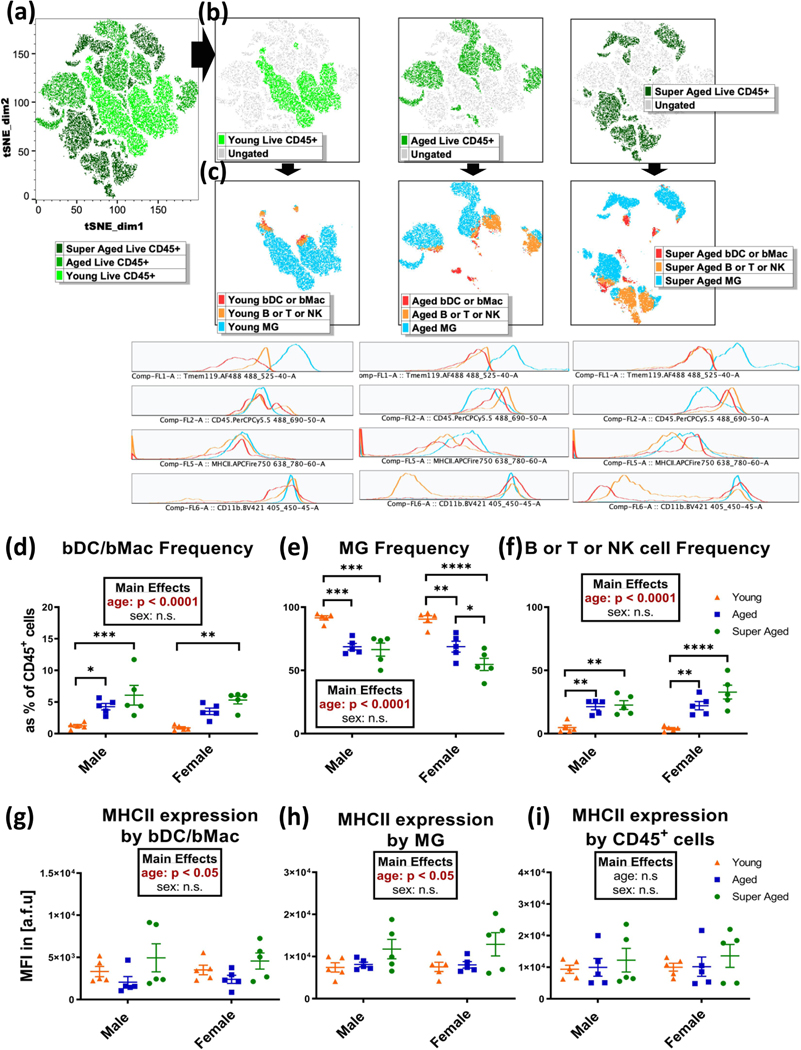
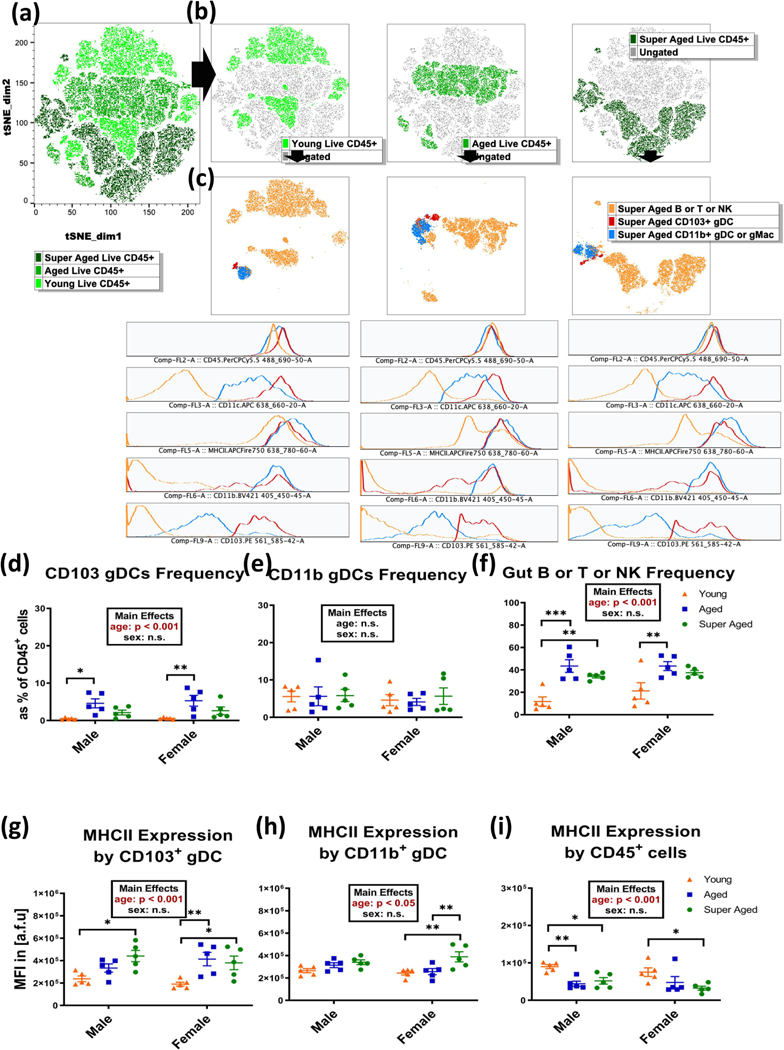
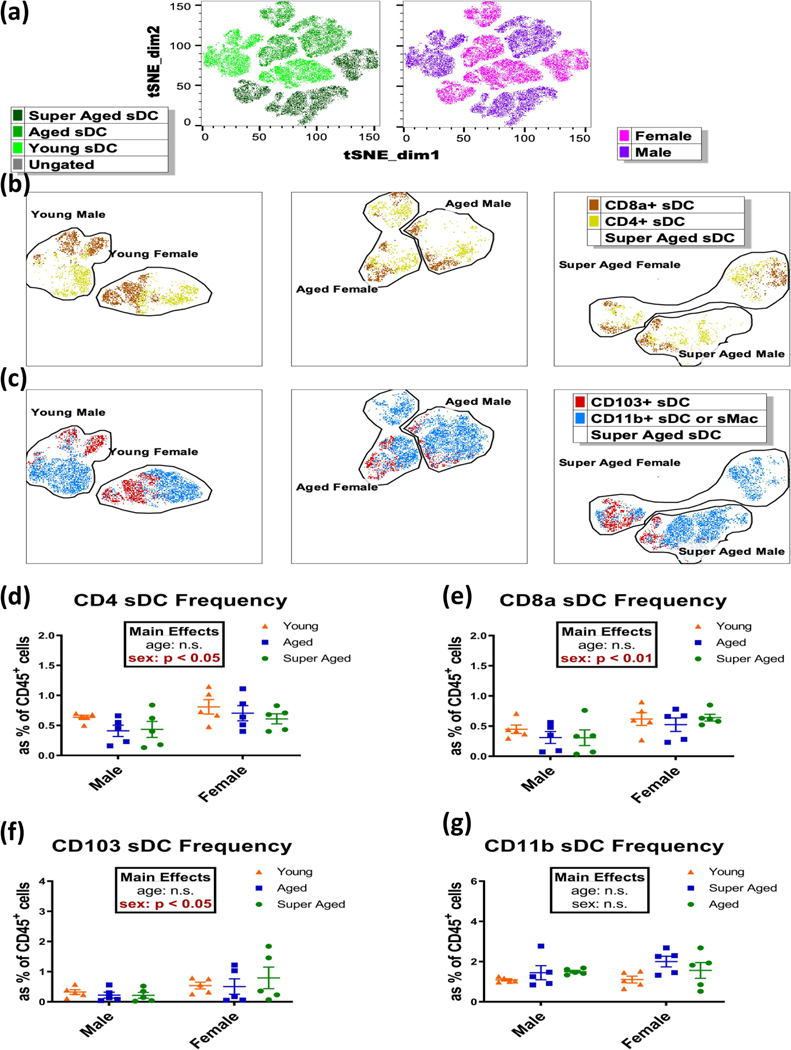
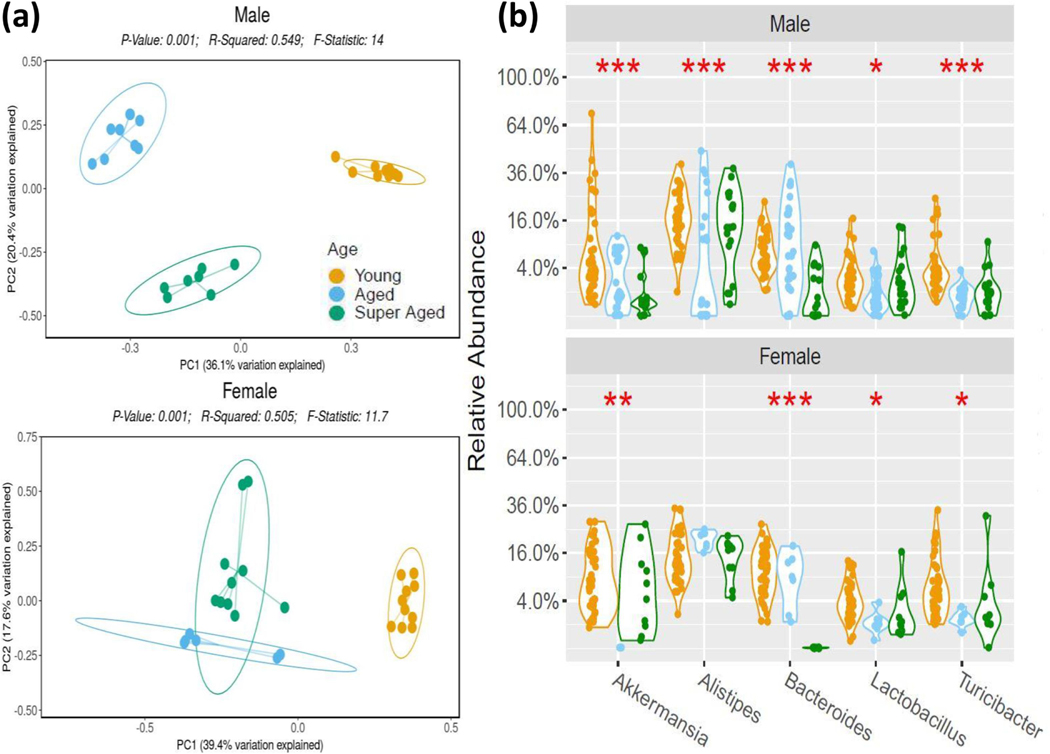
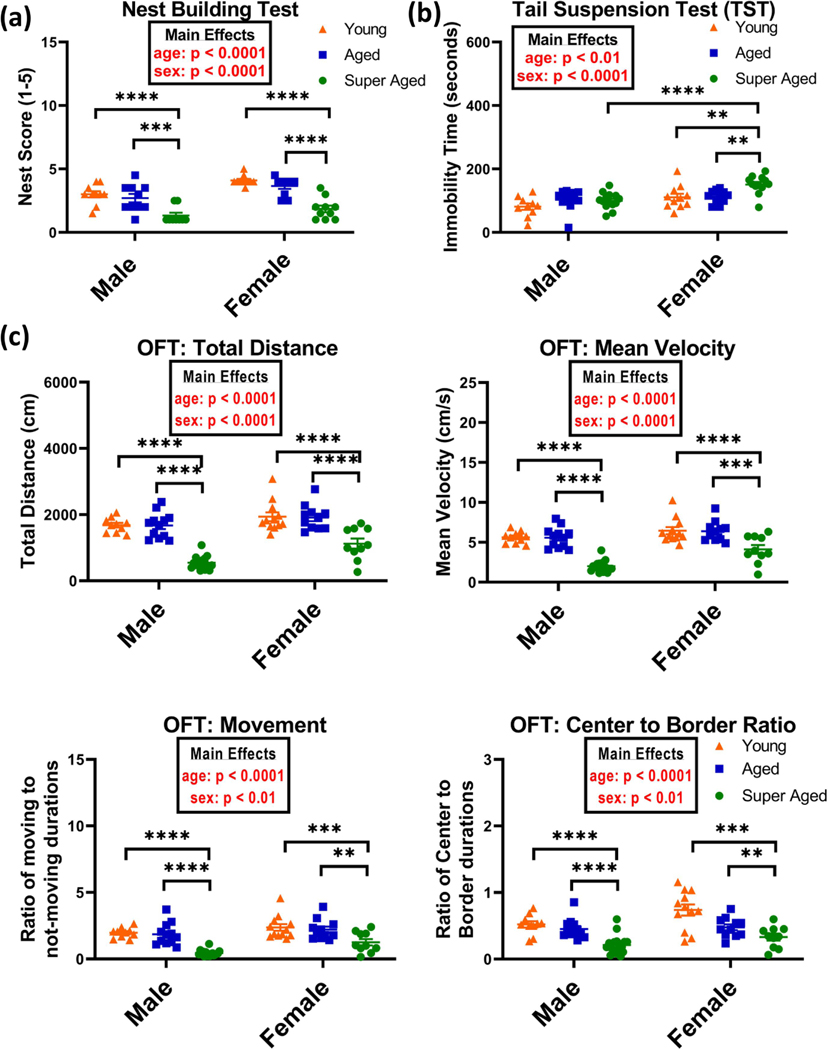
Aging is associated with dysfunction of the gut microbiota-immune-brain axis, a major regulatory axis in both brain health and in central nervous system (CNS) diseases. Antigen presenting cells (APCs) play a major role in sensing changes in the gut microbiota and regulation of innate and adaptive immune responses. APCs have also been implicated in various chronic inflammatory conditions, including age-related neurodegenerative diseases. The increase in chronic low-level inflammation seen with aging has also been linked to behavioral decline. Despite their acknowledged importance along the gut microbiota-immune-brain axis, there is limited evidence on how APCs change with aging. In this study, we examined age-related changes in myeloid APCs in the gut, spleen, and brain as well as changes in the gut microbiota and behavioral phenotype in mice ranging in age from 2 months up to 32 months of both sexes. Our data show that the number of peripherally-sourced myeloid APCs significantly increases with advanced aging in the brain. In addition, our data showed that age-related changes in APCs are subset-specific in the gut and sexually dimorphic in the spleen. Our work highlights the importance of studying myeloid APCs in an age-, tissue-, and sex-specific manner.
Keywords: Aging; Behavior; Dendritic cells; Gut microbiota-immune-brain axis; MHC-II; Myeloid cells; Sex differences.
Copyright © 2020 The Authors. Published by Elsevier Inc. All rights reserved.
Conflict of interest statement
Declaration of Competing Interest The authors declare that they have no known competing financial interests or personal relationships that could have appeared to influence the work reported in this paper.
Figures
References
-
- Adhikaree J, Franks HA, Televantos C, Vaghela P, Kaur AP, Walker D, Schmitz M, Jackson AM, Patel PM, 2019. Impaired circulating myeloid CD1c+ dendritic cell function in human glioblastoma is restored by p38 inhibition - implications for the next generation of DC vaccines. Oncoimmunology 8, 1593803. 10.1080/2162402X.2019.1593803 - DOI - PMC - PubMed
-
- Anandasabapathy N, Victora GD, Meredith M, Feder R, Dong B, Kluger C, Yao K, Dustin ML, Nussenzweig MC, Steinman RM, Liu K, 2011. Flt3L controls the development of radiosensitive dendritic cells in the meninges and choroid plexus of the steady-state mouse brain. J. Exp. Med. 208, 1695–705. 10.1084/jem.20102657 - DOI - PMC - PubMed
-
- Baruch K, Deczkowska A, David E, Castellano JM, Miller O, Kertser A, Berkutzki T, Barnett-Itzhaki Z, Bezalel D, Wyss-Coray T, Amit I, Schwartz M, 2014. Aging. Aging-induced type I interferon response at the choroid plexus negatively affects brain function. Science 346, 89–93. 10.1126/science.1252945 - DOI - PMC - PubMed
Publication types
MeSH terms
Grants and funding
LinkOut - more resources
Full Text Sources
Research Materials
Miscellaneous
