


Practical learnings from an epidemiology study on TDI-related occupational asthma: Part I-Cumulative exposure is not a good indicator of risk
- PMID: 32862785
- PMCID: PMC7750668
- DOI: 10.1177/0748233720947202
Practical learnings from an epidemiology study on TDI-related occupational asthma: Part I-Cumulative exposure is not a good indicator of risk
Abstract
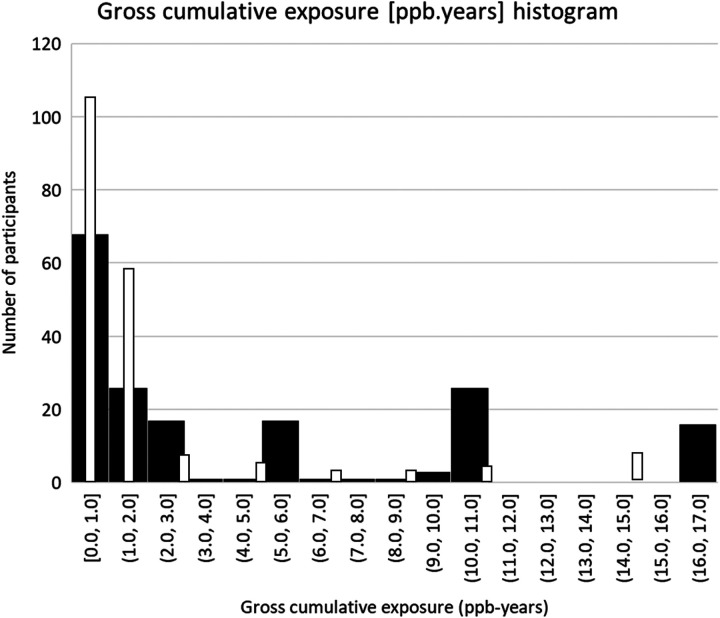
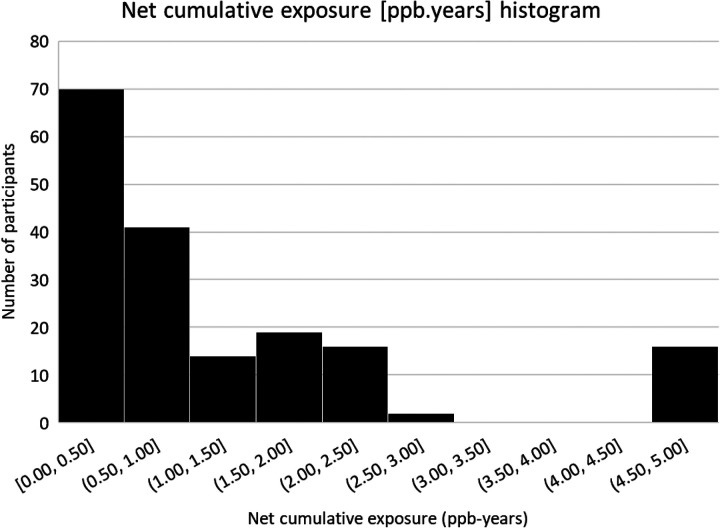
The anonymized data of an epidemiology study on incidence of toluene diisocyanate (TDI)-related occupational asthma in three US-based TDI production facilities have been reanalyzed to identify where to best focus exposure reduction efforts in industrial practice to reduce the risk of sensitization to TDI. Since the induction of sensitization has sometimes been attributed to cumulative exposure, this relationship was examined first. Gross cumulative exposure values (i.e. not taking into account whether respiratory protection was used or not) and net cumulative exposure values (i.e. accounting for the use of respiratory protection) per participant were calculated based on the duration of their study participation and the average time-weighted average value of the exposure group to which they belonged. These two sets of cumulative exposure data were compared with asthma incidence using logistic regression. Incidence was zero among workers who rarely come into contact with open plant systems (e.g. during maintenance or spills). Notwithstanding, no statistically significant relationship between asthma incidence and either gross or net cumulative exposure could be determined. This is shown to be consistent with the results of several other epidemiology studies on TDI-related occupational asthma. In conclusion, cumulative exposure values are not a good indicator of the risk of developing TDI-related occupational asthma.
Keywords: Toluene diisocyanate (TDI); cumulative exposure; occupational asthma; respiratory protection; risk indicator.
Conflict of interest statement
Figures
References
-
- Bodner KM, Burns CJ, Randolph NM, et al. (2001) A longitudinal study of respiratory health of toluene diisocyanate production workers. Journal of Occupational and Environmental Medicine 43(10): 890–897. - PubMed
-
- Bruckner HC, Avery SB, Stetson DM, et al. (1968) Clinical and immunological appraisal of workers exposed to diisocyanates. Archives of Environmental Health 16(5): 619–625. - PubMed
-
- Bugler J, Clark RL, Hill H, et al. (1991) The acute and long-term respiratory effects of aromatic diisocyanates. A five year longitudinal study of polyurethane foam workers. Report no. 10848, Manchester: International Isocyanate Institute.
MeSH terms
Substances
LinkOut - more resources
Full Text Sources
Medical
