


Does Arctic warming reduce preservation of organic matter in Barents Sea sediments?
- PMID: 32862811
- PMCID: PMC7481662
- DOI: 10.1098/rsta.2019.0364
Does Arctic warming reduce preservation of organic matter in Barents Sea sediments?
Abstract
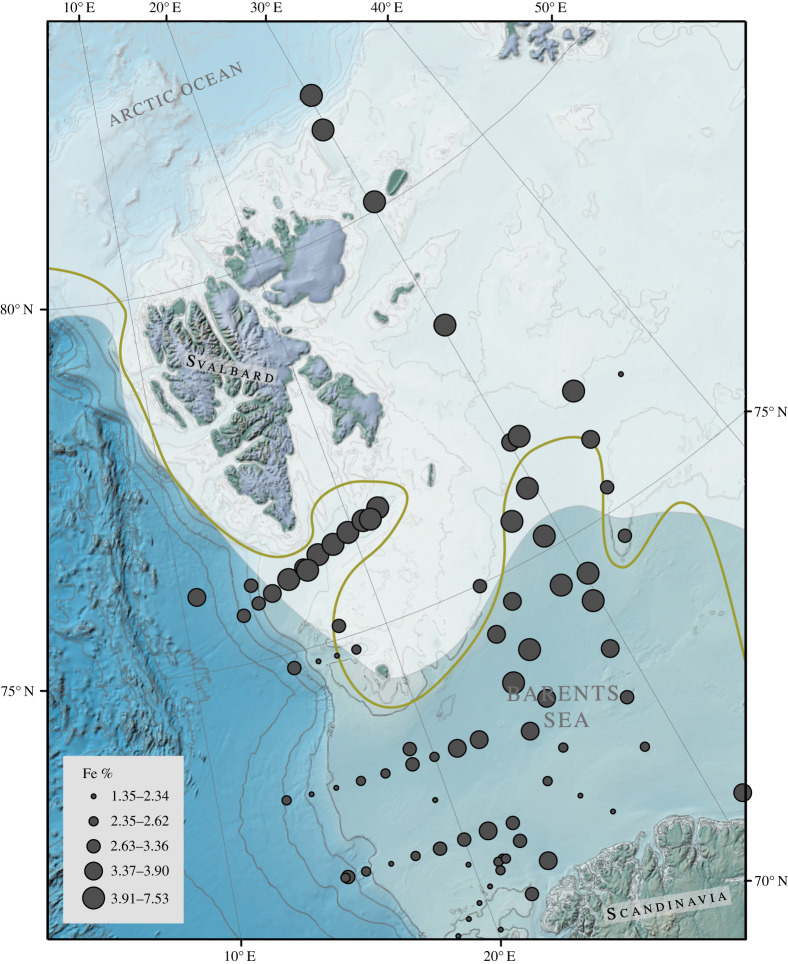
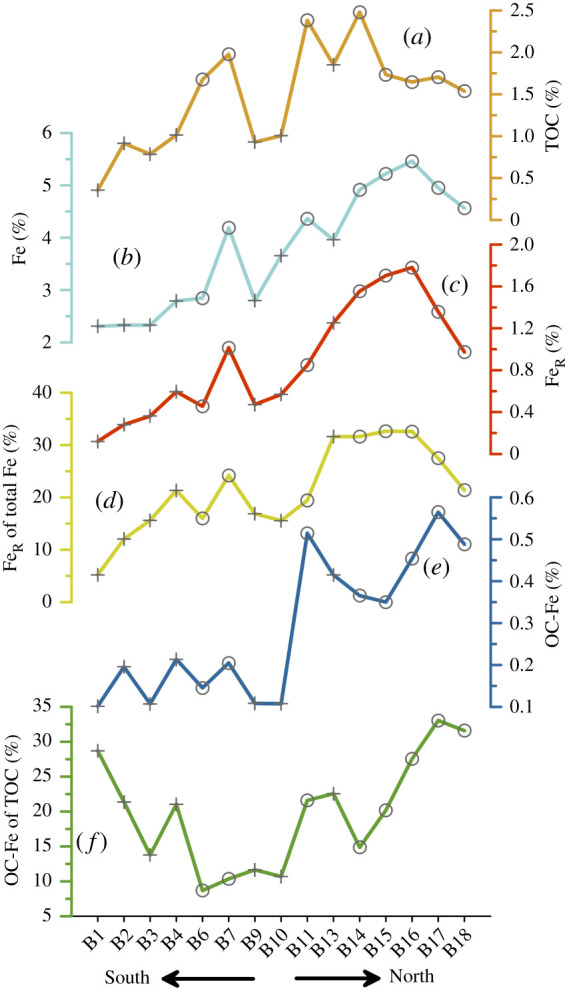
Over the last few decades, the Barents Sea experienced substantial warming, an expansion of relatively warm Atlantic water and a reduction in sea ice cover. This environmental change forces the entire Barents Sea ecosystem to adapt and restructure and therefore changes in pelagic-benthic coupling, organic matter sedimentation and long-term carbon sequestration are expected. Here we combine new and existing organic and inorganic geochemical surface sediment data from the western Barents Sea and show a clear link between the modern ecosystem structure, sea ice cover and the organic carbon and CaCO3 contents in Barents Sea surface sediments. Furthermore, we discuss the sources of total and reactive iron phases and evaluate the spatial distribution of organic carbon bound to reactive iron. Consistent with a recent global estimate we find that on average 21.0 ± 8.3 per cent of the total organic carbon is associated to reactive iron (fOC-FeR) in Barents Sea surface sediments. The spatial distribution of fOC-FeR, however, seems to be unrelated to sea ice cover, Atlantic water inflow or proximity to land. Future Arctic warming might, therefore, neither increase nor decrease the burial rates of iron-associated organic carbon. However, our results also imply that ongoing sea ice reduction and the associated alteration of vertical carbon fluxes might cause accompanied shifts in the Barents Sea surface sedimentary organic carbon content, which might result in overall reduced carbon sequestration in the future. This article is part of the theme issue 'The changing Arctic Ocean: consequences for biological communities, biogeochemical processes and ecosystem functioning'.
Keywords: Arctic Ocean; Barents Sea; carbon cycle; geochemical sediment composition; marine surface sediments; organic carbon bound to reactive iron.
Conflict of interest statement
We declare we have no competing interests.
Figures
References
-
- Meier WN, et al. 2014. Arctic sea ice in transformation: a review of recent observed changes and impacts on biology and human activity. Rev. Geophys. 52, 185–217. (10.1002/2013RG000431) - DOI
-
- Fetterer F, Knowles K, Meier WN, Savoie M, Windnagel AK. 2017. Sea Ice Index, Version 3. Boulder, CO: NSIDC: National Snow and Ice Data Center.
-
- Smedsrud LH, et al. 2013. The role of the Barents Sea in the Arctic climate system. Rev. Geophys. 51, 415–449. (10.1002/rog.20017) - DOI
-
- Loeng H. 1991. Features of the physical oceanographic conditions of the Barents Sea. Polar Res. 10, 5–18. (10.3402/polar.v10i1.6723) - DOI
