


Clouds and "throat hit": Effects of liquid composition on nicotine emissions and physical characteristics of electronic cigarette aerosols
- PMID: 32863527
- PMCID: PMC7453347
- DOI: 10.1080/02786826.2017.1341040
Clouds and "throat hit": Effects of liquid composition on nicotine emissions and physical characteristics of electronic cigarette aerosols
Abstract
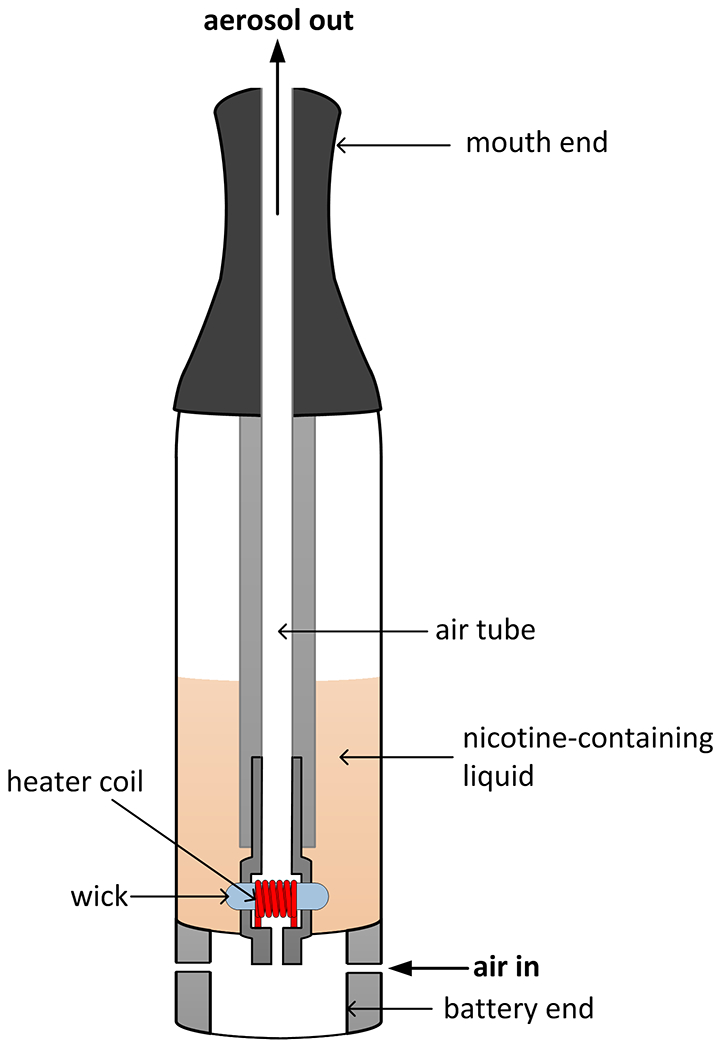
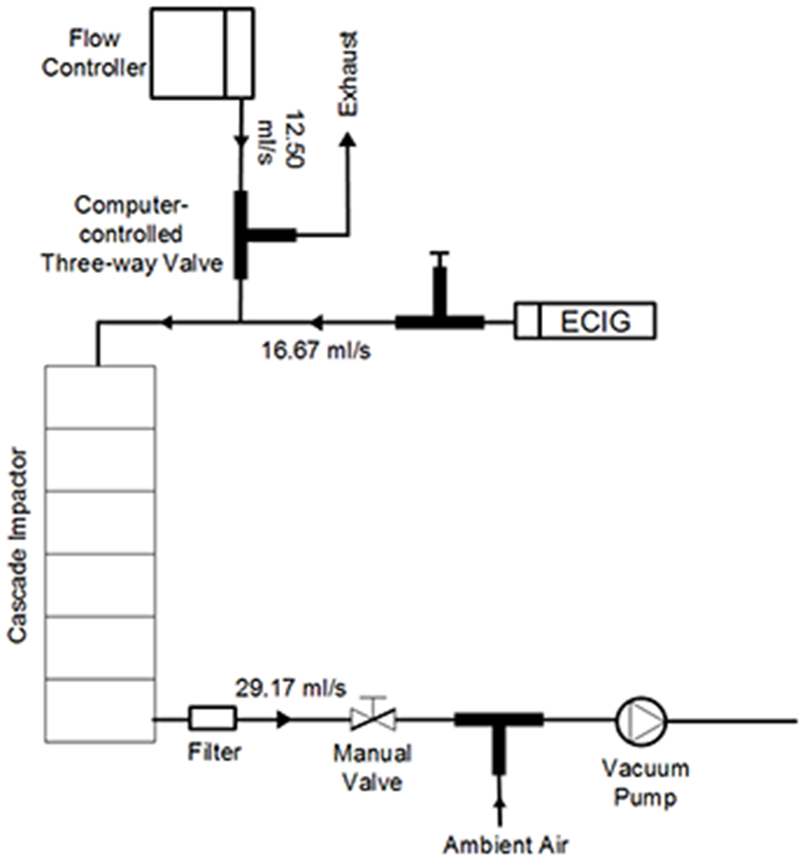
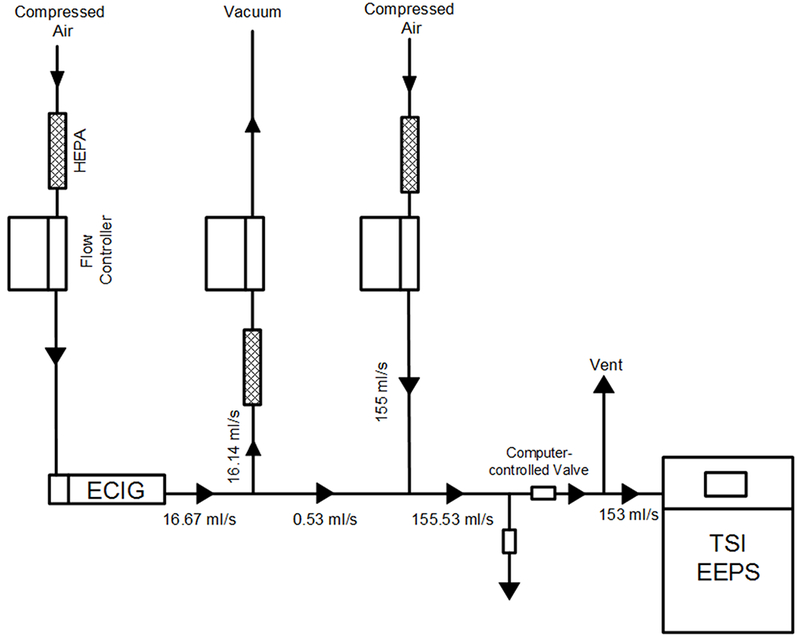
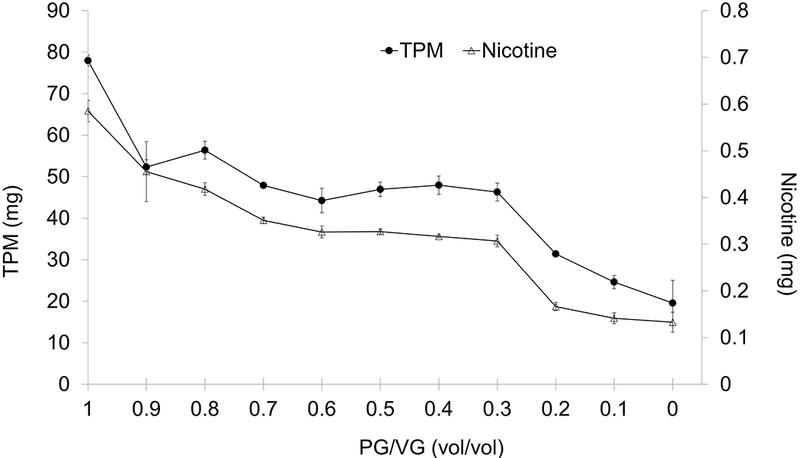
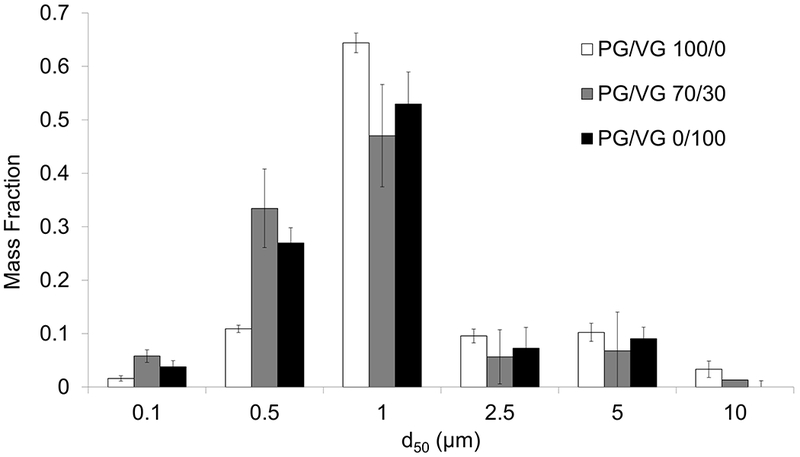
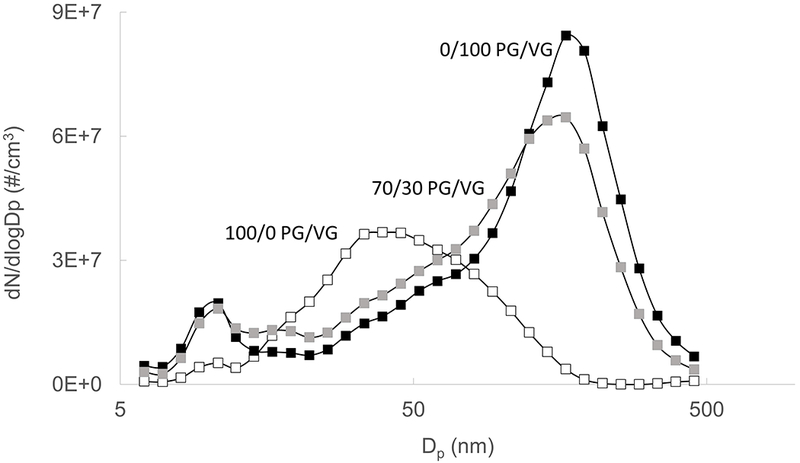
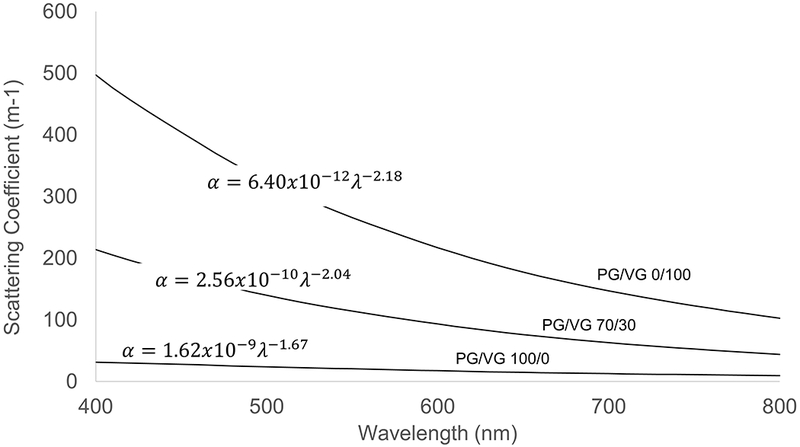
Electronic cigarettes (ECIGs) heat and vaporize a liquid mixture to produce an inhalable aerosol that can deliver nicotine to the user. The liquid mixture is typically composed of propylene glycol (PG) and vegetable glycerin (VG), in which are dissolved trace quantities of flavorants and, usually, nicotine. Due to their different chemical and thermodynamic properties, the proportions of PG and VG in the liquid solution may affect nicotine delivery and user sensory experience. In social media and popular culture, greater PG fraction is associated with greater "throat-hit", a sensation that has been attributed in cigarette smokers to increased presence of vapor-phase nicotine. VG, on the other hand, is associated with thicker and larger exhaled "clouds". In this study, we aim to investigate how PG/VG ratio influences variables that relate to nicotine delivery and plume visibility. Aerosols from varying PG/VG liquids were generated using a digitally controlled vaping instrument and a commercially available ECIG, and analyzed for nicotine content by GC-MS. Particle mass and number distribution were determined using a six-stage cascade impactor and a fast particle spectrometer (TSI EEPS), with tightly controlled dilution and sampling biases. A Mie theory model was used to compute the aerosol scattering coefficients in the visible spectrum. Decreasing the PG/VG ratio resulted in a decrease in total particulate matter (TPM) and nicotine yield (R2 > 0.9, p<.0001). Measured particle count median diameter ranged between 44-97nm, and was significantly smaller for PG liquids. Although the particle mass concentration was lower, aerosols produced using liquids that contained VG had an order of magnitude greater light scattering coefficients. These findings indicate that PG/VG ratio is a strong determinant of both nicotine delivery and user sensory experience.
Figures
References
-
- Bohren CF, and Huffman DR (1983). Absorption and scattering of light by small particles. Wiley; New York, .
-
- Bullen C, McRobbie H, Thornley S, Glover M, Lin R, and Laugesen M (2010). “Effect of an electronic nicotine delivery device (e cigarette) on desire to smoke and withdrawal, user preferences and nicotine delivery: randomised cross-over trial.” Tob.Control, 19(2), 98–103. - PubMed
-
- Cheah NP, Chong NW, Tan J, Morsed FA, and Yee SK (2014). “Electronic nicotine delivery systems: regulatory and safety challenges: Singapore perspective.” Tob.Control, 23(2), 119–125. - PubMed
Grants and funding
LinkOut - more resources
Full Text Sources
Other Literature Sources
Miscellaneous
