


Interstitial lung disease and diabetes
- PMID: 32864047
- PMCID: PMC7438183
- DOI: 10.4239/wjd.v11.i8.351
Interstitial lung disease and diabetes
Abstract
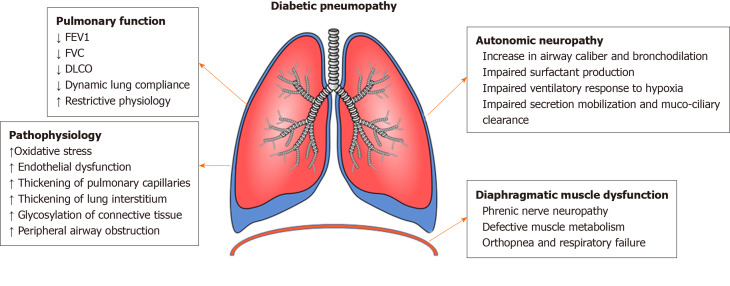
Diabetes mellitus (DM) is a chronic metabolic disease and its prevalence has been steadily increasing all over the world. DM and its associated micro and macrovascular complications result in significant morbidity and mortality. The microvascular complications are usually manifested as retinopathy, neuropathy, nephropathy and macrovascular complications generally affect the cardiovascular system. In addition to these complications, DM also affects the lungs because of its rich vascularity and abundance in connective tissue (collagen and elastin). DM has been found to cause microvascular complications and proliferation of extracellular connective tissue in the lungs, leading to decline in lung function in a restrictive pattern. Interstitial lung disease (ILD) includes a diverse group of disease conditions characterized by different degrees of inflammation and fibrosis in the pulmonary parenchyma. Idiopathic pulmonary fibrosis (IPF) is one of the common type of idiopathic interstitial pneumonia with a high mortality rate. IPF is characterized by chronic progressive fibrosis leading to progressive respiratory failure. In this review we focus on lung as the target organ in DM and the association of DM and ILD with special emphasis on IPF.
Keywords: Diabetes complications; Diabetes mellitus; Hyperglycemia; Idiopathic pulmonary fibrosis; Interstitial lung disease; Metformin; Pulmonary function test; Restrictive lung disease.
©The Author(s) 2020. Published by Baishideng Publishing Group Inc. All rights reserved.
Conflict of interest statement
Conflict-of-interest statement: The authors have no conflict of interest to disclose.
Figures
References
-
- International Federation Diabetes. IDF Diabetes Atlas 2013. 6th ed. Brussels: International Federation Diabetes, 2013.
Publication types
Grants and funding
LinkOut - more resources
Full Text Sources
