. 2020 Aug 7;5(4):621-629.
doi: 10.1002/lio2.436. eCollection 2020 Aug.

Augmented reality-enhanced navigation in endoscopic sinus surgery: A prospective, randomized, controlled clinical trial

Affiliations

Augmented reality-enhanced navigation in endoscopic sinus surgery: A prospective, randomized, controlled clinical trial

Maximilian Linxweiler et al. Laryngoscope Investig Otolaryngol. .

Abstract

Objective: Endoscopic sinus surgery represents the gold standard for surgical treatment of chronic sinus diseases. Thereby, navigation systems can be of distinct use. In our study, we tested the recently developed KARL STORZ NAV1 SinusTracker navigation software that incorporates elements of augmented reality (AR) to provide a better preoperative planning and guidance during the surgical procedure.

Methods: One hundred patients with chronic sinus disease were operated on using either a conventional navigation software (n = 52, non-AR, control group) or a navigation software incorporating AR elements (n = 48, AR, intervention group). Incidence of postoperative complications, duration of surgery, surgeon-reported benefit from the navigation system and patient-reported postoperative rehabilitation were assessed.

Results: The surgeons reported a higher benefit during surgery, used the navigation system for more surgical steps and spent longer time with preoperative image analysis when using the AR system as compared with the non-AR system. No significant differences were seen in terms of postoperative complications, target registration error, operation time and postoperative rehabilitation.

Conclusion: The AR enhanced navigation software shows a high acceptance by sinus surgeons in different stages of surgical training and offers potential benefits during surgery without affecting the duration of the operation or the incidence of postoperative complications.

Level of evidence: 1b.

Keywords: augmented reality; endoscopic sinus surgery; navigation systems; randomized controlled clinical trial.


Conflict of interest statement

The authors declare no potential conflict of interest.

Figures
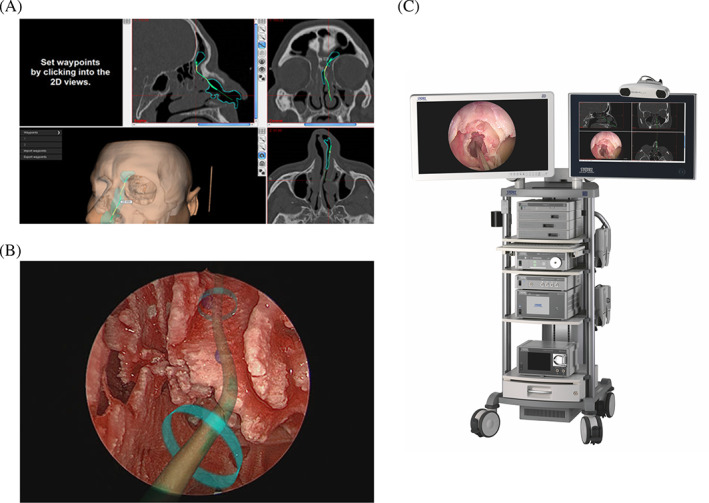
FIGURE 1
FIGURE 1
Surgical pathways as an element of augmented reality in the NAV1 SinusTracker software. A, Preoperative setting of the surgical pathway to the left frontal sinus. B, Intraoperative overlaying of the surgical pathway on the endoscopic image. C, Combined navigation cart with an optical and an electromagnetic navigation system
FIGURE 2
FIGURE 2
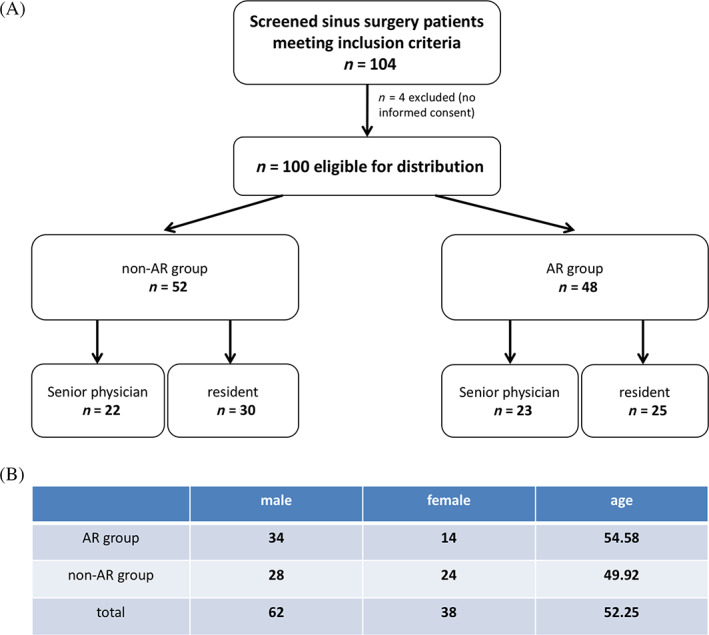
Study flowchart and distribution of age and sex in the different treatment groups. A, Study flow chart, the number of patients per study arm is indicated in the boxes. B, Distribution of age and sex in both study arms; for age, the mean value is indicated
FIGURE 3
FIGURE 3
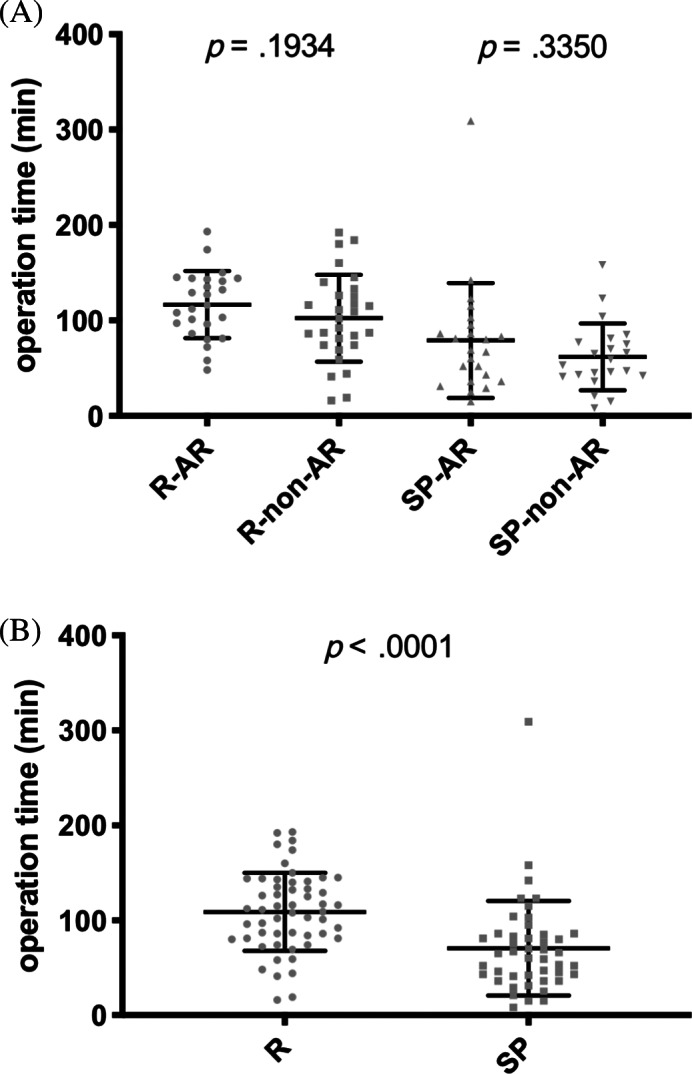
Comparison of operation time between the intervention and control group. A, Operation time (min) for all four groups of the study. B, Comparison between operations performed by the resident and the senior physician independent of the navigation system that was used. R‐AR: operation performed by the resident with navigation system including augmented reality elements (intervention group); R‐non‐AR: operation performed by the resident with navigation system not including augmented reality elements (control group); SP‐AR: operation performed by the senior physician with navigation system including augmented reality elements (intervention group); SP‐non‐AR: operation performed by the senior physician with navigation system not including augmented reality elements (control group)
FIGURE 4
FIGURE 4
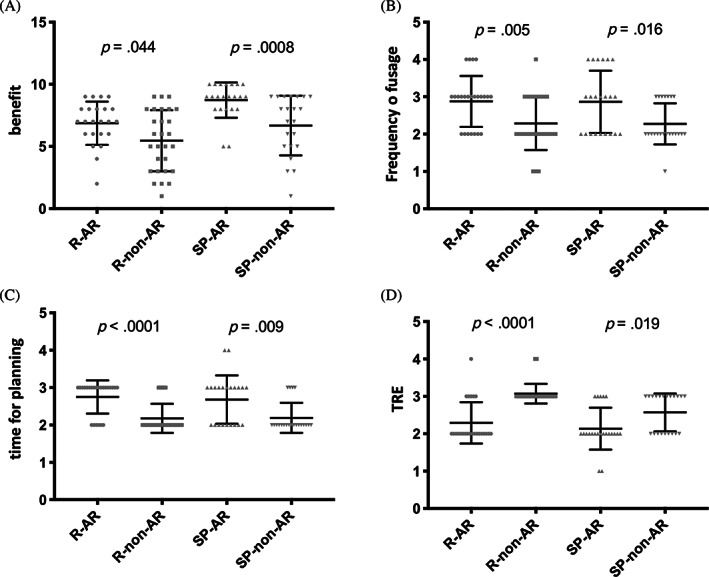
Evaluation of the two tested navigation systems by the surgeons. A, Benefit during surgery supported by the navigation system ranging from 1 (no benefit) to 10 (best imaginable benefit). B, Number of surgical steps during which the navigation system was used ranging from 1 (not at all) to 4 (more than 5 steps). C, Amount of time the surgeon spent preoperatively with the analysis of the patient's CT imaging and the planning of the surgical procedure based on these images ranging from 1 (not at all) to 4 (more than 15 minutes). D, Accuracy of the navigation system by assessing the target registration error (TRE) ranging from 1 (no TRE) to 4 (TRE > 3 mm). In panels A to D, medians and inter‐quartile ranges are indicated. R‐AR: operation performed by the resident with navigation system including augmented reality elements (intervention group); R‐non‐AR: operation performed by the resident with navigation system not including augmented reality elements (control group); SP‐AR: operation performed by the senior physician with navigation system including augmented reality elements (intervention group); SP‐non‐AR: operation performed by the senior physician with navigation system not including augmented reality elements (control group)
FIGURE 5
FIGURE 5
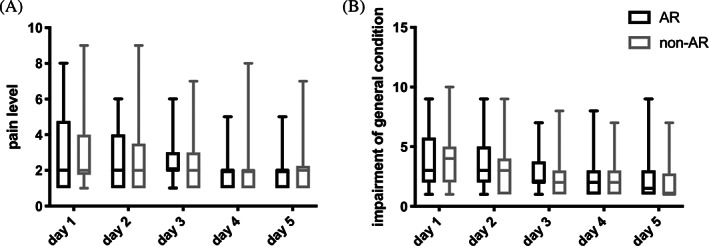
Postoperative rehabilitation of the patients. A, Pain level indicated by the patients on a numerical analogue scale ranging from 1 (no pain) to 10 (strongest imaginable pain) for the first 5 days after surgery. B, Impairment of general condition indicated by the patients on a numerical analogue scale ranging from 1 (no impairment) to 10 (strongest imaginable impairment). Values for patients of the treatment group (NAV1 SinusTracker software) are shown in black and values for patients of the control group (NAV1 optical system) are shown in grey using box and whisker blots. Each box represents the range from the first quartile to the third quartile. The median is indicated by a line. The whiskers outside the boxes represent the ranges from the minimum to the maximum value of each group. AR: navigation system with augmented reality elements (intervention group); non‐AR: navigation system without augmented reality elements (control group)

References

    1. Citardi MJ, Batra PS. Intraoperative surgical navigation for endoscopic sinus surgery: rationale and indications. Curr Opin Otolaryngol Head Neck Surg. 2007;15:23‐27. - PubMed
    1. Weber RK, Hosemann W. Comprehensive review on endonasal endoscopic sinus surgery. GMS Curr Top Otorhinolaryngol Head Neck Surg. 2015. 10.3205/cto000123. - DOI - PMC - PubMed
    1. Wise SK, DelGaudio JM. Computer‐aided surgery of the paranasal sinuses and skull base. Expert Rev Med Devices. 2005;2:395‐408. - PubMed
    1. Caversaccio M, Zheng G, Nolte LP. Computer‐aided surgery of the paranasal sinuses and the anterior skull base. Eur Arch Otorhinolaryngol. 2008;56:376‐378. - PubMed
    1. Franz L, Isola M, Bagatto D, Tuniz F, Robiony M. A novel approach to skull‐base and orbital osteotomies through virtual planning and navigation. Laryngoscope. 2018;129:823‐831. 10.1002/lary.27479. - DOI - PubMed

LinkOut - more resources