


Effects of Testosterone on Serum Concentrations, Fat-free Mass, and Physical Performance by Population: A Meta-analysis
- PMID: 32864543
- PMCID: PMC7444672
- DOI: 10.1210/jendso/bvaa090
Effects of Testosterone on Serum Concentrations, Fat-free Mass, and Physical Performance by Population: A Meta-analysis
Abstract
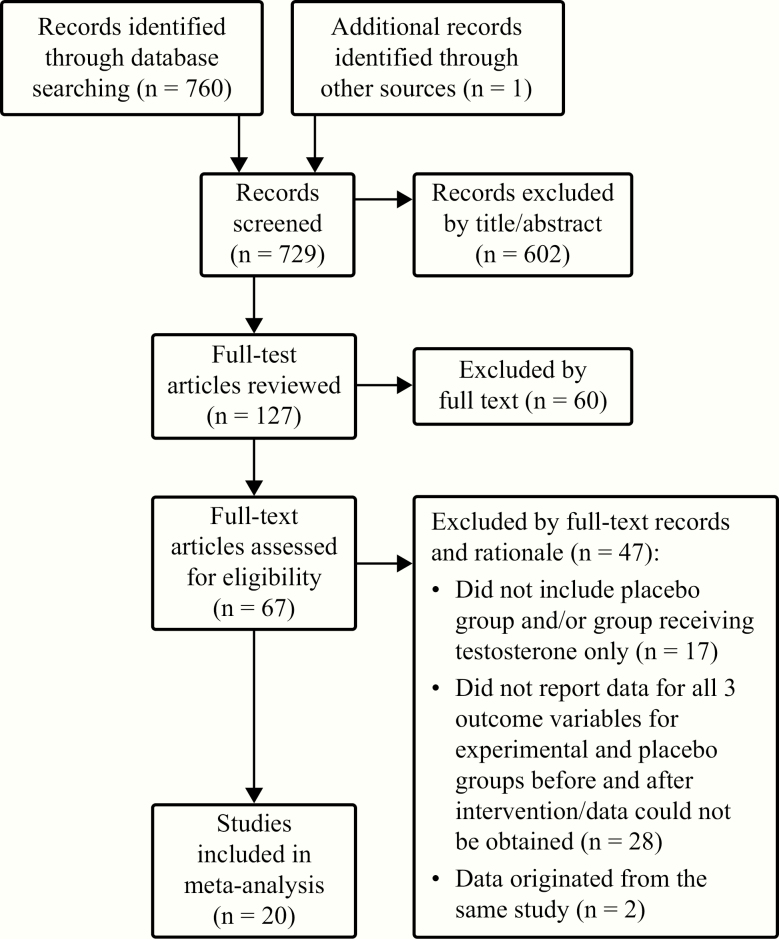
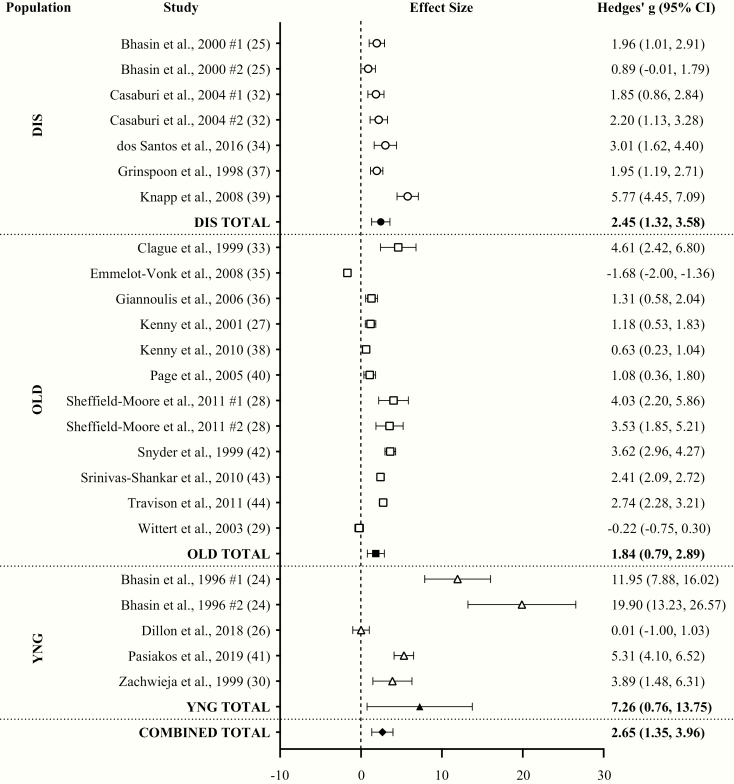
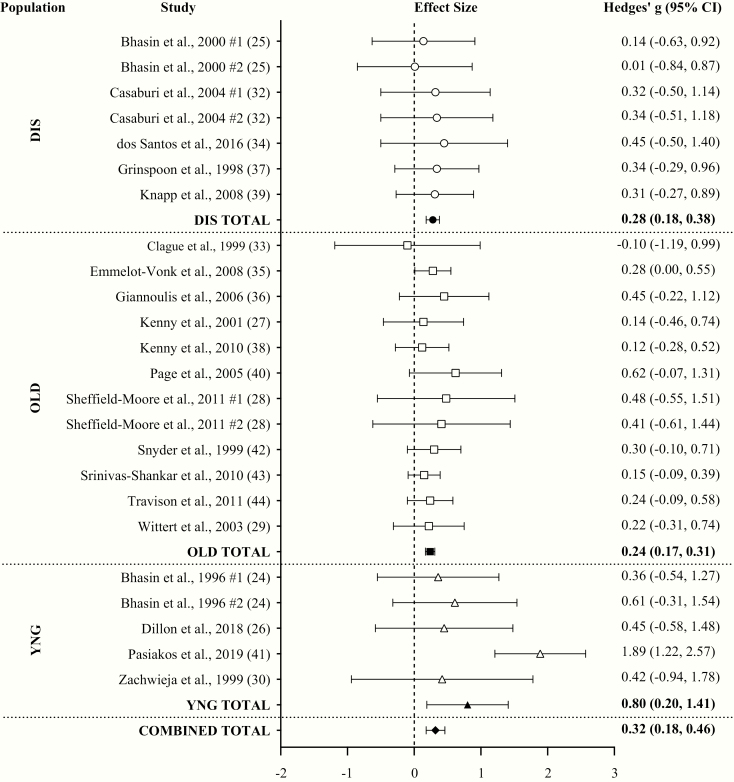
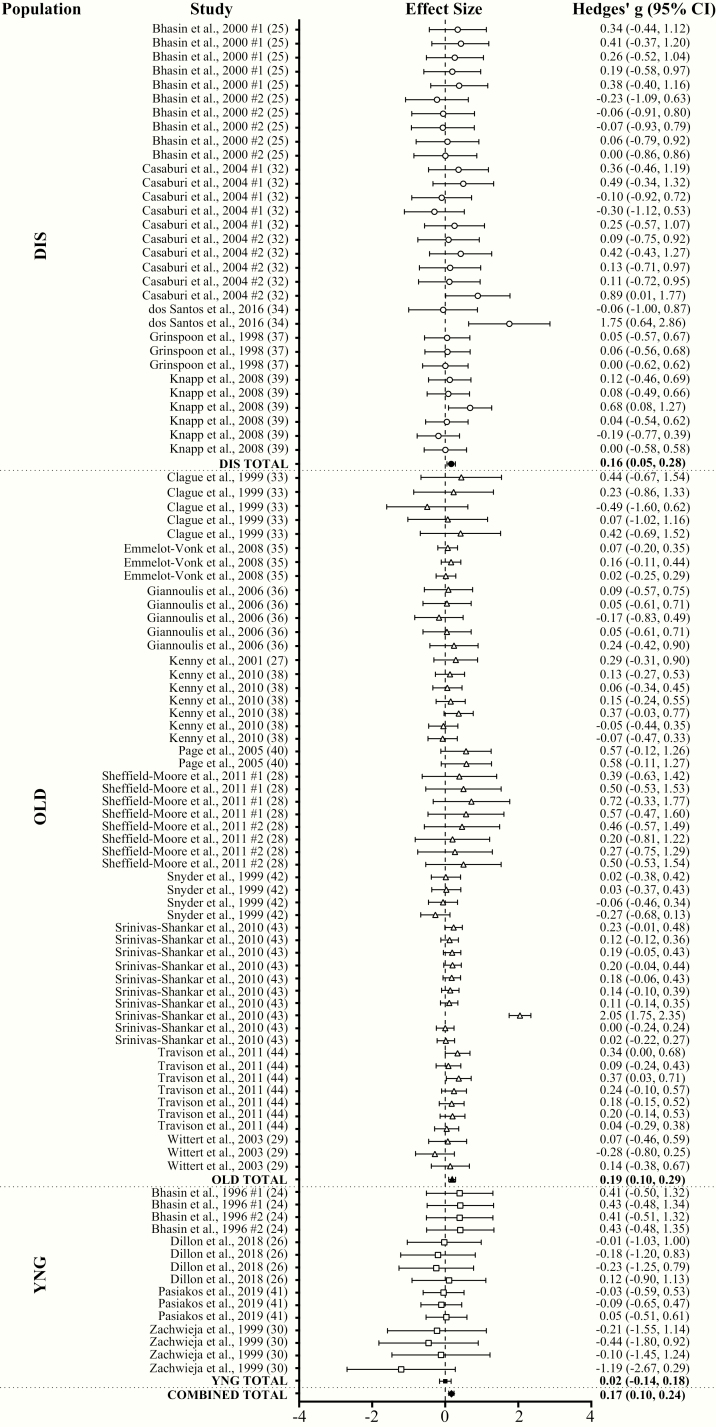
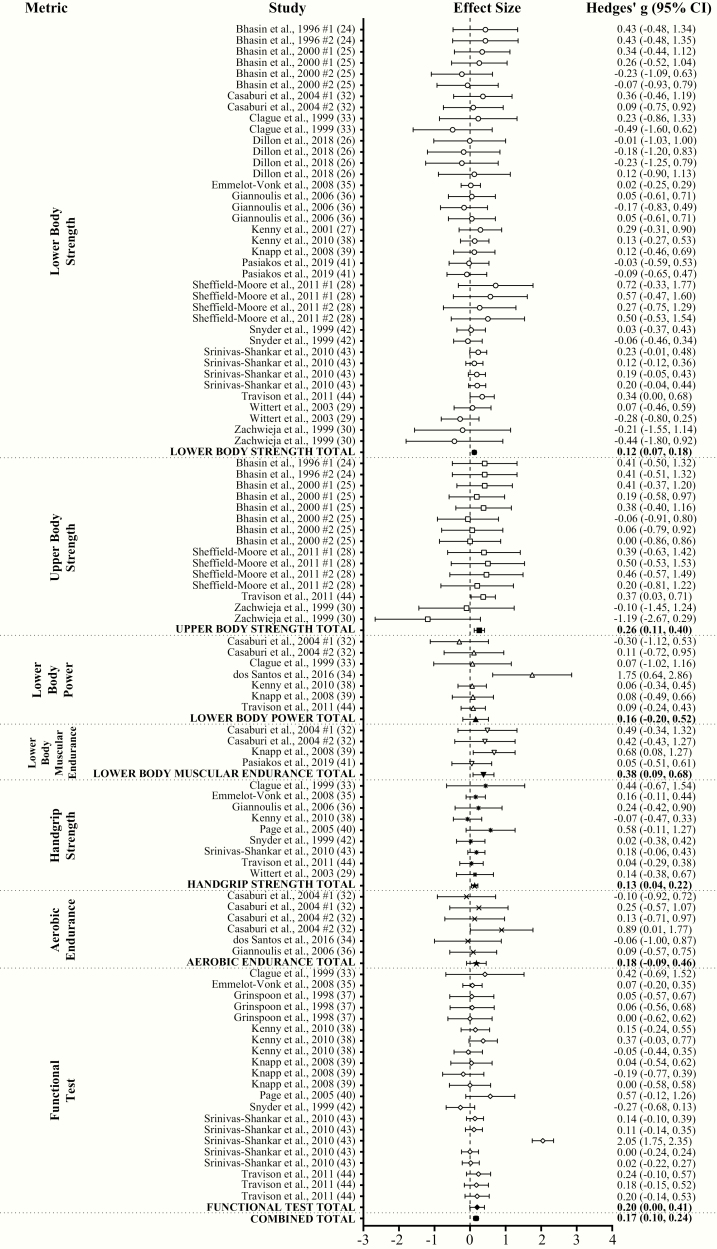
Testosterone (T) administration (TA) increases serum T and fat-free mass (FFM). Although TA-mediated increases in FFM may enhance physical performance, the data are largely equivocal, which may be due to differences in study populations, the magnitude of change in serum T and FFM, or the performance metrics. This meta-analysis explored effects of TA on serum T, FFM, and performance. Associations between increases in serum T and FFM were assessed, and whether changes in serum T or FFM, study population, or the performance metrics affected performance was determined. A systematic review of double-blind randomized trials comparing TA versus placebo on serum T, FFM, and performance was performed. Data were extracted from 20 manuscripts. Effect sizes (ESs) were assessed using Hedge's g and a random effects model. Data are presented as ES (95% confidence interval). No significant correlation between changes in serum T and FFM was observed (P = .167). Greater increases in serum T, but not FFM, resulted in larger effects on performance. Larger increases in testosterone (7.26 [0.76-13.75]) and FFM (0.80 [0.20-1.41]) were observed in young males, but performance only improved in diseased (0.16 [0.05-0.28]) and older males (0.19 [0.10-0.29]). TA increased lower body (0.12 [0.07-0.18]), upper body (0.26 [0.11-0.40]), and handgrip (0.13 [0.04-0.22]) strength, lower body muscular endurance (0.38 [0.09-0.68]), and functional performance (0.20 [0.00-0.41]), but not lower body power or aerobic endurance. TA elicits increases in serum T and FFM in younger, older, and diseased males; however, the performance-enhancing effects of TA across studies were small, observed mostly in muscular strength and endurance, and only in older and diseased males.
Keywords: age; body composition; disease; muscle mass; power; strength.
Published by Oxford University Press on behalf of the Endocrine Society 2020.
Figures
References
-
- Bhasin S, Brito JP, Cunningham GR, et al. Testosterone therapy in men with hypogonadism: an Endocrine Society clinical practice guideline. J Clin Endocrinol Metab. 2018;103(5):1715-1744. - PubMed
-
- Baumgartner RN, Waters DL, Gallagher D, Morley JE, Garry PJ. Predictors of skeletal muscle mass in elderly men and women. Mech Ageing Dev. 1999;107(2):123-136. - PubMed
-
- van den Beld AW, de Jong FH, Grobbee DE, Pols HA, Lamberts SW. Measures of bioavailable serum testosterone and estradiol and their relationships with muscle strength, bone density, and body composition in elderly men. J Clin Endocrinol Metab. 2000;85(9):3276-3282. - PubMed
-
- Matsumoto AM. Andropause: clinical implications of the decline in serum testosterone levels with aging in men. J Gerontol A Biol Sci Med Sci. 2002;57(2):M76-M99. - PubMed
-
- Morley JE, Perry HM 3rd. Andropause: an old concept in new clothing. Clin Geriatr Med. 2003;19(3):507-528. - PubMed
LinkOut - more resources
Full Text Sources