


Complement activation in polycystic ovary syndrome occurs in the postprandial and fasted state and is influenced by obesity and insulin sensitivity
- PMID: 32865246
- PMCID: PMC9623543
- DOI: 10.1111/cen.14322
Complement activation in polycystic ovary syndrome occurs in the postprandial and fasted state and is influenced by obesity and insulin sensitivity
Abstract
Objective: Polycystic ovary syndrome (PCOS) is associated with metabolic risk. Complement proteins regulate inflammation and lipid clearance but their role in PCOS-associated metabolic risk is unclear. We sought to establish whether the complement system is activated in PCOS in the fasting and postprandial state.
Design: Case-control study.
Patients: Fasting complement levels were measured in 84 women with PCOS and 95 healthy controls. Complement activation post-oral fat tolerance test (OFTT) was compared in 40 additional subjects (20 PCOS, 20 controls).
Measurements: Activation pathway (C3, C4, C3a(desArg), factor B, factor H, properdin, Factor D) and terminal pathway (C5, C5a, terminal complement complex [TCC]) proteins were measured by commercial or in-house assays.
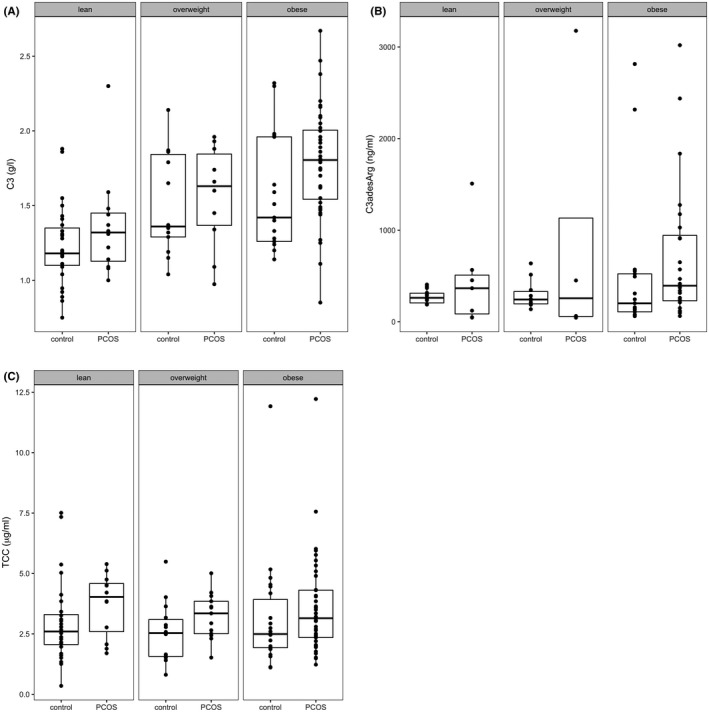
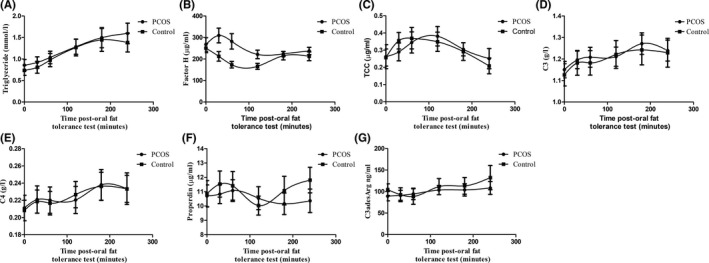
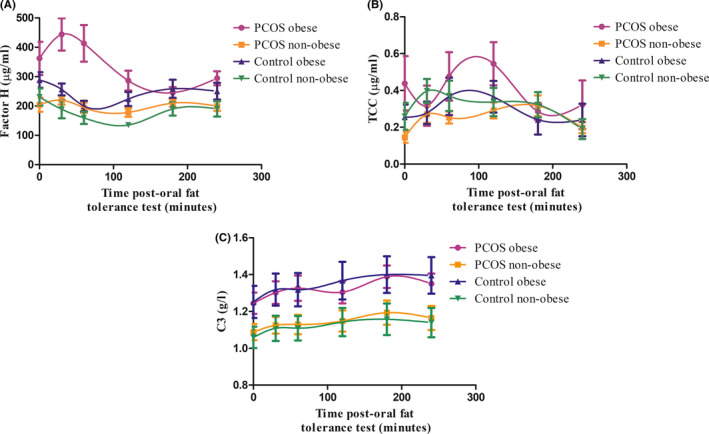
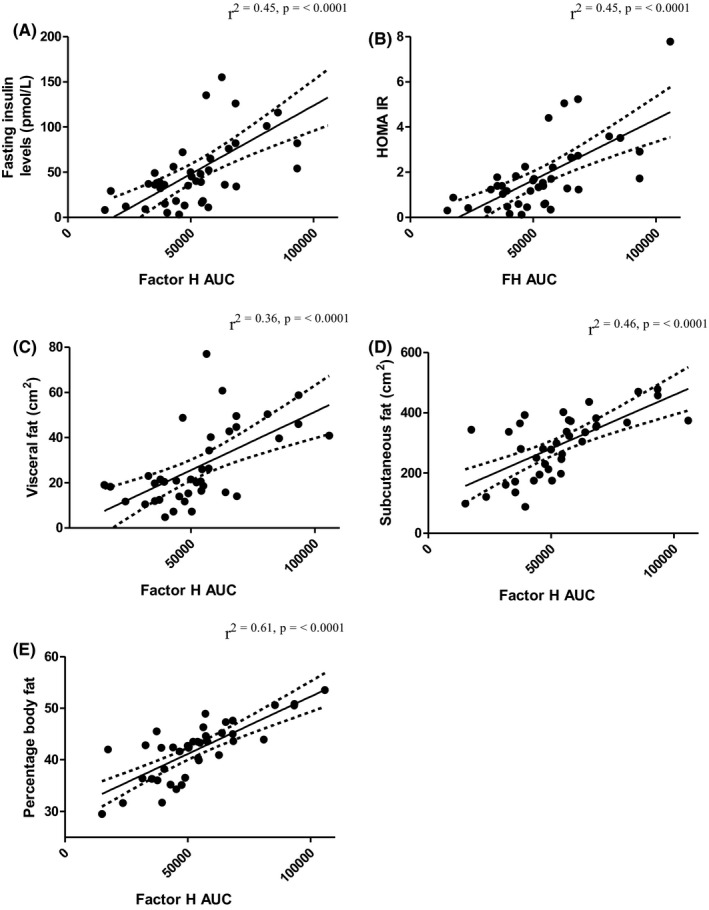
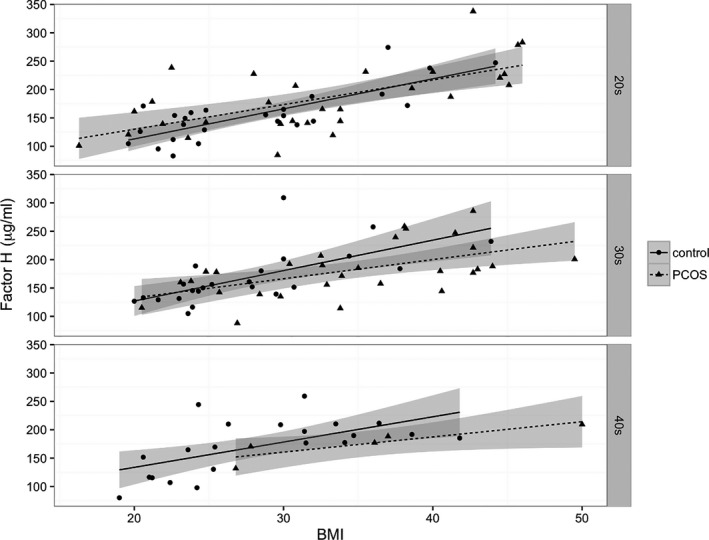
Results: Fasting C3, C3a(desArg) and TCC concentrations were increased in insulin-resistant (adjusted differences: C3 0.13 g/L [95%CI 0-0.25]; C3a(desArg) 319.2 ng/mL [19.5-619]; TCC 0.66 μg/mL [0.04-1.28]) but not in insulin-sensitive women with PCOS. C3 and factor H levels increased with obesity. Post-OFTT, C3 and C4 levels increased to a similar extent in PCOS subjects and controls, whist factor H levels increased more in women with PCOS compared to controls (adjusted differences (area under the curve): 12 167 μg min/mL [4942-19 392]), particularly in the presence of concomitant obesity.
Conclusions: Activation and terminal complement pathway components are elevated in patients with PCOS, especially in the presence of insulin resistance and obesity.
Keywords: complement system proteins; insulin resistance; obesity; polycystic ovary syndrome.
© 2020 The Authors. Clinical Endocrinology published by John Wiley & Sons Ltd.
Conflict of interest statement
The authors have no conflicts of interest to declare.
Figures
References
-
- Morgan CL, Jenkins‐Jones S, Currie CJ, Rees DA. Evaluation of adverse outcome in young women with polycystic ovary syndrome versus matched, reference controls: a retrospective, observational study. J Clin Endocrinol Metab. 2012;97:3251‐3260. - PubMed
-
- Engström G, Hedblad B, Eriksson KF, Janzon L, Lindgärde F. Complement C3 is a risk factor for the development of diabetes: a population‐based cohort study. Diabetes. 2005;54:570‐575. - PubMed
-
- Engström G, Hedblad B, Janzon L, Lindgärde F. Complement C3 and C4 in plasma and incidence of myocardial infarction and stroke: a population‐based cohort study. Eur J Cardiovasc Prev Rehabil. 2007;14:392‐397. - PubMed
Publication types
MeSH terms
Substances
Grants and funding
LinkOut - more resources
Full Text Sources
Medical
Miscellaneous
