Review
. 2020 Aug 27;13(9):215.
doi: 10.3390/ph13090215.

Kinins and Their Receptors in Infectious Diseases

Affiliations
Review

Kinins and Their Receptors in Infectious Diseases

Ana Paula A Dagnino et al. Pharmaceuticals (Basel). .

Abstract

Kinins and their receptors have been implicated in a series of pathological alterations, representing attractive pharmacological targets for several diseases. The present review article aims to discuss the role of the kinin system in infectious diseases. Literature data provides compelling evidence about the participation of kinins in infections caused by diverse agents, including viral, bacterial, fungal, protozoan, and helminth-related ills. It is tempting to propose that modulation of kinin actions and production might be an adjuvant strategy for management of infection-related complications.

Keywords: B1 receptors; B2 receptors; bradykinin; infection; therapeutics.


Conflict of interest statement

The authors declare no conflict of interest.

Figures
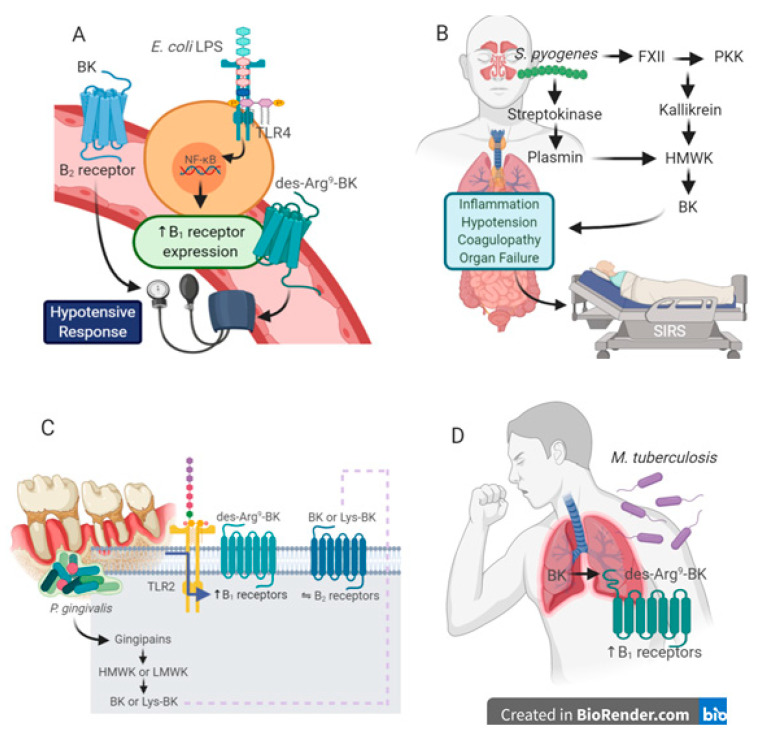
Figure 1
Figure 1
Relevance of components of the kinin system in bacterial infections. (A) E. coli LPS is a classical stimulus for kinin B1 receptor induction in vascular tissues, likely contributing to hypotension in systemic inflammation. E. coli LPS-induced B1 receptor upregulation rely on TLR4 activation and de novo protein synthesis, mediated by the transcriptional factor NF-κB. Part of the hypotensive effects of LPS are related to an increased production of BK and B2 receptor activation. (B) Streptococcal respiratory infections caused by S. pyogenes trigger the activation of contact system, via modulation of FXII, PPK and kallikrein. Plasmin activation by S. pyogenes streptokinase increases BK levels. Upon the bacteria spread throughout the blood stream due to increased vascular permeability, the patient develops systemic inflammatory response syndrome (SIRS) with coagulopathy and hypotension, causing multiple organ failure and shock. The modulation of one or more components of kinin formation pathways might be useful for management of septic patients. (C) P. gingivalis-produced gingipains cleave kininogen precursors, leading to BK and Lys-BK formation in periodontal tissues. Part of tissue destruction is mediated by the activation of constitutive B2 receptors. P. gingivalis LPS activates TLR2 and induces an upregulation of B1 receptors, which might sustain the chronic inflammation in periodontal disease. (D) M. tuberculosis infection is able to upregulate kinin B1 receptors in lungs, with an increased formation of the selective B1 receptor agonist, des-Arg9-BK from BK. Pharmacological inhibitors of B1 receptors might be therapeutic adjuvants for reducing TB infection burden.
Figure 2
Figure 2
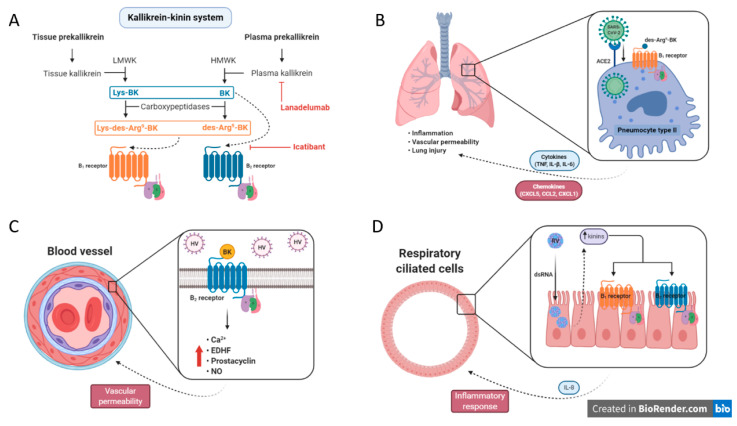
The role of kinin system in viral infections. (A) The kallikrein–kinin pathways and their intermediates, including enzymes, active metabolites, and receptors. In addition, the current pharmacological targets to modulate the system (e.g., lanadelumab and icatibant). Dashed lines designate the ligands and their respective receptors. (B) Hypothetical mechanism of crosstalk between SARS-CoV-2 and the kinin system, in which it could be one of the responsible routes for the worsening of Covid-19 clinical evolution. (C) Hantavirus (HV) modulates the bradykinin (BK)–B2 receptor axis promoting the release of Ca2+, endothelium-derived hyperpolarization factor (EDHF), prostacyclin and, nitric oxide (NO). Consequently, increasing the vascular permeability. (D) The “common cold virus”, called Rhinovirus (RV), has been suggested to enhance the expression of BK receptors (B1 and B2) by increasing the kinin agonists (i.e., BK, kallidin, and des-Arg9-BK) in nasal secretion of patients with respiratory syndromes. LMWK = low molecular weight kininogen; HMWK = high molecular weight kininogen; ACE2 = angiotensin-converting enzyme 2.
Figure 3
Figure 3
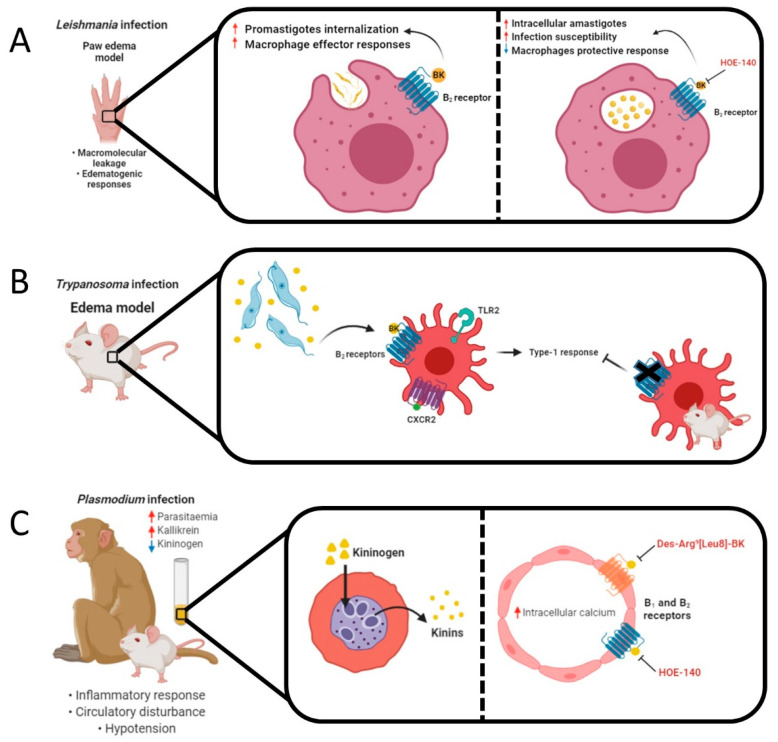
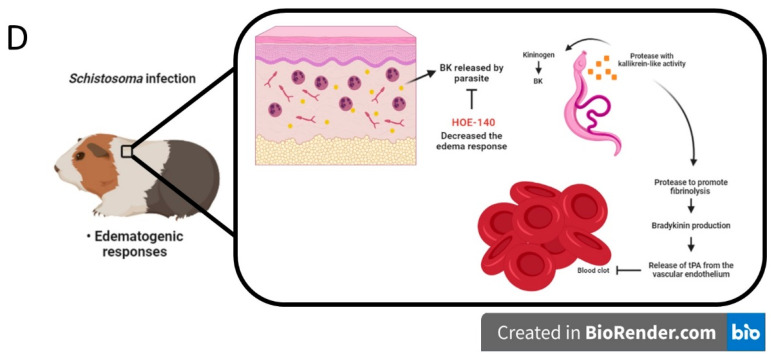
Animal models of parasite infection and the role of kinins. (A) Leishmania promastigotes induced macrophage effector responses through B2 receptor activation by BK in the paw edema model. The treatment with BK increased the uptake of promastigotes by macrophages, whereas HOE-140 blocked this effect. Even with the reduction of parasite internalization, the treatment with HOE-140 caused an increase in the rate of growth of intracellular amastigotes, making host cells susceptible to infection. (B) Trypomastigotes release kinins and sensitize dendritic cells (DCs) via B2 receptor activation. A cooperative activation of TLR2, CXCR2 and B2 receptors induces type 1 immunity. An impairment of type-1 responses was observed in CD11c+ DCs isolated from spleen of B2 receptor knockout mice, that had been infected by trypomastigotes, with reduced IL-12 production. (C) Monkeys or mice infected by Plasmodium presented decreased HMWK and LMWK levels, while serum kallikrein concentrations and kinin formation were elevated. These results were accompanied by increased parasitemia and kininase activity. Parasites internalized plasmatic kininogen and liberated vasoactive kinins (Lys-BK, BK, and des-Arg9-BK) through the activation of cysteine proteases falcipain-2 and falcipain-3. B1 and B2 receptor activation triggered intracellular Ca2+ increase in endothelial cells causing circulatory disturbances, while the selective kinin antagonists des-Arg9[Leu8]-BK and HOE-140 restored this effect. (D) Intradermal injection of Schistosoma cercariae into the guinea pig skin induced edema formation, BK release and leukocyte accumulation, while HOE-140 decreased the edema response. Adult male worms cleave HMWK through protease activation. Proteases trigger BK production from kininogen, stimulating the release of tissue plasminogen activator (tPA) from vascular endothelial cells, which would promote fibrinolysis and anticoagulant effects.
Figure 3
Figure 3
Animal models of parasite infection and the role of kinins. (A) Leishmania promastigotes induced macrophage effector responses through B2 receptor activation by BK in the paw edema model. The treatment with BK increased the uptake of promastigotes by macrophages, whereas HOE-140 blocked this effect. Even with the reduction of parasite internalization, the treatment with HOE-140 caused an increase in the rate of growth of intracellular amastigotes, making host cells susceptible to infection. (B) Trypomastigotes release kinins and sensitize dendritic cells (DCs) via B2 receptor activation. A cooperative activation of TLR2, CXCR2 and B2 receptors induces type 1 immunity. An impairment of type-1 responses was observed in CD11c+ DCs isolated from spleen of B2 receptor knockout mice, that had been infected by trypomastigotes, with reduced IL-12 production. (C) Monkeys or mice infected by Plasmodium presented decreased HMWK and LMWK levels, while serum kallikrein concentrations and kinin formation were elevated. These results were accompanied by increased parasitemia and kininase activity. Parasites internalized plasmatic kininogen and liberated vasoactive kinins (Lys-BK, BK, and des-Arg9-BK) through the activation of cysteine proteases falcipain-2 and falcipain-3. B1 and B2 receptor activation triggered intracellular Ca2+ increase in endothelial cells causing circulatory disturbances, while the selective kinin antagonists des-Arg9[Leu8]-BK and HOE-140 restored this effect. (D) Intradermal injection of Schistosoma cercariae into the guinea pig skin induced edema formation, BK release and leukocyte accumulation, while HOE-140 decreased the edema response. Adult male worms cleave HMWK through protease activation. Proteases trigger BK production from kininogen, stimulating the release of tissue plasminogen activator (tPA) from vascular endothelial cells, which would promote fibrinolysis and anticoagulant effects.
Figure 4
Figure 4
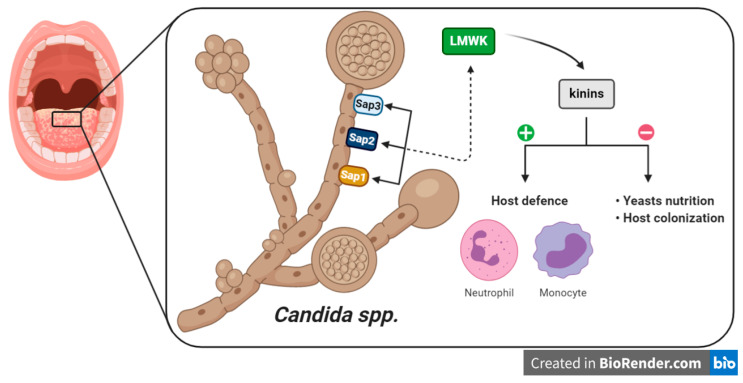
Involvement of kinin system in candidiasis. The pathogenicity of Candida spp. in sequential stages of interaction (Sap -> LMWK -> kinins -> effects) with kinin signaling in human host infection. Sap = secreted aspartic protease; LMWK = low molecular weight kininogen.

References

    1. Kaplan A.P., Joseph K., Silverberg M. Pathways for bradykinin formation and inflammatory disease. J. Allergy Clin. Immunol. 2002;109:195–209. doi: 10.1067/mai.2002.121316. - DOI - PubMed
    1. Wu Y. Contact pathway of coagulation and inflammation. Thromb. J. 2015;13:17. doi: 10.1186/s12959-015-0048-y. - DOI - PMC - PubMed
    1. Couture R., Harrisson M., Vianna R.M.J., Cloutier F. Kinin receptors in pain and inflammation. Eur. J. Pharmacol. 2001;429:161–176. doi: 10.1016/S0014-2999(01)01318-8. - DOI - PubMed
    1. Marceau F., Regoli D. Bradykinin receptor ligands: Therapeutic perspectives. Nat. Rev. Drug Discov. 2004;3:845–852. doi: 10.1038/nrd1522. - DOI - PubMed
    1. Leeb-Lundberg L.M.F., Marceau F., Müller-Esterl W., Pettibone D.J., Zuraw B.L., Leeb-Lundberg L.M.F. International Union of Pharmacology. XLV. Classification of the Kinin Receptor Family: From Molecular Mechanisms to Pathophysiological Consequences. Pharmacol. Rev. 2005;57:27–77. doi: 10.1124/pr.57.1.2. - DOI - PubMed

LinkOut - more resources