


Effectiveness of Social Measures against COVID-19 Outbreaks in Selected Japanese Regions Analyzed by System Dynamic Modeling
- PMID: 32867280
- PMCID: PMC7503244
- DOI: 10.3390/ijerph17176238
Effectiveness of Social Measures against COVID-19 Outbreaks in Selected Japanese Regions Analyzed by System Dynamic Modeling
Abstract
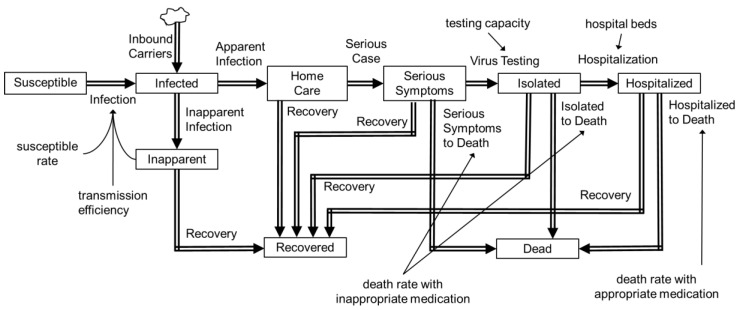
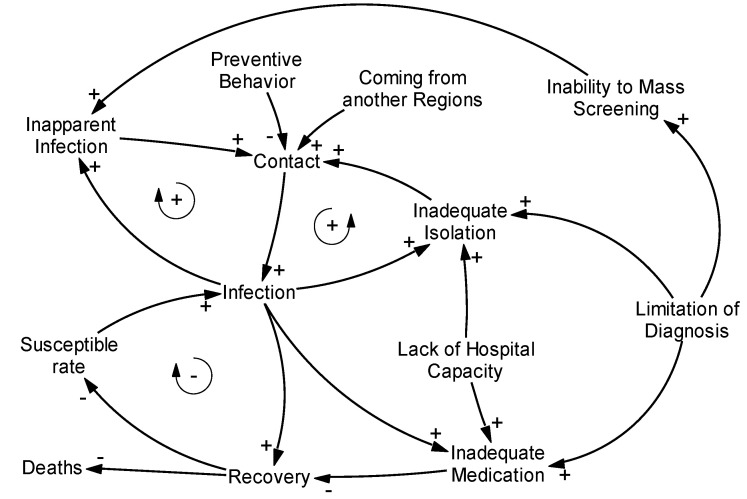
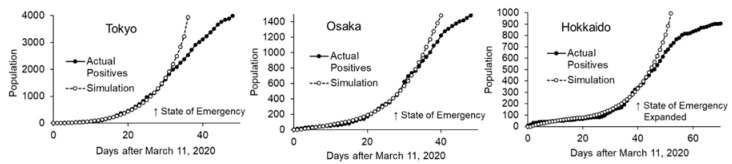
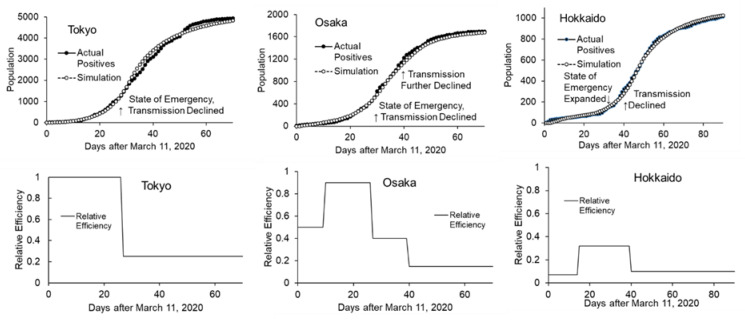
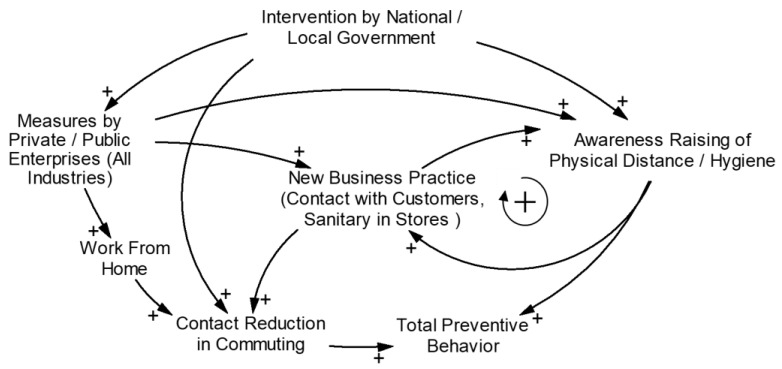
In Japan's response to the coronavirus disease 2019 (COVID-19), virus testing was limited to symptomatic patients due to limited capacity, resulting in uncertainty regarding the spread of infection and the appropriateness of countermeasures. System dynamic modelling, comprised of stock flow and infection modelling, was used to describe regional population dynamics and estimate assumed region-specific transmission rates. The estimated regional transmission rates were then mapped against actual patient data throughout the course of the interventions. This modelling, together with simulation studies, demonstrated the effectiveness of inbound traveler quarantine and resident self-isolation policies and practices. A causal loop approach was taken to link societal factors to infection control measures. This causal loop modelling suggested that the only effective measure against COVID-19 transmission in the Japanese context was intervention in the early stages of the outbreak by national and regional governments, and no social self-strengthening dynamics were demonstrated. These findings may contribute to an understanding of how social resilience to future infectious disease threats can be developed.
Keywords: COVID-19; new infectious disease; system dynamics.
Conflict of interest statement
M.N. is an employee of Nippon Shinyaku Co., Ltd., a pharmaceutical company. The authors declare no other conflict of interest.
Figures
References
-
- Weeks M.R., Li J., Lounsbury D., Green H.D., Abbott M., Berman M., Rohena L., Gonzalez R., Lang S., Mosher H. Using participatory system dynamics modeling to examine the local HIV test and treatment care continuum in order to reduce community viral load. Am. J. Community Psycol. 2017;60:584–598. doi: 10.1002/ajcp.12204. - DOI - PMC - PubMed
-
- Chen H.-J., Xue H., Liu S., Huang T.T.K., Wang Y.C., Wan Y. Obesity trend in the United States and economic intervention options to change it: A simulation study linking ecological epidemiology and system dynamics modeling. Public Health. 2018;161:20–28. doi: 10.1016/j.puhe.2018.01.013. - DOI - PMC - PubMed
MeSH terms
LinkOut - more resources
Full Text Sources
