


Development and Implementation of a Complex Health System Intervention Targeting Transitions of Care from Hospital to Post-acute Care
- PMID: 32869191
- PMCID: PMC7878619
- DOI: 10.1007/s11606-020-06140-2
Development and Implementation of a Complex Health System Intervention Targeting Transitions of Care from Hospital to Post-acute Care
Abstract
Background: Failure of effective transitions of care following hospitalization can lead to excess days in the hospital, readmissions, and adverse events. Evidence identifies both patient and system factors that influence poor care transitions, yet health systems struggle to translate evidence into complex interventions that have a meaningful impact on care transitions.
Objective: We report on our experience developing, pilot testing, and evaluating a complex intervention (Addressing Complex Transitions program, or ACT program) that aims to improve care transitions for complex patients.
Design: Following the Medical Research Council (MRC) framework, we engaged in iterative, stakeholder-driven work to develop a complex care intervention, assess feasibility and pilot methods, evaluate the intervention in practice, and facilitate ongoing implementation monitoring and dissemination.
Participants: Patients receiving care from UW Medicine's health system including 4 hospitals and 20-site Post-Acute Care network.
Intervention: Literature review and prospective data collection activities informed ACT program design. ACT program components include a tailored risk calculator that provides real-time scoring of transitions of care risk factors, a multidisciplinary team with the capacity to address complex barriers to safe transitions, and enhanced discharge workflows to improve care transitions for complex patients.
Key measures: Program evaluation metrics included estimated hospital days saved and program acceptance by care team members.
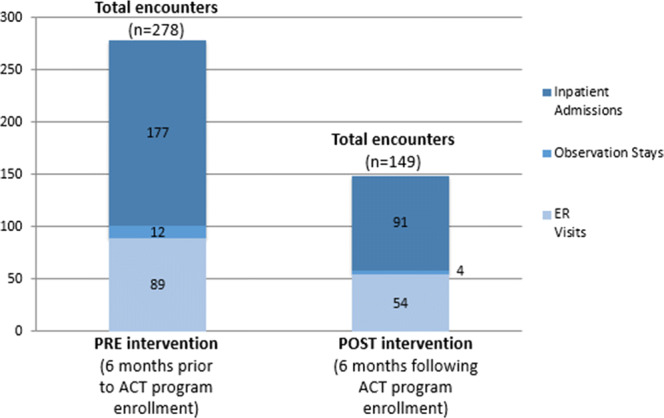
Key results: During the 6-month pilot, 565 patients were screened and 97 enrolled in the ACT program. An estimated 664 hospital days were saved for the index admission of ACT program participants. Analysis of pre/post-hospital utilization for ACT program participants showed an estimated 3227 fewer hospital days after ACT program enrollment.
Conclusions: Health systems need to address increasingly difficult challenges in care delivery. The use of evidence-based frameworks, such as the MRC framework, can guide systems to design complex interventions that respond to their local context and stakeholder needs.
Keywords: care transitions; complex intervention; long length of stay; post-acute care.
Conflict of interest statement
The authors declare that they do not have a conflict of interest.
Figures
References
-
- Health policy brief: improving care transitions | health affairs. https://www.healthaffairs.org/do/10.1377/hblog20120921.023379/full/. Accessed September 3, 2019. - DOI
Publication types
MeSH terms
LinkOut - more resources
Full Text Sources
