


Phase 1 study of the immunotoxin LMB-100 in patients with mesothelioma and other solid tumors expressing mesothelin
- PMID: 32870522
- PMCID: PMC8552963
- DOI: 10.1002/cncr.33145
Phase 1 study of the immunotoxin LMB-100 in patients with mesothelioma and other solid tumors expressing mesothelin
Abstract
Background: LMB-100 is an antibody-toxin conjugate with an antimesothelin Fab linked to a 24-kilodalton portion of Pseudomonas exotoxin A with mutations that decrease immunogenicity. The objective of the current first-in-human phase 1 study was to determine the maximum tolerated dose (MTD) and safety in patients with advanced solid tumors expressing mesothelin.
Methods: Cohorts of 1 to 7 patients received intravenous LMB-100 at 7 dose levels from 40 µg/kg to 250 µg/kg intravenously on days 1, 3, and 5 of a 21-day cycle.
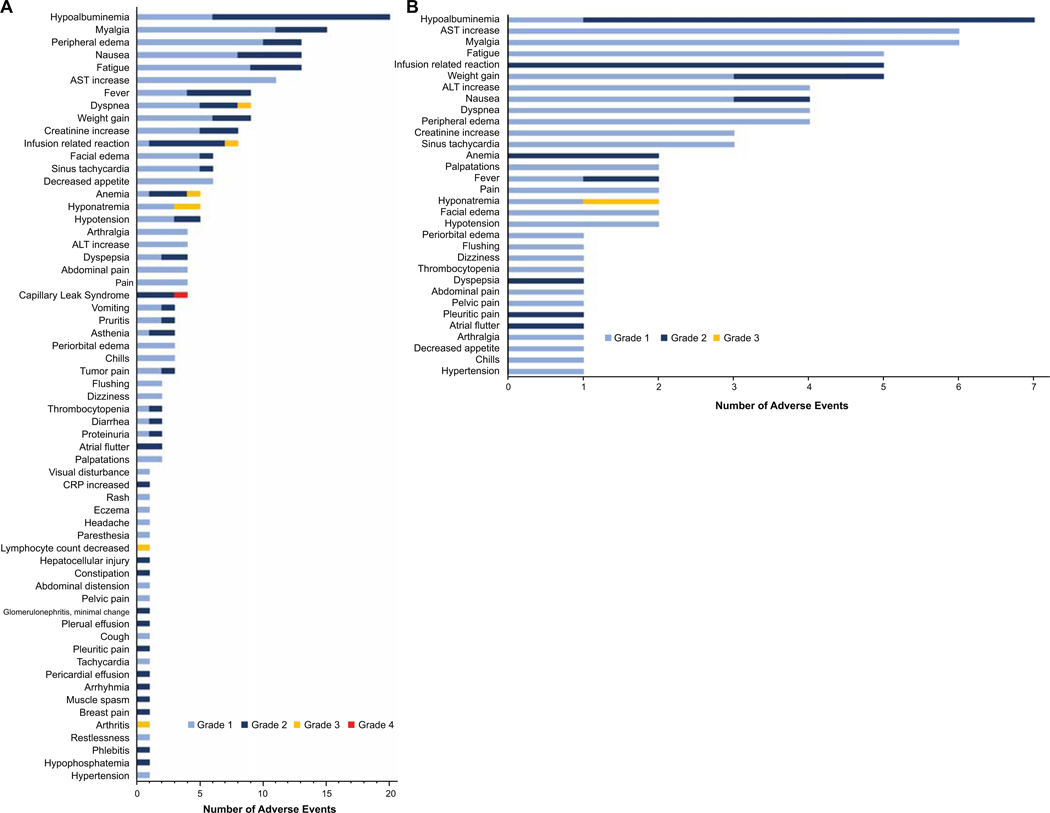
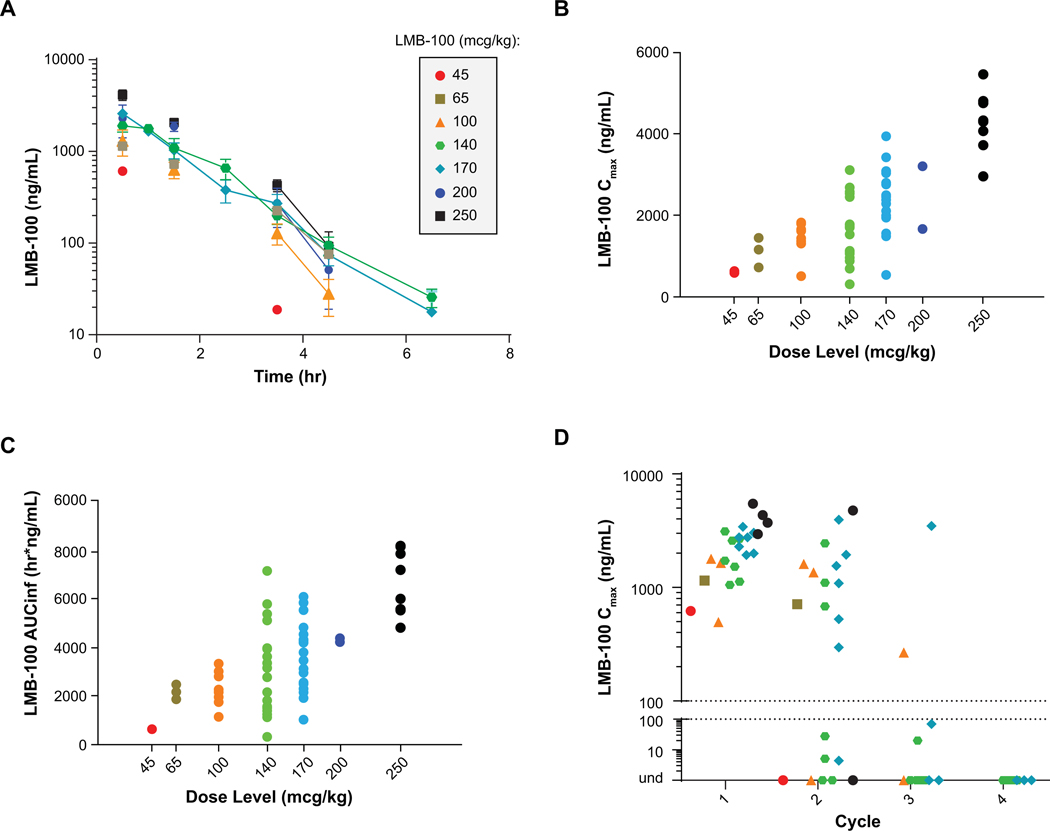
Results: Of the 25 patients accrued, 17 had mesothelioma, 3 each had ovarian or pancreatic cancer, and 2 patients had gastric cancer. Dose-limiting toxicities occurred in 2 of 4 patients treated at a dose of 250 µg/kg (capillary leak syndrome) and in 3 of 7 patients treated at a dose of 170 µg/kg (creatinine increase). The MTD of LMB-100 was 140 µg/kg. Of the 10 patients with mesothelioma who were treated at doses of 170 µg/kg or 140 µg/kg, 8 had stable disease and 2 developed progressive disease. Peak LMB-100 plasma concentrations were dose-dependent during cycle 1. The development of antidrug antibodies decreased LMB-100 blood levels in 8 of 21 patients (38%) who received cycle 2 and 9 of 11 patients (81.8%) who received cycle 3.
Conclusions: The MTD for single-agent LMB-100 was found to be 140 µg/kg given on a schedule of every other day for 3 doses every 3 weeks. Although less immunogenic than the first-generation antimesothelin immunotoxin SS1P, the majority of patients developed antidrug antibodies after 2 cycles, indicating that LMB-100 has limited antitumor efficacy as a single agent. Phase 2 studies of LMB-100 plus pembrolizumab currently are ongoing for patients with mesothelioma and lung cancer.
Lay summary: Mesothelin, a cell surface antigen, is an attractive target for cancer therapy given its limited expression in normal human tissues and high expression in many human cancers. LMB-100 is a recombinant antimesothelin immunotoxin consisting of a humanized antimesothelin antibody fragment fused to a truncated Pseudomonas exotoxin A. In the current study, the authors determined the safety, maximum tolerated dose, and pharmacokinetics of LMB-100, as well as the generation of antidrug antibodies. Ongoing phase 2 clinical trials are evaluating the combination of LMB-100 plus pembrolizumab in patients with treatment-refractory mesothelioma and non-small cell lung cancer.
Keywords: LMB-100; immunotoxin; mesothelin; mesothelioma.
© 2020 American Cancer Society.
Conflict of interest statement
Disclosure of Potential Conflicts of Interest
The other authors declare that they have no competing interests.
Figures
References
-
- Chang K, Pastan I, Willingham MC. Isolation and characterization of a monoclonal antibody, K1, reactive with ovarian cancers and normal mesothelium. Int J Cancer. 1992;50: 373–381. - PubMed
-
- Argani P, Iacobuzio-Donahue C, Ryu B, et al. Mesothelin is overexpressed in the vast majority of ductal adenocarcinomas of the pancreas: identification of a new pancreatic cancer marker by serial analysis of gene expression (SAGE). Clin Cancer Res. 2001;7: 3862–3868. - PubMed
Publication types
MeSH terms
Substances
Grants and funding
LinkOut - more resources
Full Text Sources
Other Literature Sources
Medical
