


Moist Wound Healing with Commonly Available Dressings
- PMID: 32870777
- PMCID: PMC8568799
- DOI: 10.1089/wound.2020.1232
Moist Wound Healing with Commonly Available Dressings
Abstract
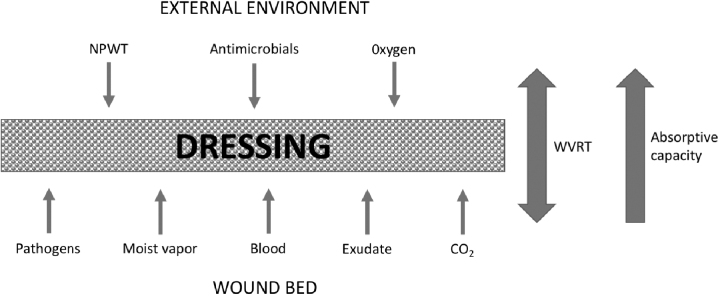
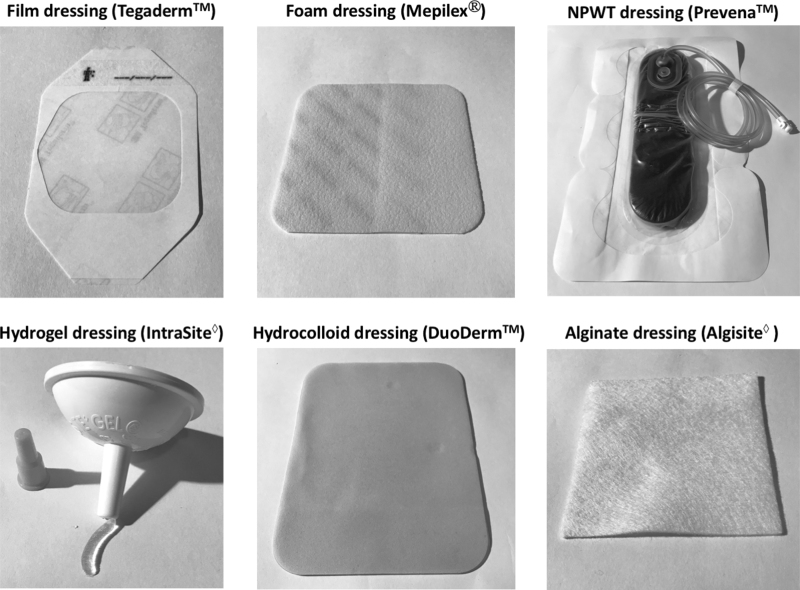
Significance: A moist wound environment has several benefits that result in faster and better quality of healing. It facilitates autolytic debridement, reduces pain, reduces scarring, activates collagen synthesis, facilitates and promotes keratinocyte migration over the wound surface, and supports the presence and function of nutrients, growth factors, and other soluble mediators in the wound microenvironment. Recent Advances: Wound dressings can be utilized to create, maintain, and control a moist environment for healing. Moist wound dressings can be divided into films, foams, hydrocolloids, hydrogels, and alginates. We are also including negative pressure wound therapy systems in the moist dressings. Critical Issues: An optimal wound dressing should provide a moist environment and have an optimal water vapor transmission rate (WVTR) and absorptive capacity. It should also protect the wound against trauma and contamination and be easy to apply, painless to remove, and esthetically acceptable or even pleasing. Future Directions: Interventions, particularly dressing changes, by medical caregivers are labor intensive and expensive and there should be a continuous effort to reduce their number per week. Smart dressings with integrated microsensors and delivery capabilities that would allow wireless real-time monitoring and treatment of the wound would be very advantageous. This way the state of the wound as well as the wear time of the dressing could be assessed without dressing removal or visit to the wound care center. In addition, an ability to adjust the WVTRs to the exudate level of the wound (or having a large absorptive capacity without changing the WVTR) would be useful. This feature would guarantee an optimal level of hydration of the wound surface throughout the treatment.
Keywords: absorptive capacity; antimicrobials; moist wound dressings; moist wound healing; negative pressure wound therapy; water vapor transmission rate; wear time.
Figures


References
-
- Field FK, Kerstein MD. Overview of wound healing in a moist environment. Am J Surg 1994;167:2S–6S. - PubMed
-
- Winter GD. Formation of the scab and the rate of epithelization of superficial wounds in the skin of the young domestic pig. Nature 1962;193:293. - PubMed
-
- Svensjö T, Pomahac B, Yao F, et al. . Accelerated healing of full-thickness skin wounds in a wet environment. Plast Reconstr Surg 2000;106:602. - PubMed
-
- Vogt PM, Andree C, Breuing K, et al. . Dry, moist, and wet skin wound repair. Ann Plast Surg 1995;34:493. - PubMed
MeSH terms
Substances
LinkOut - more resources
Full Text Sources
Other Literature Sources
Medical
