Review
. 2020 Aug 30;25(17):3954.
doi: 10.3390/molecules25173954.

Microplastics in Ecosystems: From Current Trends to Bio-Based Removal Strategies

Affiliations
Review

Microplastics in Ecosystems: From Current Trends to Bio-Based Removal Strategies

Solange Magalhães et al. Molecules. .

Abstract

Plastics are widely used due to their excellent properties, inexpensiveness and versatility leading to an exponential consumption growth during the last decades. However, most plastic does not biodegrade in any meaningful sense; it can exist for hundreds of years. Only a small percentage of plastic waste is recycled, the rest being dumped in landfills, incinerated or simply not collected. Waste-water treatment plants can only minimize the problem by trapping plastic particles of larger size and some smaller ones remain within oxidation ponds or sewage sludge, but a large amount of microplastics still contaminate water streams and marine systems. Thus, it is clear that in order to tackle this potential ecological disaster, new strategies are necessary. This review aims at briefly introducing the microplastics threat and critically discusses emerging technologies, which are capable to efficiently clean aqueous media. Special focus is given to novel greener approaches based on lignocellulose flocculants and other biomaterials. In the final part of the present review, it was given a proof of concept, using a bioflocculant to remove micronized plastic from aqueous medium. The obtained results demonstrate the huge potential of these biopolymers to clean waters from the microplastics threat, using flocculants with appropriate structure.

Keywords: ecosystems; flocculants; lignocelluloses; microplastics; removal; wastewater.


Conflict of interest statement

The authors declare no conflict of interest.

Figures

Figure 1
Figure 1
Worldwide plastic demand by polymer type. Adapted from reference [3].
Figure 2
Figure 2
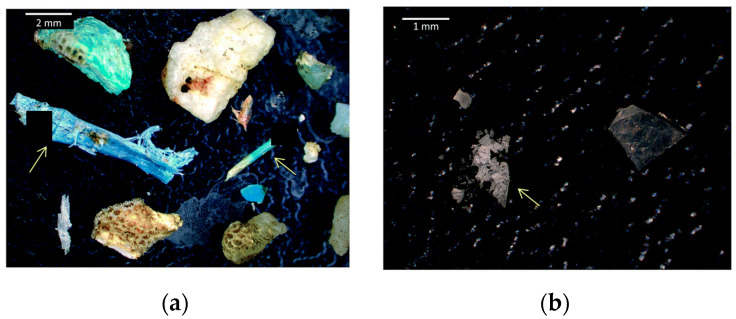
Images of Pacific Ocean trawl microplastic particles, a) primary and b) secondary microplastics, some with adhered crustaceans, mineral crusts, or radiolarians (taken from reference [19] with permission of the Royal Society of Chemistry).
Figure 3
Figure 3
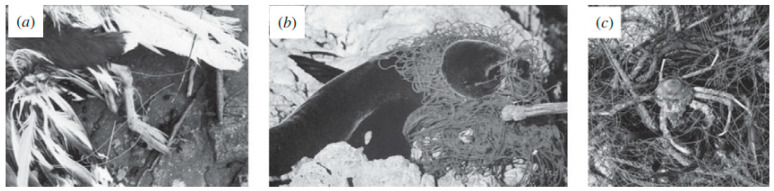
Examples of animals that ingested microplastics: (a) southern black-backed gull, Larus dominicanus caught and hooked in nylon filament fishing line; (b) a New Zealand fur seal trapped in discarded netting and (c) Ghost fishing-derelict fishing gear dredged from >100 m on the Otago shelf (taken from reference [23] with permission of the Royal Society).
Figure 4
Figure 4
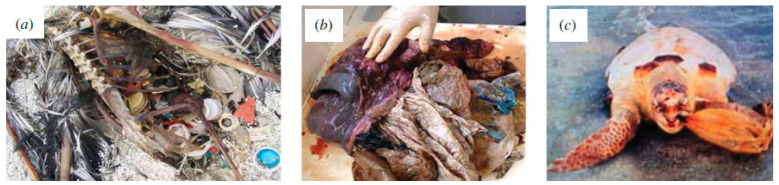
Examples of ingestion: (a) Laysan Albatross; (b) plastic from the stomach of a young Minke whale that had been washed ashore dead in France and (c) stranded sea turtle disgorging an inflated plastic bag. (taken from reference [23] with permission of the Royal Society).
Figure 5
Figure 5
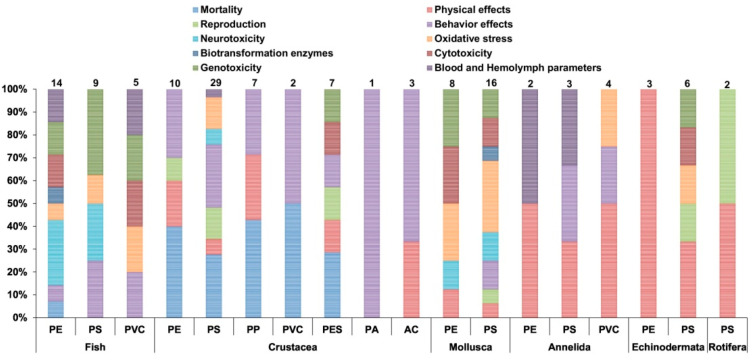
Ecotoxicological effects of microplastics on the different groups of organisms. Each bar has the total number of studies on it. [32].
Figure 6
Figure 6
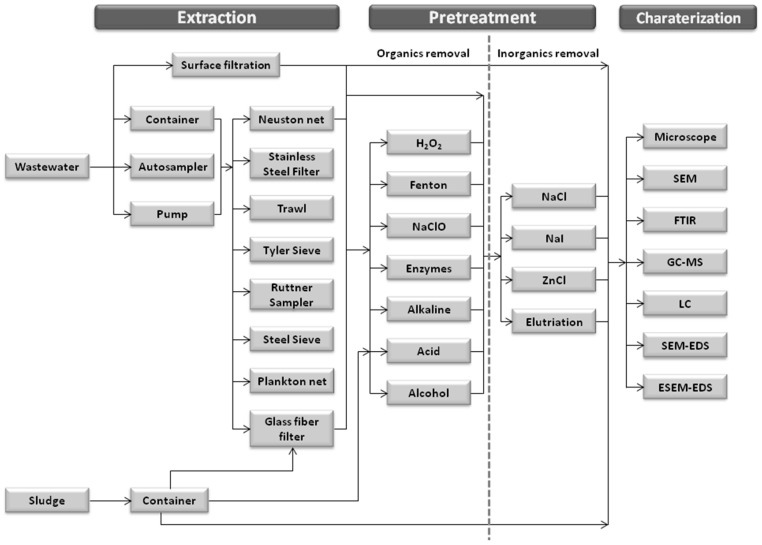
Flow chart summarizing steps and techniques used for microplastics detection in WWTPs (adapted from reference [4,47]).
Figure 7
Figure 7
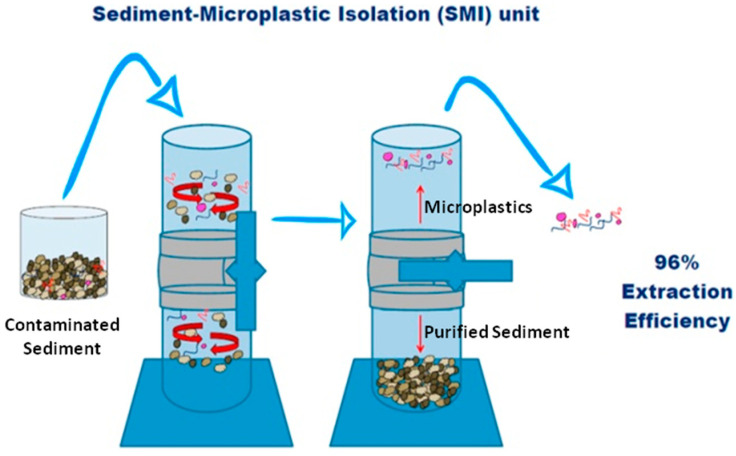
Schematic representation of the SMI approach (taken from reference [9] with permission from Elsevier).
Figure 8
Figure 8
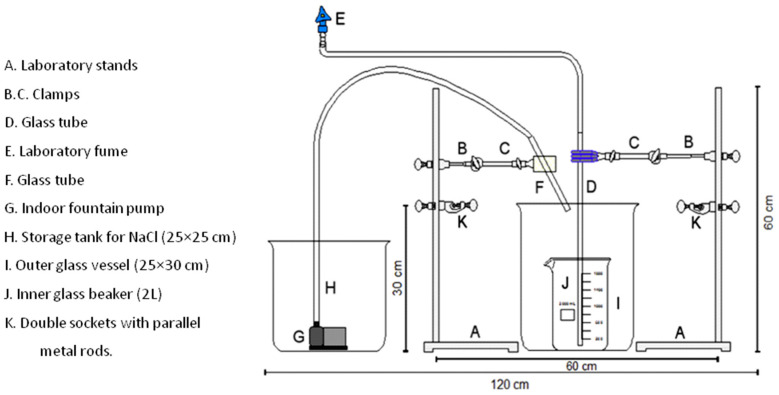
Scheme of the experimental setup for the air-induced overflow AIO method (taken from reference [50] with permission of Elsevier).
Figure 9
Figure 9
Schematic representation of multiple pollutants removal from water using magnetic polyoxometalate supported ionic liquid phases (taken from reference [55] with permission of John Wiley & Sons, Inc).
Figure 10
Figure 10
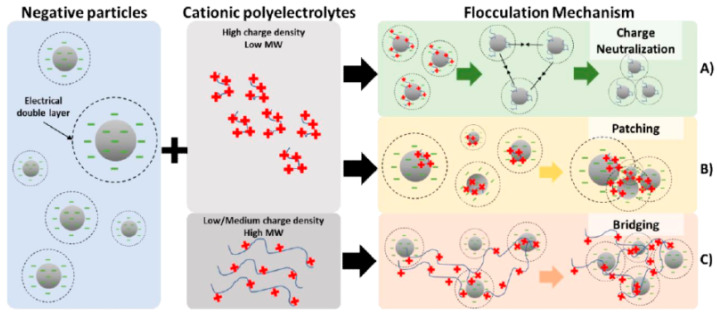
Illustration of the hypothetic flocculation mechanisms occurring among negatively charged particles and cationic polyeletrolytes: (A) charge neutralization, (B) patching and (C) bridging.
Figure 11
Figure 11
Schematic representation of reductive amination of b-glucans. Taken from reference [74] with permission of the American Chemical Society.
Figure 12
Figure 12
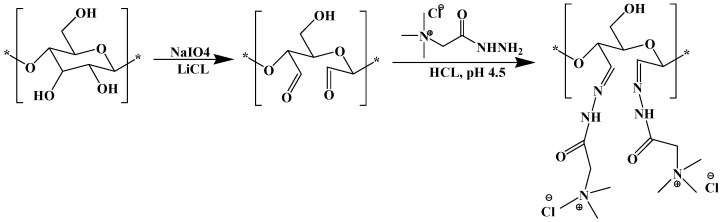
Two-step reaction scheme used to produce cationic cellulose (Taken from reference [77] with permission of the Royal Society of Chemistry).
Figure 13
Figure 13
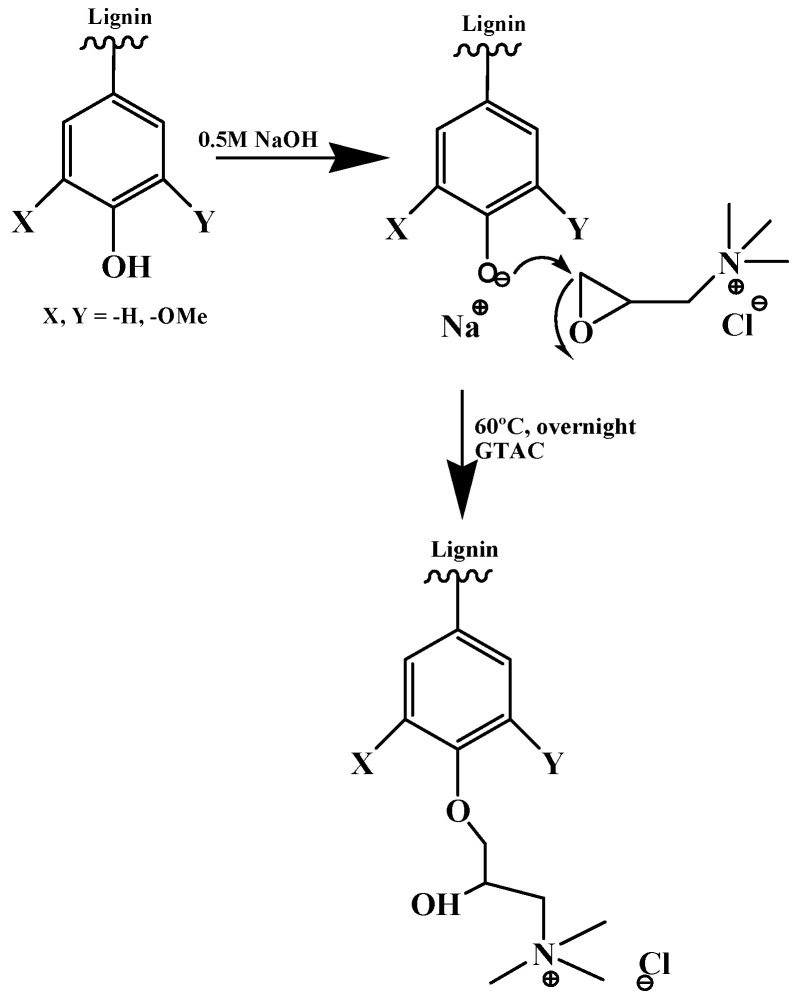
Reaction scheme for lignin derivatization with GTAC under alkaline conditions (Taken from reference [67] with permission of the European Polymer Journal).
Figure 14
Figure 14
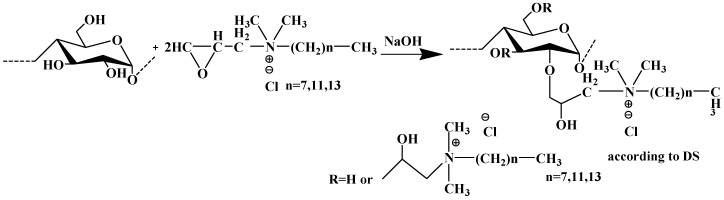
Synthesis scheme of cationic starch derivatives. Taken from reference [62] with permission of Elsevier.
Figure 15
Figure 15
Chemical reaction of acetic anhydride with cellulose (Taken from reference [80] with permission of the Springer Nature).
Figure 16
Figure 16
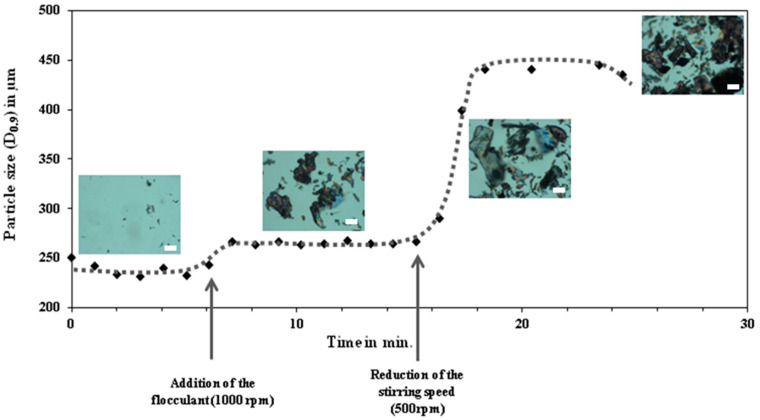
Evolution of particle size (D0.9) as function of time with different concentrations of flocculant (w/w) 0.01% (top) and 0.1% (bottom) based on the concentration of microplastics. The scale bars in the inserts represent 100 µm.
Figure 16
Figure 16
Evolution of particle size (D0.9) as function of time with different concentrations of flocculant (w/w) 0.01% (top) and 0.1% (bottom) based on the concentration of microplastics. The scale bars in the inserts represent 100 µm.

References

    1. Cole M., Lindeque P., Halsband C., Galloway T.S. Microplastics as contaminants in the marine environment: A review. Mar. Pollut. Bull. 2011;62:2588–2597. doi: 10.1016/j.marpolbul.2011.09.025. - DOI - PubMed
    1. Academies S. A Scientific Perspective on Microplastics in Nature and Society. SAPEA; Berlin, Germany: 2019. - DOI
    1. Rima F.J.G.S. Setting the facts straight on plastics. [(accessed on 4 February 2020)]; Available online: https://www.weforum.org/agenda/2019/10/plastics-what-are-they-explainer/
    1. Sun J., Dai X., Wang Q., van Loosdrecht M.C.M., Ni B.-J. Microplastics in wastewater treatment plants: Detection, occurrence and removal. Water Res. 2019;152:21–37. doi: 10.1016/j.watres.2018.12.050. - DOI - PubMed
    1. Guardian T. A million bottles a minute: World’s plastic binge ‘as dangerous as climate change’. [(accessed on 7 December 2019)]; Available online: https://www.theguardian.com/environment/2017/jun/28/a-million-a-minute-w....

MeSH terms

LinkOut - more resources