


Young Adults Have Worse Outcomes Than Older Adults: Secondary Analysis of a Medication Trial for Opioid Use Disorder
- PMID: 32873500
- PMCID: PMC7683373
- DOI: 10.1016/j.jadohealth.2020.07.038
Young Adults Have Worse Outcomes Than Older Adults: Secondary Analysis of a Medication Trial for Opioid Use Disorder
Abstract
Purpose: Young adults are disproportionately affected by the current opioid crisis. Although medications for opioid use disorder are broadly effective, with reductions in morbidity and mortality, the particular effectiveness of medications for opioid use disorder among young adults is less well understood.
Methods: This secondary analysis compared young adults (aged 18-25 years) with older adults (aged ≥26 years) in a large comparative effectiveness trial ("XBOT") that randomized subjects to extended-release naltrexone or sublingual buprenorphine-naloxone for 6 months. Opioid relapse was defined by opioid use over four consecutive weeks or seven consecutive days, using urine testing and self-report.
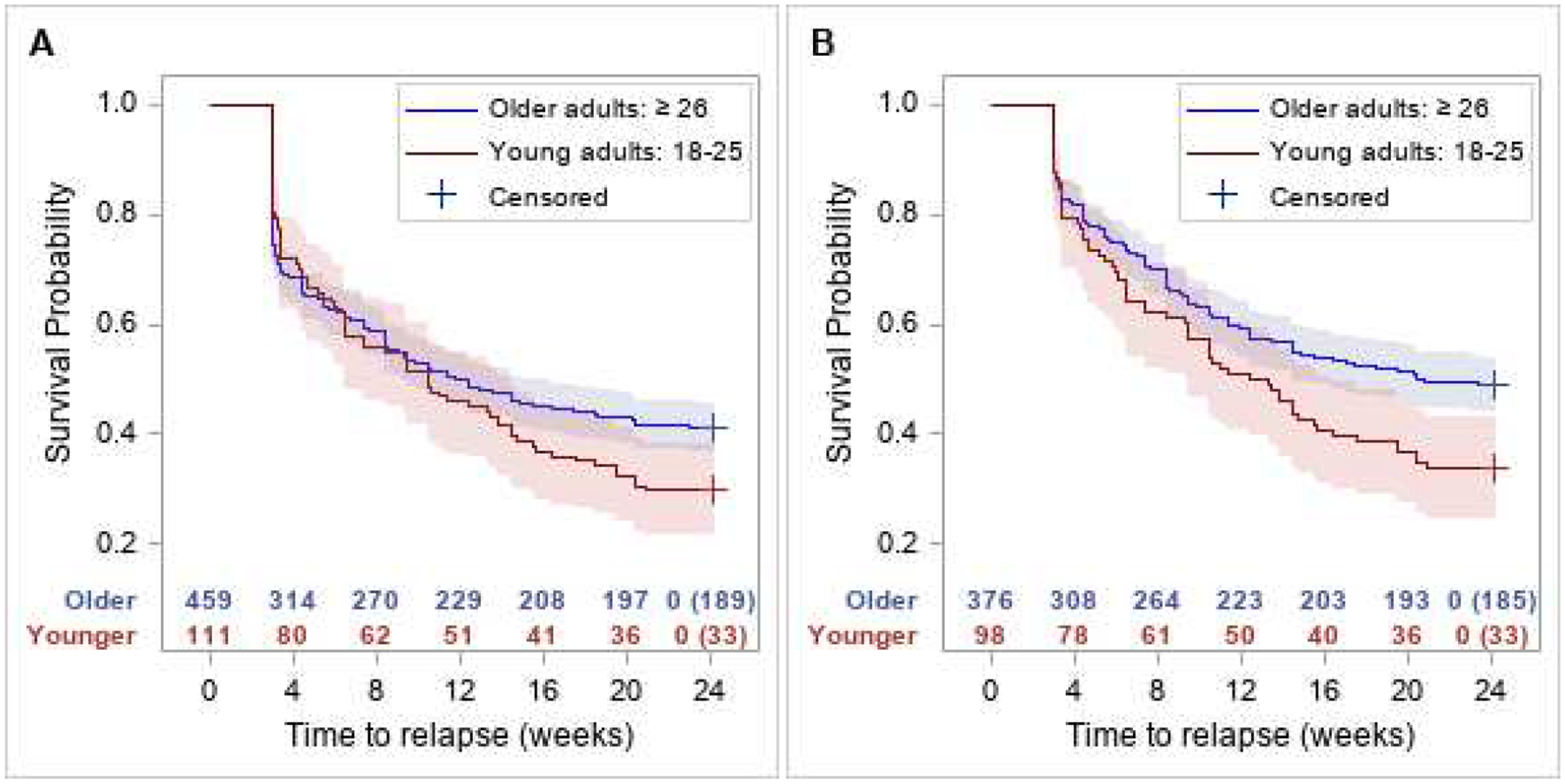
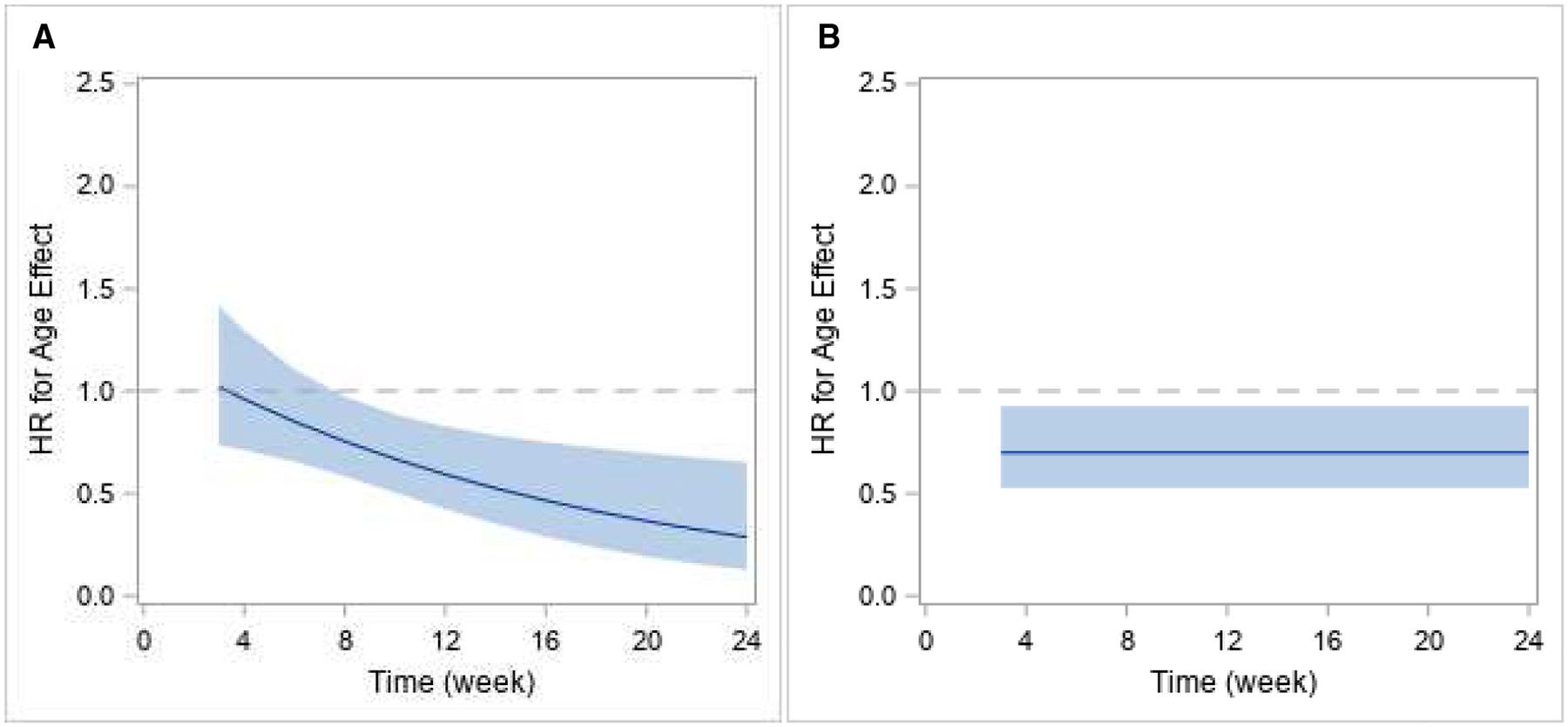
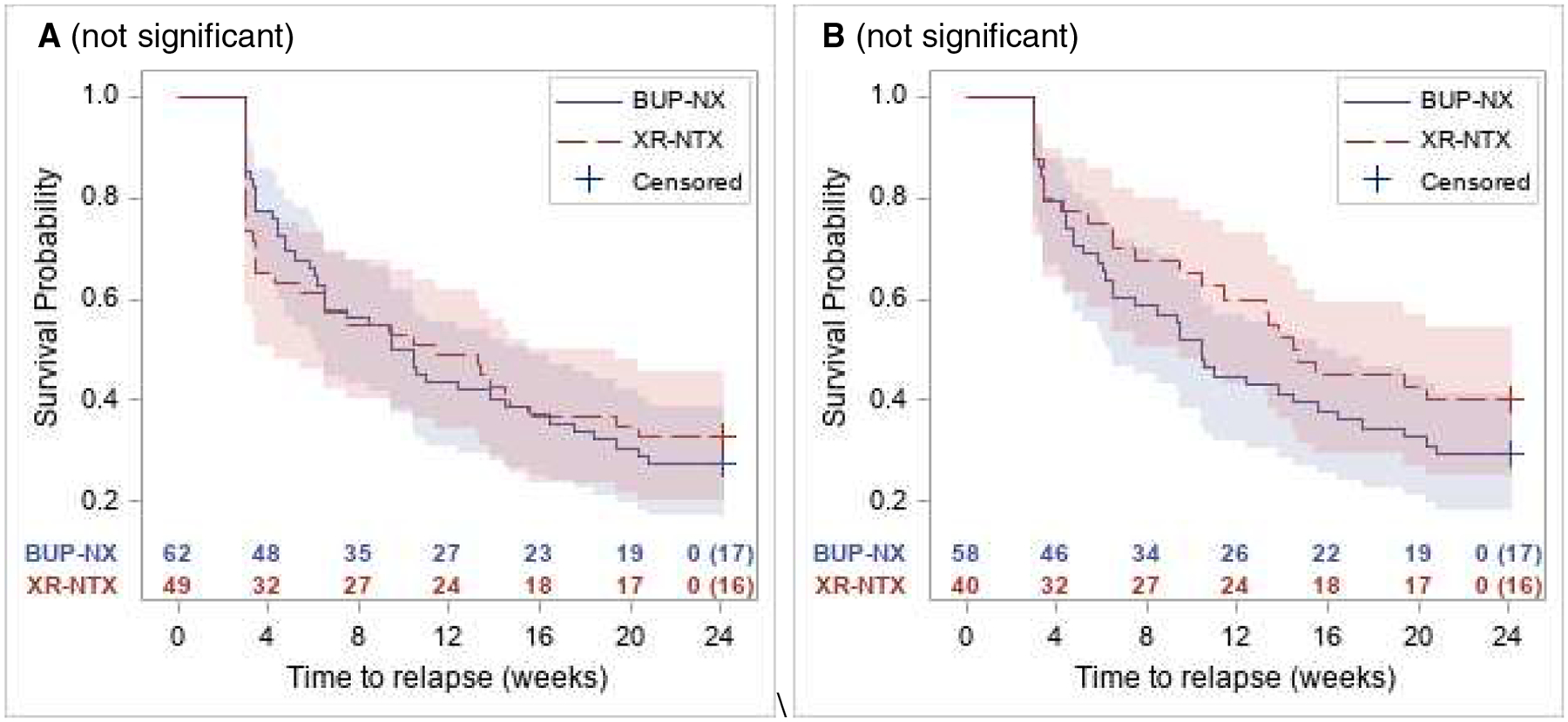
Results: Among subjects in the intention-to-treat sample (n = 570, all randomized participants), a main effect of age group was found, with higher relapse rates among young adults (70.3%) compared with older adults (58.2%), with an odds ratio of 1.72 (95% confidence interval = 1.08-2.70), p = .02. In the per-protocol sample (n = 474, only participants who started medication), relapse rates were higher among young adults (66.3%) compared with older adults (50.8%), with an odds ratio of 1.91 (95% confidence interval = 1.19-3.06). Among the intention-to-treat sample, survival analysis revealed a significant time-by-age group interaction (p = .01) with more relapse over time in young adults. No significant interactions between age and medication group were detected.
Conclusions: Young adults have increased rates of relapse compared with older adults, perhaps because of vulnerabilities that increase their risk for treatment dropout and medication nonadherence, regardless of medication assignment. These results suggest that specialized, developmentally informed interventions may be needed to improve retention and successful treatment of opioid use disorder among young adults.
Keywords: Addiction treatment; Buprenorphine; Naltrexone; Opioid use disorder; Young adults.
Copyright © 2020 Society for Adolescent Health and Medicine. Published by Elsevier Inc. All rights reserved.
Conflict of interest statement
Conflicts: Dr Fishman has been a consultant for Alkermes, US World Meds and Drug Delivery LLC.
Figures
Comment in
-
The Broken Care Continuum for Young Adults With Opioid Addiction.J Adolesc Health. 2020 Dec;67(6):735-736. doi: 10.1016/j.jadohealth.2020.09.020. J Adolesc Health. 2020. PMID: 33220792 Free PMC article. No abstract available.
References
-
- Substance Abuse and Mental Health Services Administration. Key Substance Use and Mental Health Indicators in the United States: Results from the 2016 National Survey on Drug Use and Health, https://www.samhsa.gov/data/report/key-substance-use-and-mental-health-i...
Publication types
MeSH terms
Substances
Grants and funding
- U10 DA013046/DA/NIDA NIH HHS/United States
- UG1 DA013035/DA/NIDA NIH HHS/United States
- U10 DA013732/DA/NIDA NIH HHS/United States
- U10 DA015833/DA/NIDA NIH HHS/United States
- U10 DA013720/DA/NIDA NIH HHS/United States
- U10 DA015831/DA/NIDA NIH HHS/United States
- U10 DA013035/DA/NIDA NIH HHS/United States
- U10 DA013714/DA/NIDA NIH HHS/United States
- R61 AT010614/AT/NCCIH NIH HHS/United States
- U10 DA013045/DA/NIDA NIH HHS/United States
- U10 DA013034/DA/NIDA NIH HHS/United States
- UG1 DA013034/DA/NIDA NIH HHS/United States
- UG1 DA013720/DA/NIDA NIH HHS/United States
- UG1 DA013732/DA/NIDA NIH HHS/United States
- UG1 DA013714/DA/NIDA NIH HHS/United States
- UG1 DA015831/DA/NIDA NIH HHS/United States
LinkOut - more resources
Full Text Sources
Medical
