


A Window of Vascular Plasticity Coupled to Behavioral Recovery after Stroke
- PMID: 32873722
- PMCID: PMC7531554
- DOI: 10.1523/JNEUROSCI.1464-20.2020
A Window of Vascular Plasticity Coupled to Behavioral Recovery after Stroke
Abstract
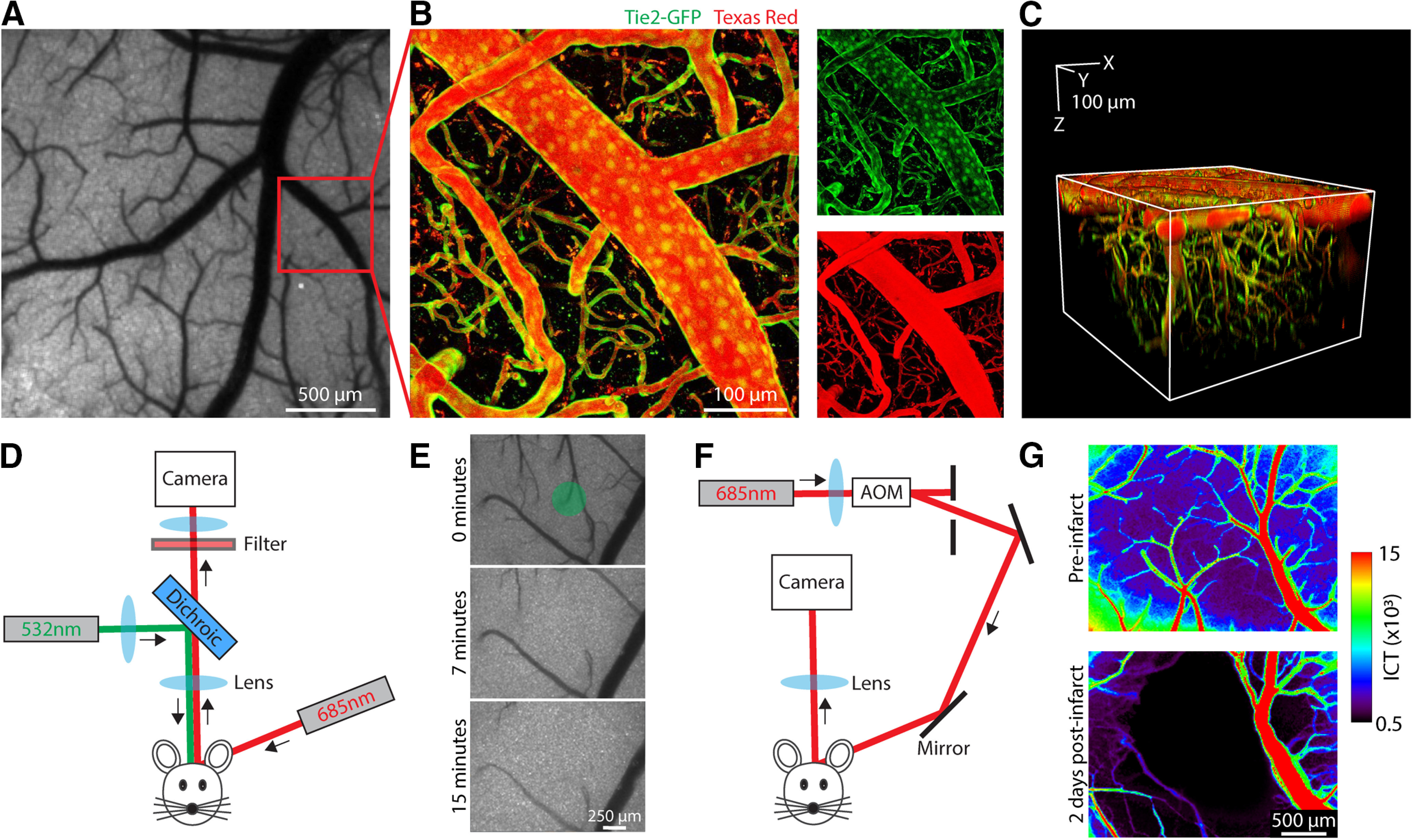
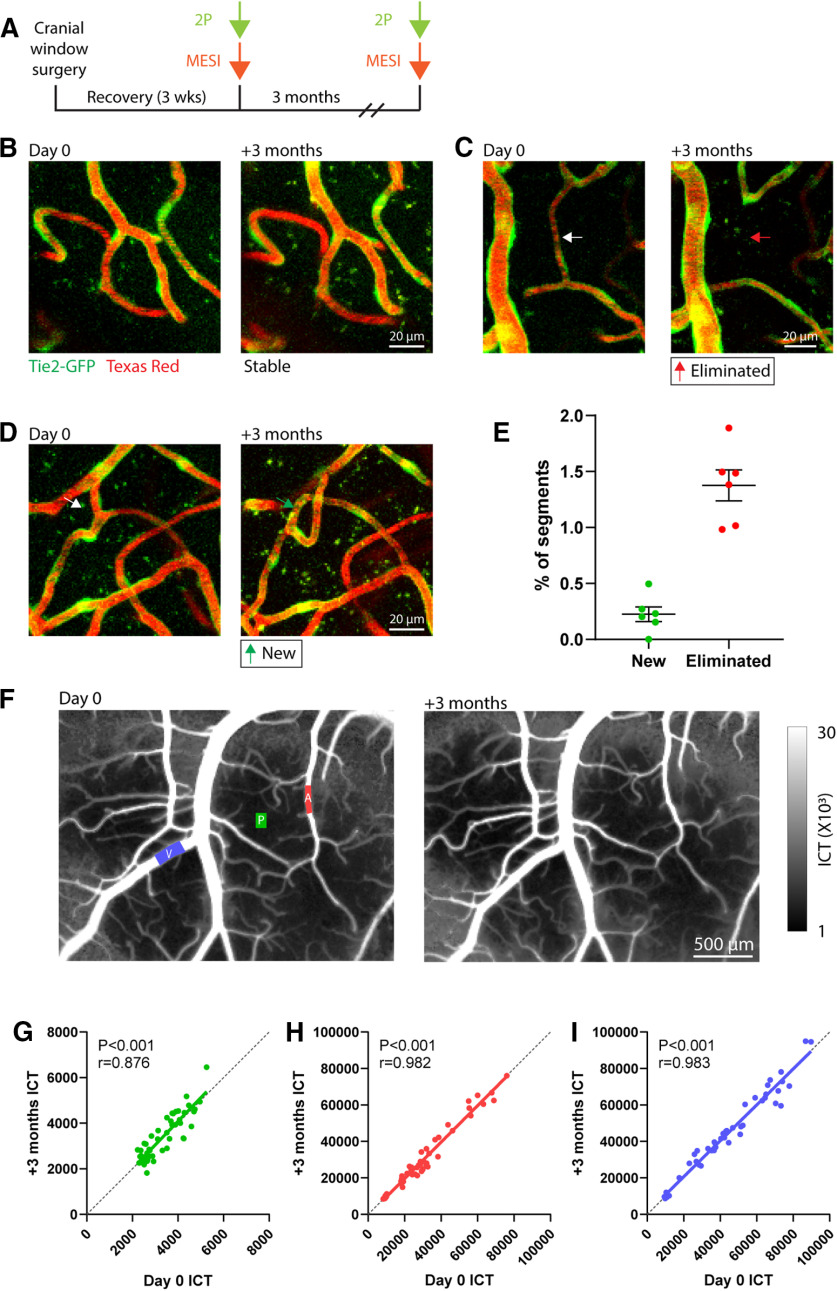
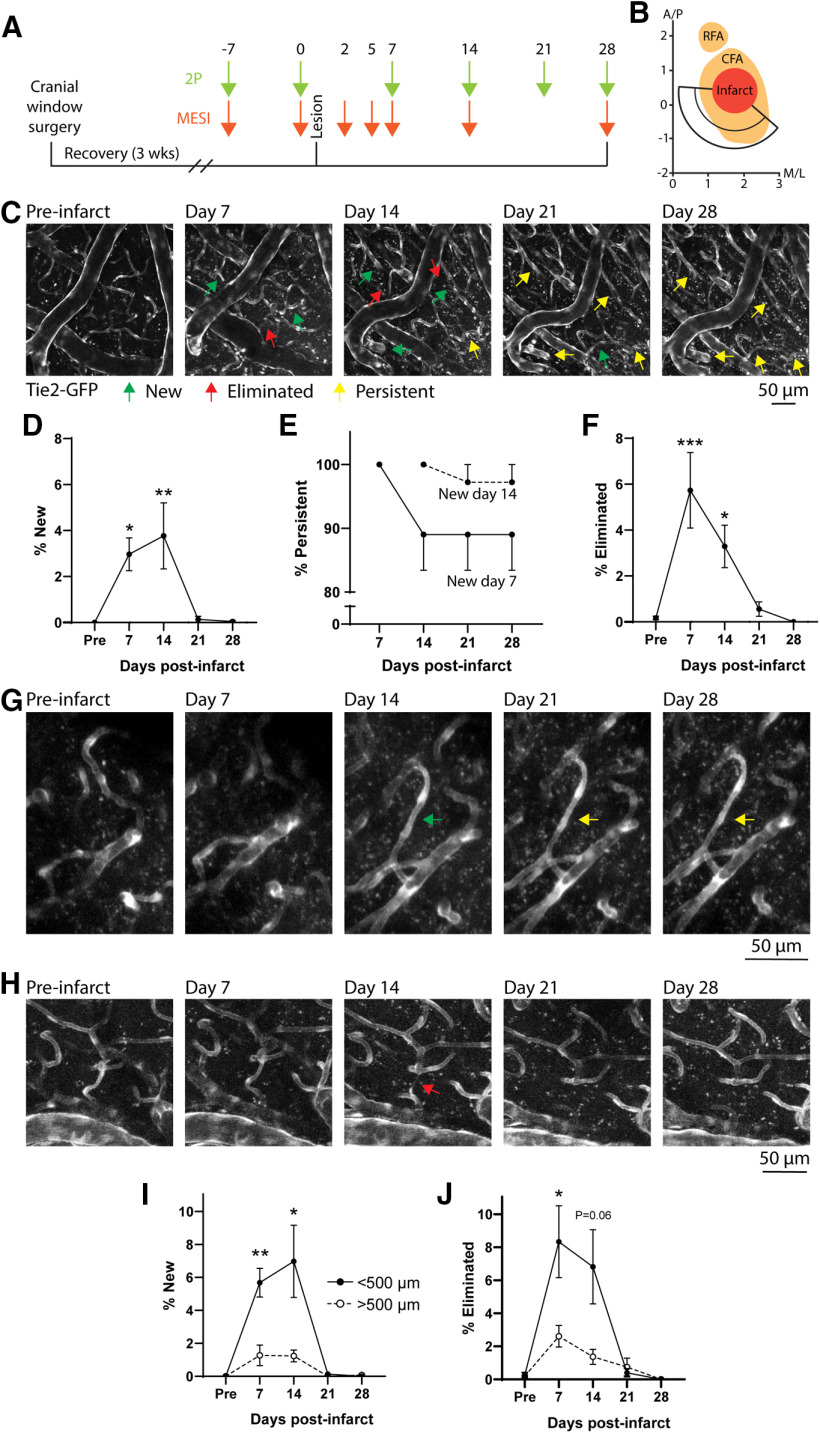
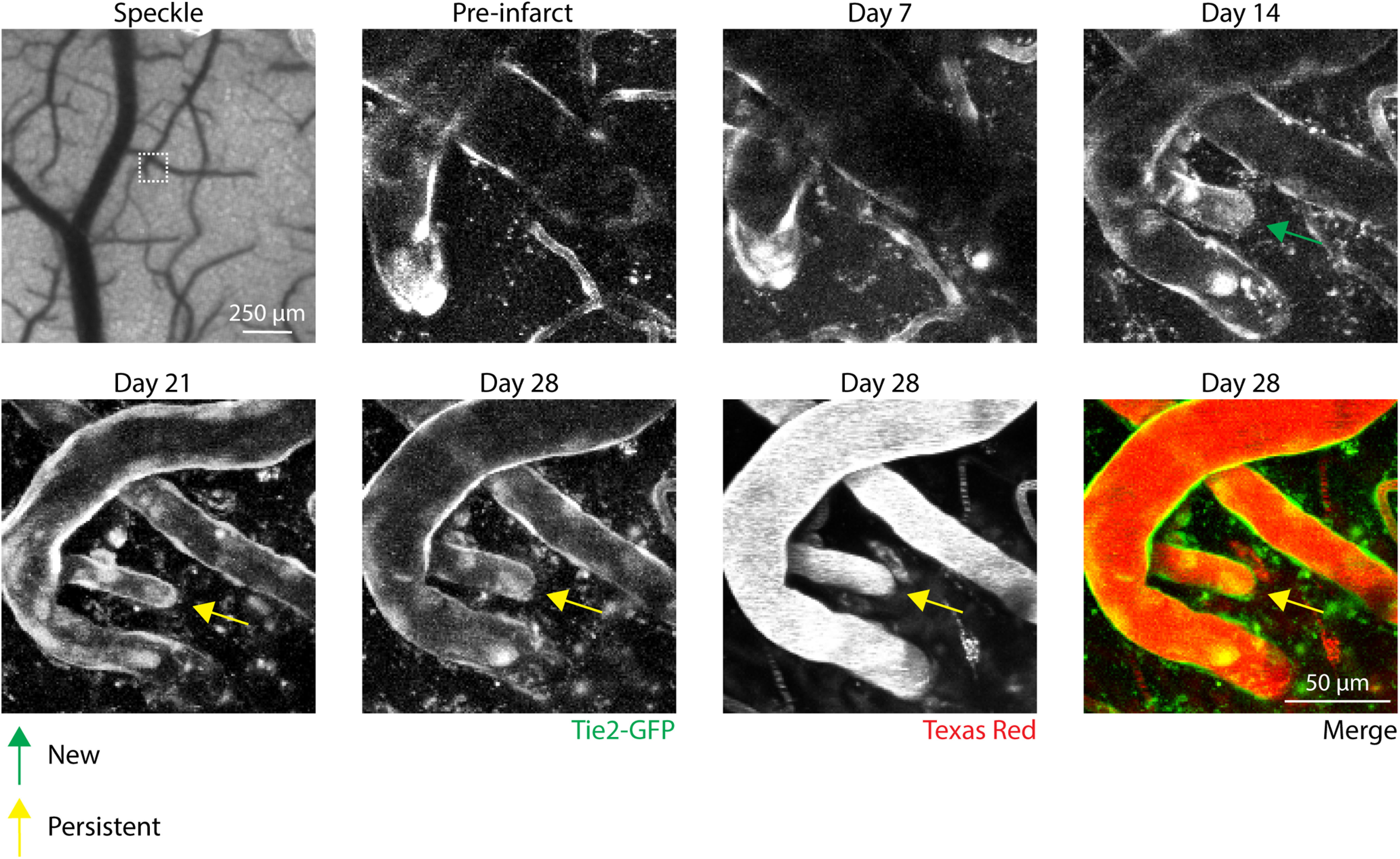
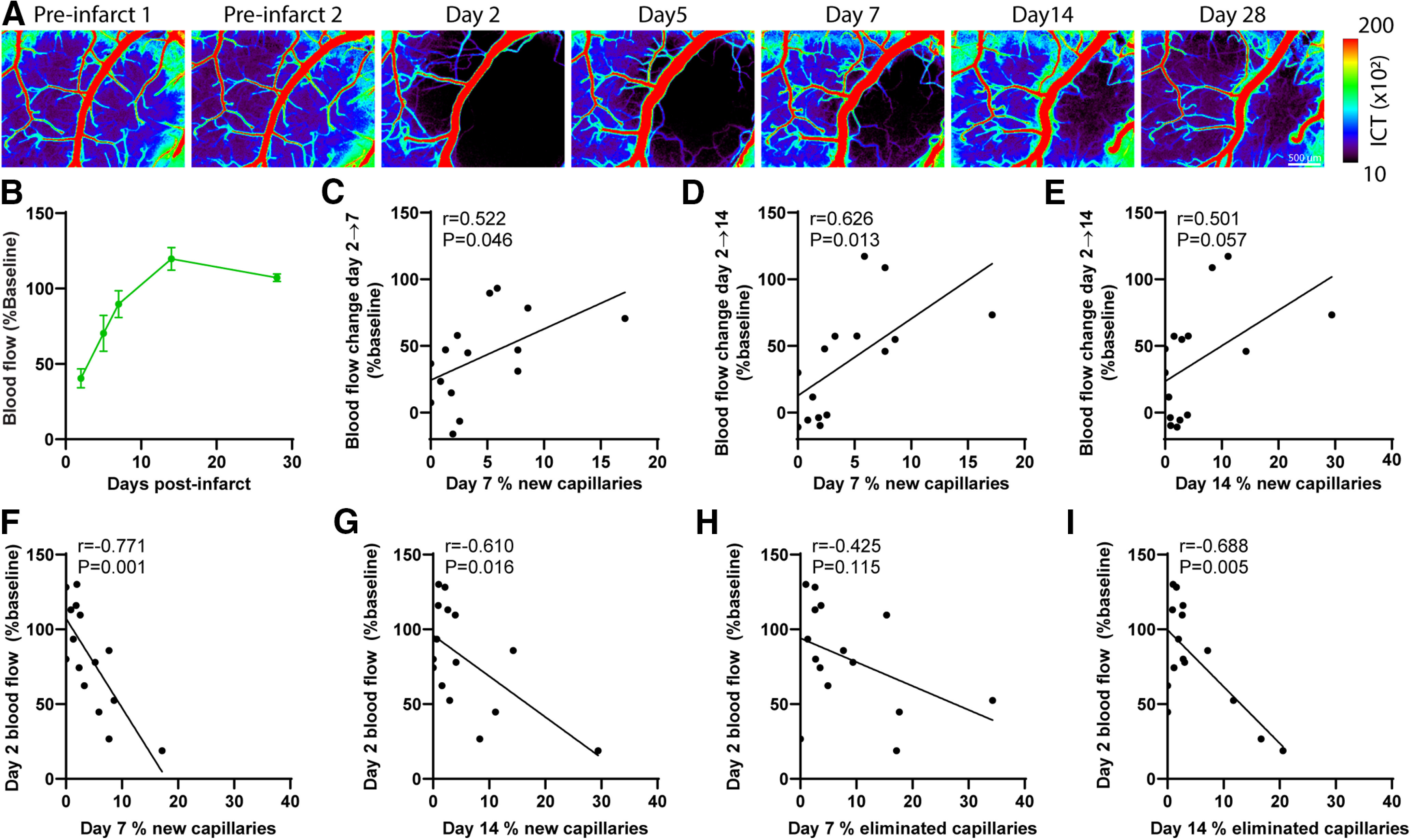
Stroke causes remodeling of vasculature surrounding the infarct, but whether and how vascular remodeling contributes to recovery are unclear. We established an approach to monitor and compare changes in vascular structure and blood flow with high spatiotemporal precision after photothrombotic infarcts in motor cortex using longitudinal 2-photon and multiexposure speckle imaging in mice of both sexes. A spatially graded pattern of vascular structural remodeling in peri-infarct cortex unfolded over the first 2 weeks after stroke, characterized by vessel loss and formation, and selective stabilization of a subset of new vessels. This vascular structural plasticity was coincident with transient activation of transcriptional programs relevant for vascular remodeling, reestablishment of peri-infarct blood flow, and large improvements in motor performance. Local vascular plasticity was strongly predictive of restoration of blood flow, which was in turn predictive of behavioral recovery. These findings reveal the spatiotemporal evolution of vascular remodeling after stroke and demonstrate that a window of heightened vascular plasticity is coupled to the reestablishment of blood flow and behavioral recovery. Our findings support that neovascularization contributes to behavioral recovery after stroke by restoring blood flow to peri-infarct regions. These findings may inform strategies for enhancing recovery from stroke and other types of brain injury.SIGNIFICANCE STATEMENT An improved understanding of neural repair could inform strategies for enhancing recovery from stroke and other types of brain injury. Stroke causes remodeling of vasculature surrounding the lesion, but whether and how the process of vascular remodeling contributes to recovery of behavioral function have been unclear. Here we used longitudinal in vivo imaging to track vascular structure and blood flow in residual peri-infarct cortex after ischemic stroke in mice. We found that stroke created a restricted period of heightened vascular plasticity that was associated with restoration of blood flow, which was in turn predictive of recovery of motor function. Therefore, our findings support that vascular remodeling facilitates behavioral recovery after stroke by restoring blood flow to peri-infarct cortex.
Keywords: angiogenesis; blood flow; in vivo imaging; neural repair; recovery; vascular remodeling.
Copyright © 2020 the authors.
Figures
References
-
- Brown CE, Aminoltejari K, Erb H, Winship IR, Murphy TH (2009) In vivo voltage-sensitive dye imaging in adult mice reveals that somatosensory maps lost to stroke are replaced over weeks by new structural and functional circuits with prolonged modes of activation within both the peri-infarct zone and distant sites. J Neurosci 29:1719–1734. 10.1523/JNEUROSCI.4249-08.2009 - DOI - PMC - PubMed
Publication types
MeSH terms
Grants and funding
LinkOut - more resources
Full Text Sources
Medical
Molecular Biology Databases
