


Rotational relapse of anterior teeth following orthodontic treatment and circumferential supracrestal fiberotomy
- PMID: 32874069
- PMCID: PMC7452021
- DOI: 10.1016/j.sdentj.2019.10.003
Rotational relapse of anterior teeth following orthodontic treatment and circumferential supracrestal fiberotomy
Abstract
Background/purpose: Several factors cause relapse of orthodontically de-rotated teeth after appliance removal. Circumferential supracrestal fiberotomy (CSF) may release the tension on the supra-alveolar fibers following tooth de-rotation, thereby reducing the relapse risk. However, careful identification of the amount and location of relapse enables proper clinical evaluation. We aimed to determine the amount of orthodontic relapse following CSF for de-rotated anterior teeth.
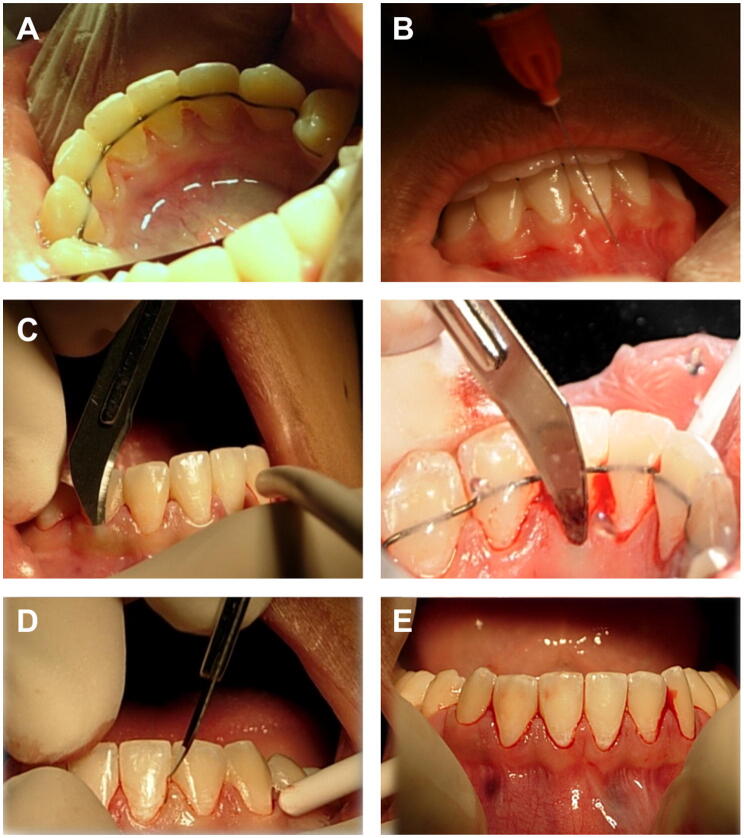
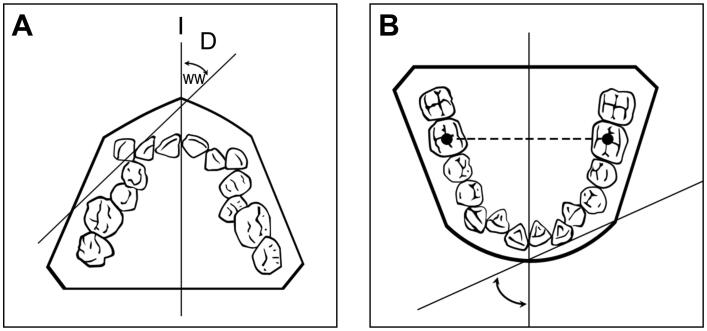
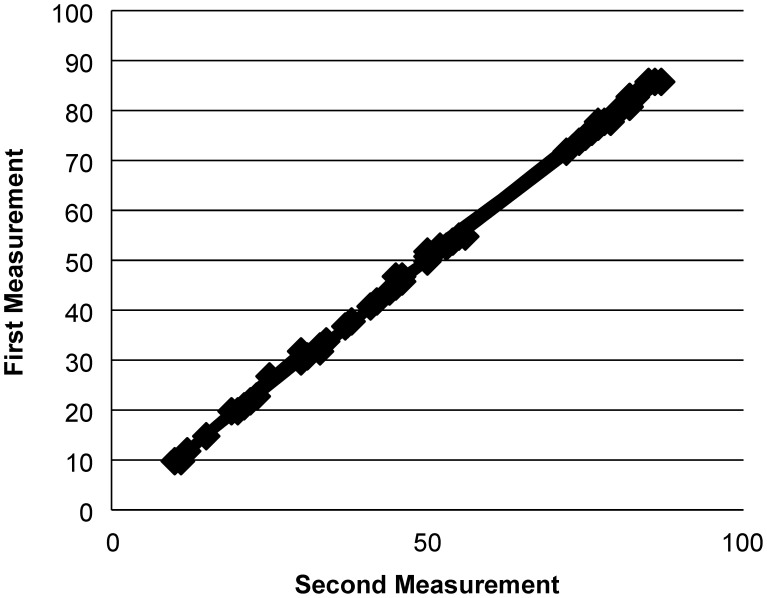
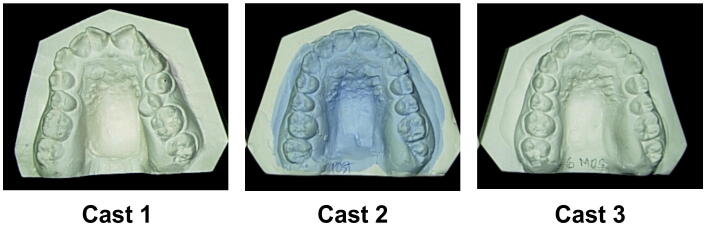
Materials and methods: Eleven patients with 90 orthodontically de-rotated anterior teeth were enrolled. CSF was performed after orthodontic treatment, during fixed retainer placement. Rotational correction and relapse were measured on three casts (preorthodontic treatment, cast 1; postorthodontic treatment + CSF, cast 2; and 12-month follow-up, cast 3). The Wilcoxon test was used to assess significant differences in the tooth rotation angles between casts 1 and 2 and casts 2 and 3. The relationship between the magnitude of relapse and pretreatment severity of rotation was assessed by the point biserial correlation test. The Mann-Whitney U test helped in identifying significant differences in the amount of relapse between maxillary and mandibular teeth.
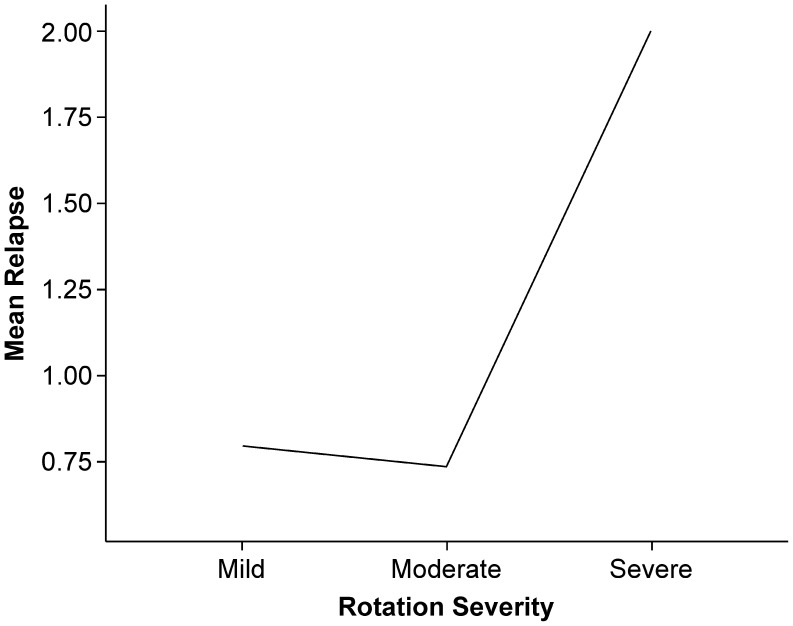
Results: The mean amount of rotational correction was 14.05°, while the mean amount and percentage of relapse were 1.1° and 10.8%, respectively [0.81° (8%) and 1.44° (14%) for maxillary and mandibular teeth, respectively]. The relapse amount was proportional to the pretreatment rotation severity, and it was larger for the mandibular canines. There was no significant difference in the amount of relapse between the maxillary and mandibular teeth (P = 0.07).
Conclusion: Post-treatment rotational relapse of anterior teeth subjected to CSF was minimal and statistically insignificant after 1 year of follow-up. This validates the promising results of CSF when combined with appropriate mechanical retention for an adequate period.
Keywords: CSF, Circumferential supracrestal fiberotomy; Cohort study; Fiberotomy; Mandibular canines; Relapse; Tooth rotation.
© 2019 The Authors.
Conflict of interest statement
None.
Figures
References
-
- Beertsen W. Remodeling of collagen fibers in the periodontal ligament and the supra-alveolar region. Angle. Orthod. 1979;49:218–224. - PubMed
-
- Block R.W., Kerns D.G., Regennitter F.J., Kerns L.L. The circumferential supracrestal fiberotomy. Gen. Dent. 1998;46:48–54. - PubMed
-
- Cao T., Xu L., Shi J., Zhou Y. Combined orthodontic-periodontal treatment in periodontal patients with anteriorly displaced incisors. Am. J. Orthod. Dentofacial. Orthop. 2015;148:805–813. - PubMed
-
- Crum R.E., Andreasen G.F. The effect of gingival fiber surgery on the retention of rotated teeth. Am. J. Orthod. 1974;65:626–637. - PubMed
LinkOut - more resources
Full Text Sources
Miscellaneous
