


P53 expression and micro-vessel density in relation with 5-year survival in patients with colorectal cancer
- PMID: 32874562
- PMCID: PMC7452034
- DOI: 10.1016/j.amsu.2020.08.006
P53 expression and micro-vessel density in relation with 5-year survival in patients with colorectal cancer
Abstract
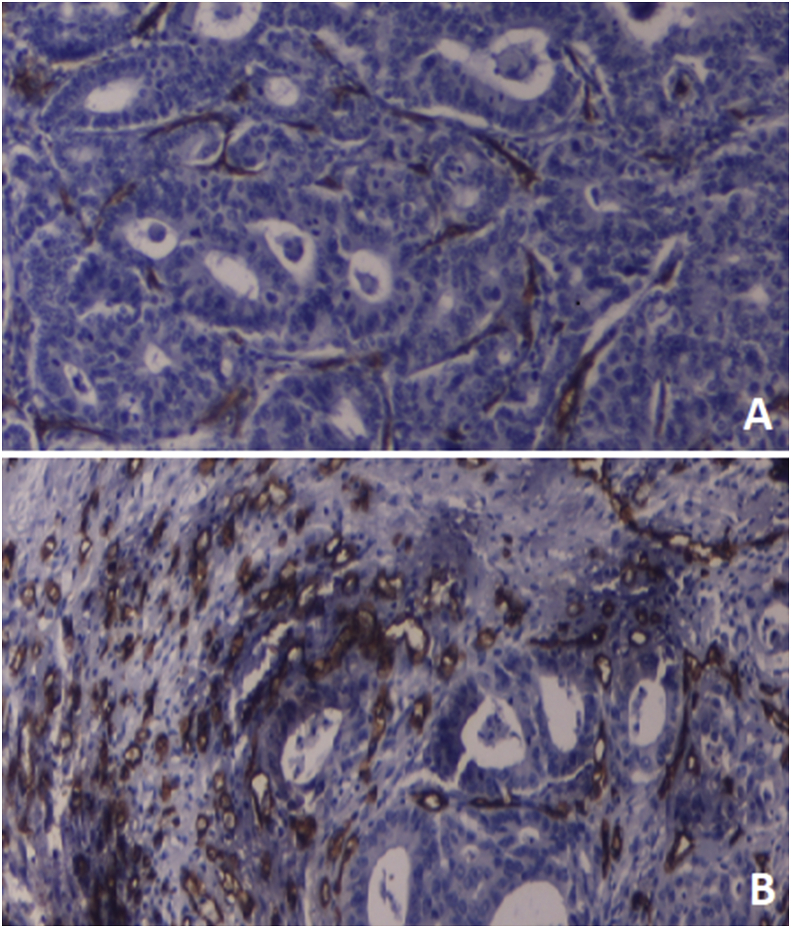
Colorectal cancers are among the commonest causes of cancer related morbidity and mortality worldwide. Adenomatous polyps which develop dysplastic changes are the main cause of invasive cancer. P53 inactivation is a key genetic step in the occurrence of cancer. The degree of the formation of the blood vessels inside the tumor (microvessel density) increases the ability of the tumor to have local infiltration, metastatic potential and may reflect the tumor metabolic activity. A total number of 104 patients who underwent surgeries for colorectal adenocarcinoma followed for 5 years. Patients were categorized into 4 categories based on tumor expression of P53 and micro-vessel density, 64.42% of patients were females, 58.7% died from colorectal cancer during the 5-year period, 37.5% had 5-years survival free from cancer, and 16.3% survived with recurrence, 28.8% had over expression of both P53 and MVD. A significant correlation was found between: P53 and MVD with the site of tumor occurrence being more significant with left-sided colonic tumors, the clinical stage being more significant with stage III disease, and with the survival rate being more significant in patients who died during this period, P values 0.025, 0.01, and 0.001 respectively. Overexpression of P53 and MVD are associated with higher mortality and more advanced disease. We advise a more aggressive form of therapy for colorectal adenocarcinomas expressing high level of both factors and tumors with high expression of both factors may need modification in the chemotherapeutic drugs or radiation therapy with closer follow up than tumors having lower expression.
Keywords: Adenomatous polyp; Bleeding per rectum; Colonoscopy; Colorectal cancer; Microvessel density; P53.
© 2020 The Authors.
Conflict of interest statement
There is no conflict of interest to be declared.
Figures
References
-
- Jessup J.M. Diagnosing colorectal carcinoma: clinical and molecular approaches. CA A Cancer J. Clin. 1997;47(2):70–92. - PubMed
LinkOut - more resources
Full Text Sources
Research Materials
Miscellaneous
