. 2020 Sep 2;15(9):e0237374.
doi: 10.1371/journal.pone.0237374. eCollection 2020.

Artificial habitats host elevated densities of large reef-associated predators

Affiliations

Artificial habitats host elevated densities of large reef-associated predators

Avery B Paxton et al. PLoS One. .

Abstract

Large predators play important ecological roles, yet many are disproportionately imperiled. In marine systems, artificial reefs are often deployed to restore degraded reefs or supplement existing reefs, but it remains unknown whether these interventions benefit large predators. Comparative field surveys of thirty artificial and natural reefs across ~200 km of the North Carolina, USA coast revealed large reef-associated predators were more dense on artificial than natural reefs. This pattern was associated with higher densities of transient predators (e.g. jacks, mackerel, barracuda, sharks) on artificial reefs, but not of resident predators (e.g., grouper, snapper). Further analyses revealed that this pattern of higher transient predator densities on artificial reefs related to reef morphology, as artificial reefs composed of ships hosted higher transient predator densities than concrete reefs. The strength of the positive association between artificial reefs and transient predators increased with a fundamental habitat trait-vertical extent. Taller artificial reefs had higher densities of transient predators, even when accounting for habitat area. A global literature review of high trophic level fishes on artificial and natural habitats suggests that the overall pattern of more predators on artificial habitats is generalizable. Together, these findings provide evidence that artificial habitats, especially those like sunken ships that provide high vertical structure, may support large predators.


Conflict of interest statement

Author ABP is employed by CSS-Inc. This affiliation does not alter our adherence to PLOS ONE policies on sharing data and materials.

Figures
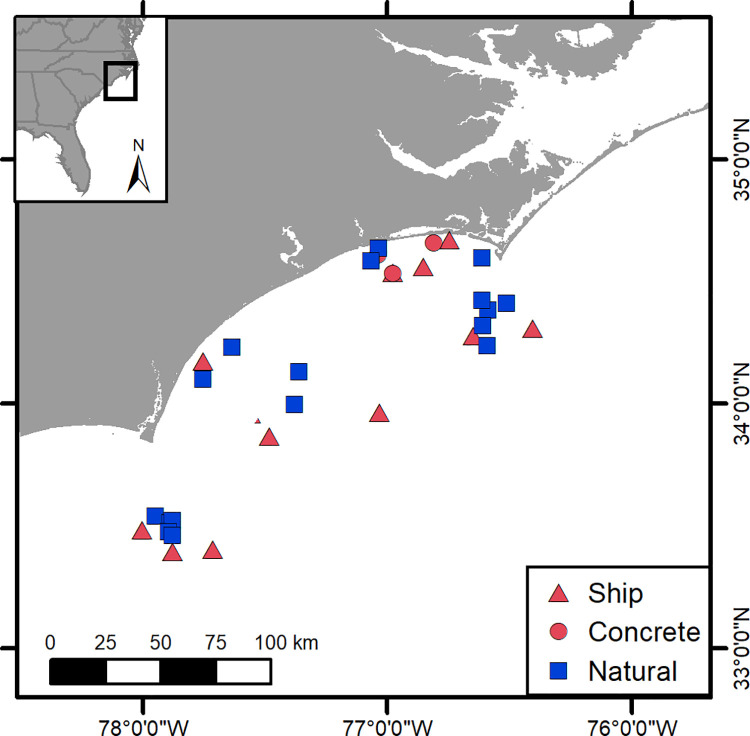
Fig 1
Fig 1. Location of study sites along the east coast of the US.
Red represents fourteen artificial reefs. Red triangles are ships, and red circles are concrete artificial reefs. Blue squares represent sixteen natural rocky reefs.
Fig 2
Fig 2
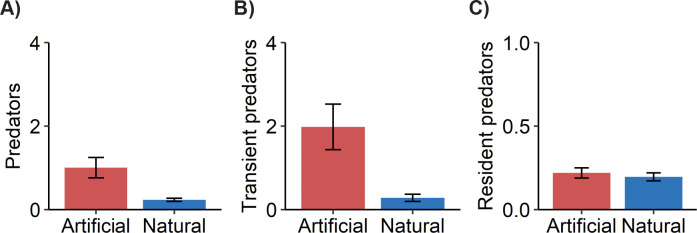
Mean observed density (± SE) per transect of predators on artificial reefs (red) versus natural reefs (blue) for A) all predators, B) transient predators, and C) resident predators. These values represent aggregated species-specific densities. N = 109 transects for artificial reefs and 127 transects for natural reefs.
Fig 3
Fig 3
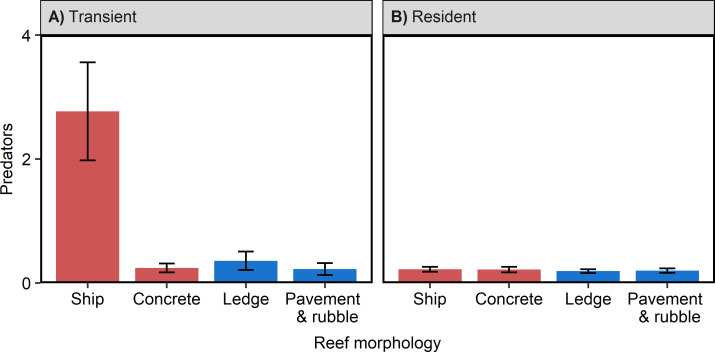
Mean observed predator density (± SE) per transect on artificial reefs (red) versus natural reefs (blue) by reef morphology for A) transient predators and B) resident predators. These values represent combined species-specific densities. N = 109 transects for artificial reefs and 127 transects for natural reefs.
Fig 4
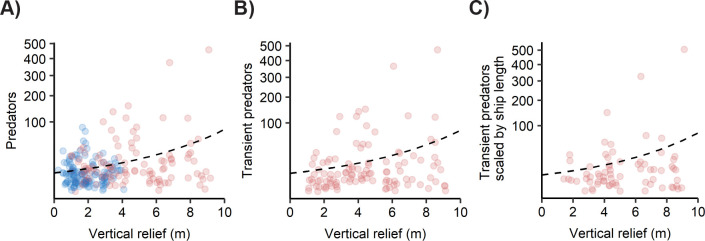
Fig 4. Association between vertical relief of reefs and predator density.
A) Density of all predators (transient and resident) on artificial reefs (red) and natural reefs (blue). N = 109 artificial reef transects and 127 natural reef transects. B) Density of transient predators on artificial reefs. N = 109 artificial reef transects. C) Density of transient predators scaled by reef length for ship-type artificial reefs. N = 69 artificial reef transects on ships of known lengths. Black dashed lines are predicted fit of the GLMs.
Fig 5
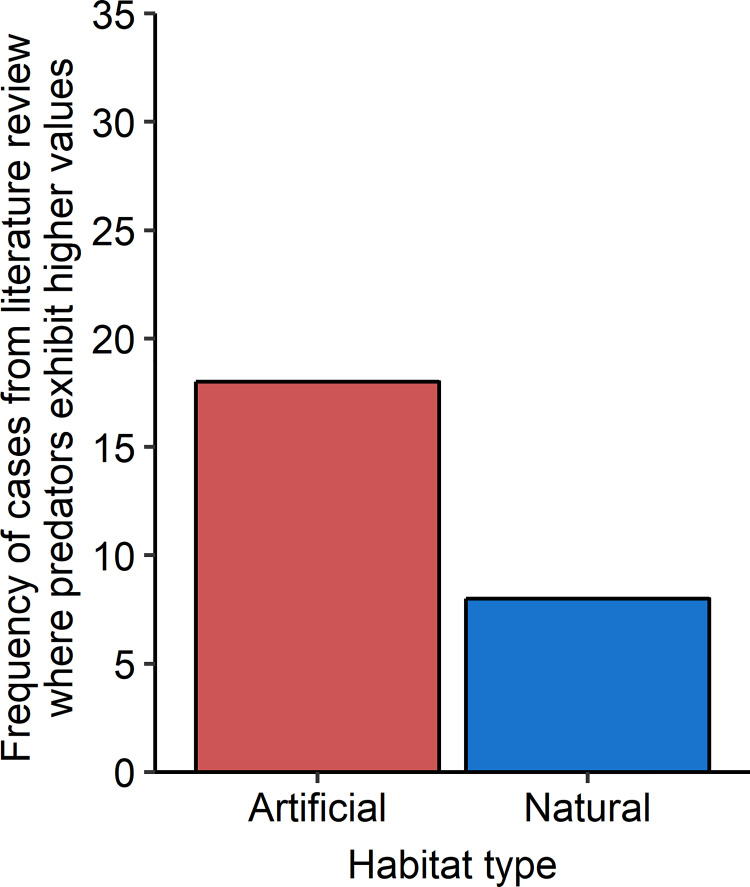
Fig 5. Frequency of cases from literature synthesis where fishes classified as large predators exhibited higher values (abundance, biomass, or density) on artificial habitats versus natural habitats.
N = 26.

References

    1. Hughes BB, Eby R, Dyke V, Tinker MT, Marks CI, Johnson KS. Recovery of a top predator mediates negative eutrophic effects on seagrass. Proceedings of the National Academy of Sciences. 2014;110:15313–8. 10.1073/pnas.1401578111 - DOI - PMC - PubMed
    1. Hughes BB, Hammerstrom KK, Grant NE, Hoshijima U, Eby R, Wasson K. Trophic cascades on the edge: fostering seagrass resilience via a novel pathway. Oecologia. 2016;182:231–41. 10.1007/s00442-016-3652-z . - DOI - PubMed
    1. McCauley DJ, Young HS, Dunbar RB, Estes JA, Semmens BX, Micheli F. Assessing the effects of large mobile predators on ecosystem connectivity. Ecological Applications. 2012;22:1711–7. 10.1890/11-1653.1 . - DOI - PubMed
    1. Sergio F, Newton I, Marchesi L, Pedrini P. Ecologically justified charisma: Preservation of top predators delivers biodiversity conservation. Journal of Applied Ecology. 2006;43:1049–55. 10.1111/j.1365-2664.2006.01218.x 941. - DOI
    1. Estes JA, Terborgh J, Brashares JS, Power ME, Berger J, Bond WJ, et al. Trophic downgrading of planet Earth. Science. 2011;333:301–6. 10.1126/science.1205106 . - DOI - PubMed

Publication types