


Targeted Therapies in Early Stage NSCLC: Hype or Hope?
- PMID: 32878298
- PMCID: PMC7504271
- DOI: 10.3390/ijms21176329
Targeted Therapies in Early Stage NSCLC: Hype or Hope?
Abstract
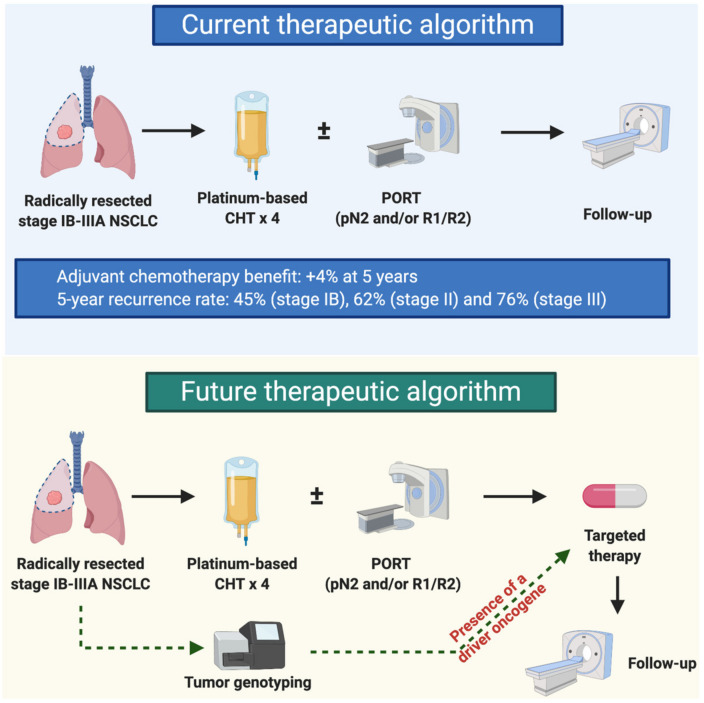
Non-small-cell lung cancer (NSCLC) represents roughly 85% of lung cancers, with an incidence that increases yearly across the world. The introduction in clinical practice of several new and more effective molecules has led to a consistent improvement in survival and quality of life in locally advanced and metastatic NSCLC. In particular, oncogenic drivers have indeed transformed the therapeutic algorithm for NSCLC. Nearly 25% of patients are diagnosed in an early stage when NSCLC is still amenable to radical surgery. In spite of this, five-year survival rates for fully resected early stage remains rather disappointing. Adjuvant chemotherapy has shown a modest survival benefit depending on the stage, but more than half of patients relapse. Given this need for improvement, over the last years different targeted therapies have been evaluated in early-stage NSCLC with no survival benefit in unselected patients. However, the identification of reliable predictive biomarkers to these agents in the metastatic setting, the design of molecularly-oriented studies, and the availability of novel potent and less toxic agents opened the way for a novel era in early stage NSCLC treatment. In this review, we will discuss the current landscape of targeted therapeutic options in early NSCLC.
Keywords: ALK; EGFR; NSCLC; early stage; osimertinib; targeted therapy.
Conflict of interest statement
A.F. reports receiving personal fees from Bristol-Myers Squibb, Roche Holdings AG, Pfizer, Astellas, and Merck Sharp & Dohme, outside of the present work. A.A. reports receiving personal fees from Bristol-Myers Squibb, AstraZeneca, Roche Holdings AG, Pfizer, Merck Sharp & Dohme, and Boehringer Ingelheim, outside of the present work. A.R. No conflict of interest. V.G. No conflict of interest. D.C. No conflict of interest. C.R. reports roles in speaker bureaus for MSD and AstraZeneca; advisory board roles with ARCHER, Inivata, and Merck Serono; consultant roles with Mylan and Oncompass; a supported research grant from the Lung Cancer Research Foundation/Pfizer; and research support from Guardant Health and Biomark
Figures
References
Publication types
MeSH terms
Substances
LinkOut - more resources
Full Text Sources
Medical
Research Materials
Miscellaneous
