. 2020 Sep 2;20(1):206.
doi: 10.1186/s12911-020-01231-w.

Towards more efficient use of intravenous lumens in multi-infusion settings: development and evaluation of a multiplex infusion scheduling algorithm

Affiliations

Towards more efficient use of intravenous lumens in multi-infusion settings: development and evaluation of a multiplex infusion scheduling algorithm

Frank Doesburg et al. BMC Med Inform Decis Mak. .

Abstract

Background: Multi-drug intravenous (IV) therapy is one of the most common medical procedures used in intensive care units (ICUs), operating rooms, oncology wards and many other hospital departments worldwide. As drugs or their solvents are frequently chemically incompatible, many solutions must be administered through separate lumens. When the number of available lumens is too low to facilitate the safe administration of these solutions, additional (peripheral) IV catheters are often required, causing physical discomfort and increasing the risk for catheter related complications. Our objective was to develop and evaluate an algorithm designed to reduce the number of intravenous lumens required in multi-infusion settings by multiplexing the administration of various parenteral drugs and solutions.

Methods: A multiplex algorithm was developed that schedules the alternating IV administration of multiple incompatible IV solutions through a single lumen, taking compatibility-related, pharmacokinetic and pharmacodynamic constraints of the relevant drugs into account. The conventional scheduling procedure executed by ICU nurses was used for comparison. The number of lumens required by the conventional procedure (LCONV) and multiplex algorithm (LMX) were compared.

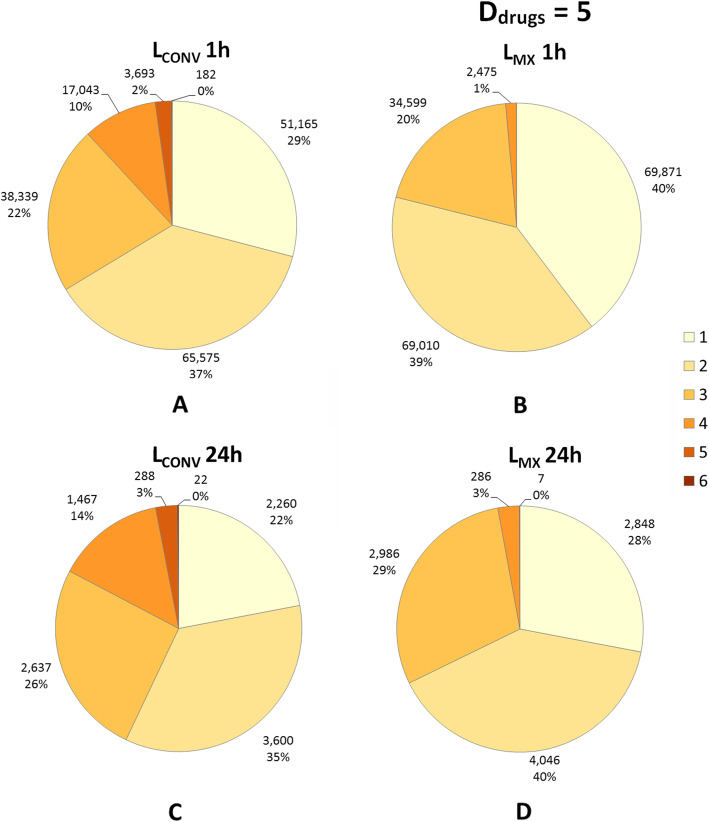
Results: We used data from 175,993 ICU drug combinations, with 2251 unique combinations received by 2715 consecutive ICU patients. The mean ± SD number of simultaneous IV solutions was 2.8 ± 1.6. In 27% of all drug combinations, and 61% of the unique combinations the multiplex algorithm required fewer lumens (p < 0.001). With increasing LCONV, the reduction in number of lumens by the multiplex algorithm further increased (p < 0.001). In only 1% of cases multiplexing required > 3 lm, versus 12% using the conventional procedure.

Conclusion: The multiplex algorithm addresses a major issue that occurs in ICUs, operating rooms, oncology wards, and many other hospital departments where several incompatible drugs are infused through a restricted number of lumens. The multiplex algorithm allows for more efficient use of IV lumens compared to the conventional multi-infusion strategy.

Keywords: Algorithms; Drug incompatibility; Infusion pumps; Infusions, intravenous; Injection site reaction.


Conflict of interest statement

Frank Doesburg and Maarten Nijsten are credited as co-inventors on a patent “System for providing multiple infusions to a patient” that was filed by Fresenius Kabi. Fresenius Kabi had no role in study design, data collection and analysis, decision to publish, or preparation of the manuscript.

Figures
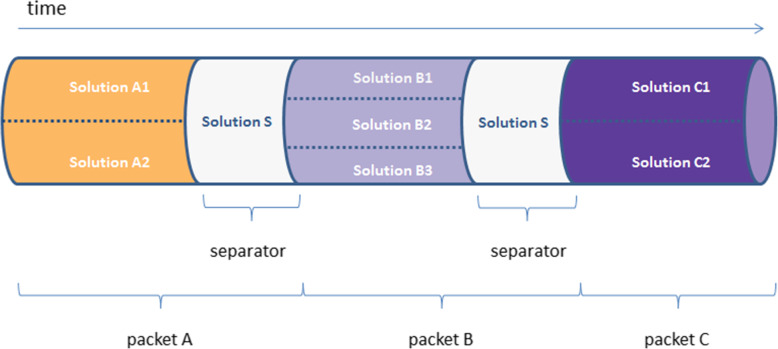
Fig. 1
Fig. 1
Multiplexed fluid administration through an IV tube. Using multiplex infusion packets of intravenous solutions a, b, and c are administered through a single IV tube, where solution S serves as separator. All drugs within a packet are compatible with each other
Fig. 2
Fig. 2
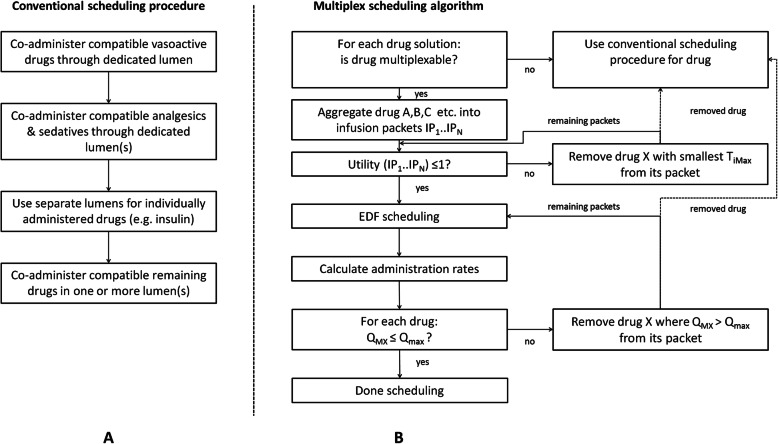
Conventional scheduling procedure and the multiplex scheduling algorithm. Using the conventional scheduling procedure drugs are initially divided lumens based on drug category and subsequently based on compatibility (Panel a). The multiplex algorithm (Panel b) has to satisfy utility and maximal administration rate (QMAX) related constraints for successful scheduling. When a drug cannot be multiplexed, it will be scheduled following the conventional scheduling procedure.
Fig. 3
Fig. 3
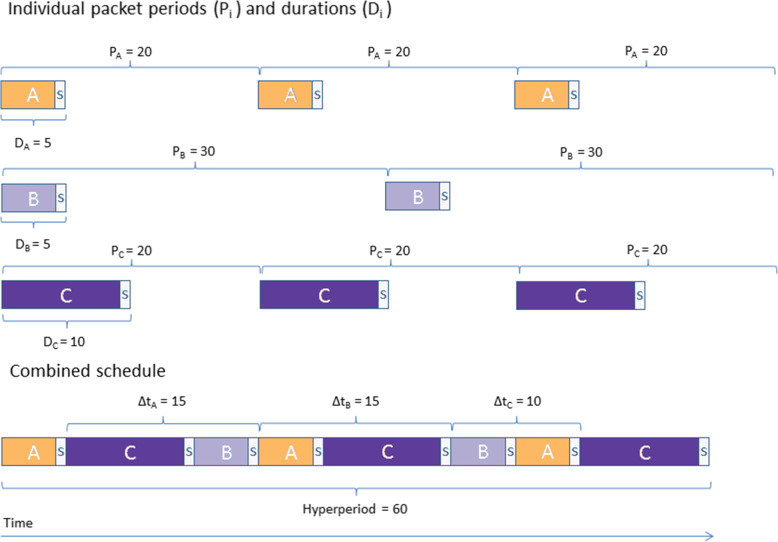
Earliest deadline first (EDF) scheduling. The end of every period PI is a deadline for the administration of the respective packet. A separator packet A separator fluid volume (SFV) is considered as part of each packet during scheduling. The deadline is related to the PK/PD characteristics of the drug or solution so that sufficiently stable sustained biological action of the constituent(s) is maintained under repeated interrupted administration. Here the so called utility, or U-value is UA + UB + UC = 5/20 + 5/30 + 10/20 = 11/12. AS U ≤ 1, Scheduling is feasible. Packet A, that has the nearest deadline, is scheduled first, followed by packets C and B until all Packets are scheduled. The Hyperperiod, or least common mutiple of the periods, is 60 minutes in the example.
Fig. 4
Fig. 4
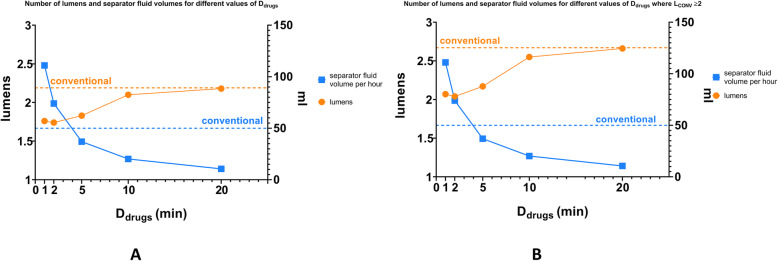
Lumens and separator fluid volumes required by the multiplex algorithm for the different values of Ddrugs. Panel a shows lumens and separator fluid volumes for all levels of LCONV assuming a Vygon V-Green IV tube (Vygon, France; 2 m, 2 mL). Panel b shows the same data, however schedules where LCONV was equal to 1 were omitted as this number could obviously not be reduced to zero by multiplexing. In both panels the dashed orange line indicates the mean of LCONV and the dashed blue line indicates the mean hourly volume of volumetric saline and glucose infusions
Fig. 5
Fig. 5
Number of IV lumens required by conventional scheduling (LCONV) and multiplex scheduling (LMX). Values of LCONV and LMX as determined over 1 h periods (panels a and b) and the maximal values of LCONV and LMX aggregated over 24 h periods from midnight to midnight (panels c and d). Note that Ddrugs = 5 min in panels b and d

References

    1. Evans RS, Sharp JH, Linford LH, et al. Reduction of peripherally inserted central catheter-associated DVT. Chest. 2013;143:627–633. doi: 10.1378/chest.12-0923. - DOI - PubMed
    1. Hilton E, Haslett TM, Borenstein MT, et al. Central catheter infections: single- versus triple-lumen catheters. Influence of guide wires on infection rates when used for replacement of catheters. Am J Med. 1988;84:667–672. doi: 10.1016/0002-9343(88)90102-7. - DOI - PubMed
    1. Maki DG, Kluger DM, Crnich CJ. The risk of bloodstream infection in adults with different intravascular devices: a systematic review of 200 published prospective studies. Mayo Clin Proc. 2006;81:1159–1171. doi: 10.4065/81.9.1159. - DOI - PubMed
    1. Goff DA, Larsen P, Brinkley J, et al. Resource utilization and cost of inserting peripheral intravenous catheters in hospitalized children. Hosp Pediatr. 2013;3:185–191. doi: 10.1542/hpeds.2012-0089. - DOI - PubMed
    1. Doesburg F, Cnossen F, Dieperink W, et al. Improved usability of a multi-infusion setup using a centralized control interface: a task-based usability test. PLoS One. 2017;12:e0183104. doi: 10.1371/journal.pone.0183104. - DOI - PMC - PubMed

Publication types

Substances