


Modic changes - An evidence-based, narrative review on its patho-physiology, clinical significance and role in chronic low back pain
- PMID: 32879563
- PMCID: PMC7452231
- DOI: 10.1016/j.jcot.2020.06.025
Modic changes - An evidence-based, narrative review on its patho-physiology, clinical significance and role in chronic low back pain
Erratum in
-
Erratum regarding previously published articles.J Clin Orthop Trauma. 2020 Nov-Dec;11(6):1169-1171. doi: 10.1016/j.jcot.2020.09.032. Epub 2020 Sep 26. J Clin Orthop Trauma. 2020. PMID: 33013141 Free PMC article.
-
Erratum regarding missing Declaration of Competing Interest statements in previously published articles.J Clin Orthop Trauma. 2020 Nov-Dec;11(6):1178. doi: 10.1016/j.jcot.2020.10.026. Epub 2020 Oct 15. J Clin Orthop Trauma. 2020. PMID: 33078052 Free PMC article.
-
Erratum regarding previously published articles.J Clin Orthop Trauma. 2020 Nov-Dec;11(6):1172-1174. doi: 10.1016/j.jcot.2020.10.044. Epub 2020 Oct 23. J Clin Orthop Trauma. 2020. PMID: 33192025 Free PMC article.
-
Erratum regarding previously published articles.J Clin Orthop Trauma. 2021 Aug 5;21:101560. doi: 10.1016/j.jcot.2021.101560. eCollection 2021 Oct. J Clin Orthop Trauma. 2021. PMID: 34414073 Free PMC article.
Abstract
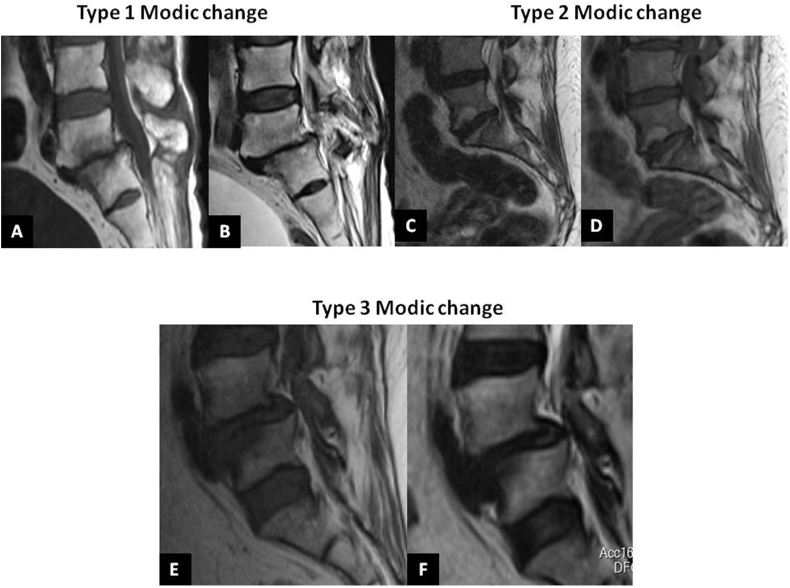
Objective: Lumbar degenerative spinal ailments are the most important causes for chronic low back pain. Modic changes (MC) are vertebral bone marrow signal intensity changes seen on MRI, commonly in association with degenerative disc disease (DDD). Despite being widely studied, majority of issues concerning MC are still controversial. The current narrative, evidence-based review comprehensively discusses the various aspects related to MC.
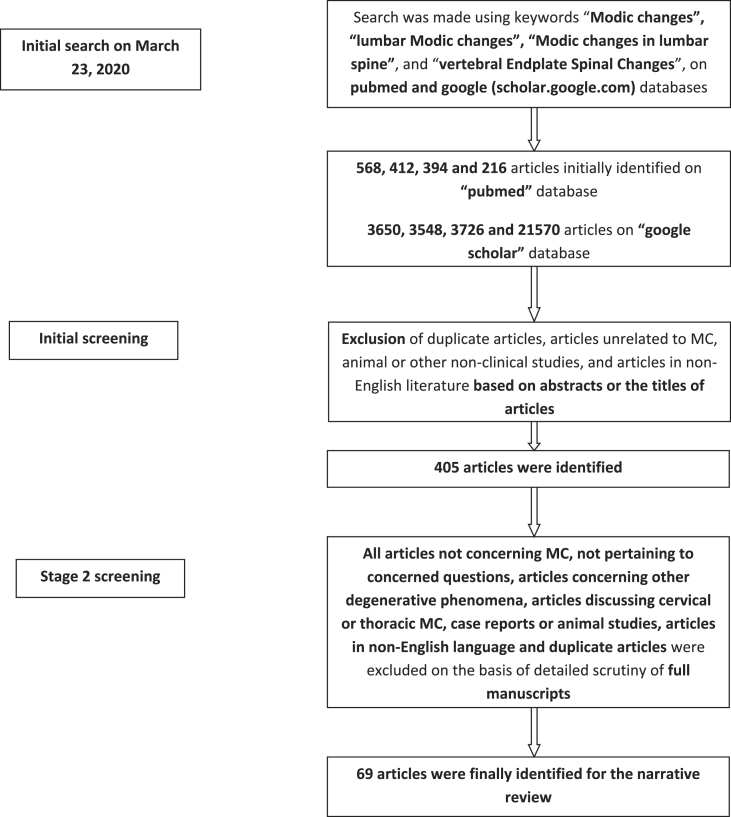
Literature search: An elaborate search was made using keywords "Modic changes", "lumbar Modic changes", "Modic changes in lumbar spine", and "vertebral Endplate Spinal Changes", on pubmed and google (scholar.google.com) databases on the 3rd of March 2020. We identified crucial questions regarding Modic changes and included relevant articles pertaining to these topics for this narrative review.
Results: The initial search using the keywords "Modic changes", "lumbar Modic changes", "Modic changes in lumbar spine", and "vertebral Endplate Spinal Changes" on pubmed yielded a total of 568, 412, 394 and 216 articles on "pubmed" database, respectively. A similar search using the aforementioned keywords yielded a total of 3650, 3548, 3726 and 21570 articles on "google scholar" database. The initial screening involved exclusion of duplicate articles, articles unrelated to MC, animal or other non-clinical studies, and articles in non-English literature based on abstracts or the titles of articles. This initial screening resulted in the identification of 405 articles. Full manuscripts were obtained for all these selected articles and thoroughly scrutinised at the second stage of article selection. All articles not concerning Modic changes, not pertaining to concerned questions, articles concerning other degenerative phenomena, articles discussing cervical or thoracic MC, case reports or animal studies, articles in non-English language and duplicate articles were excluded. Review articles, randomised controlled trials and level 1 studies were given preference. Overall, 69 articles were included in this review.
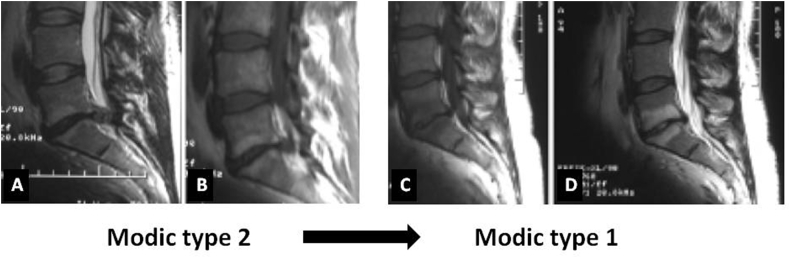
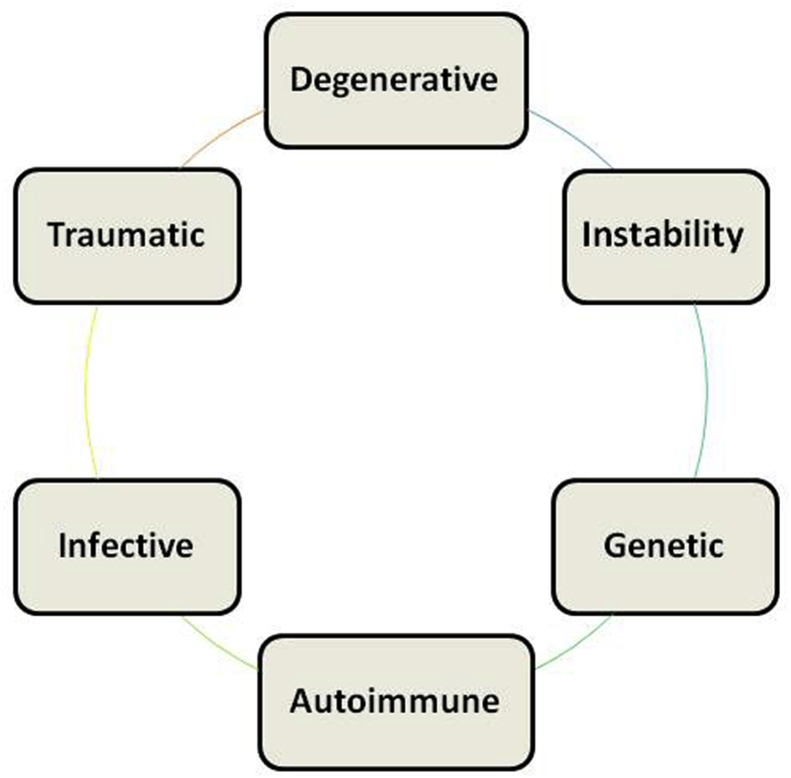
Conclusion: Modic change (MC) is a dynamic phenomenon and its true etiology is still not definitely known. Disc/end plate injury, occult discitis and autoimmune reactions seem to trigger an inflammatory cascade, which leads to their development. Male sex, older age, diabetes mellitus, genetic factors, smoking, obesity, spinal deformities, higher occupational loads and DDD are known risk factors. There is no conclusive evidence on the causative role of MC in chronic low back pain (LBP) or any influence on the long term outcome in patients with LBP or lumbar disc herniations (LDH). Patients with MC have been reported to have less satisfactory outcome following conservative treatment or discectomy, although the evidence is still unclear.
Keywords: Bone marrow lesion; Degenerativedisc disease; End plate injury; Low back pain; Modic changes.
© 2020 Delhi Orthopedic Association. All rights reserved.
Figures
References
-
- Martínez-Quiñones J.V., Aso-Escario J., González-García L., Consolini F., Arregui-Calvo R. Are modic changes able to help us in our clinical practice? A study of the modic changes in young adults during working age. Clin Spine Surg. 2017;30(6):259–264. doi: 10.1097/BSD.0000000000000195. - DOI - PubMed
LinkOut - more resources
Full Text Sources
Research Materials
Miscellaneous
