


De Garengeot hernia: a systematic review
- PMID: 32880011
- PMCID: PMC7855214
- DOI: 10.1007/s00464-020-07934-5
De Garengeot hernia: a systematic review
Abstract
Background: A De Garengeot hernia is a femoral hernia that contains the appendix. This rare type of hernia was first described by René-Jacques Croissant De Garengeot in 1731. Numerous case reports have been published since then, yet collective analysis about the presentation, diagnosis, management, and outcomes of patients with this unique hernia is lacking.
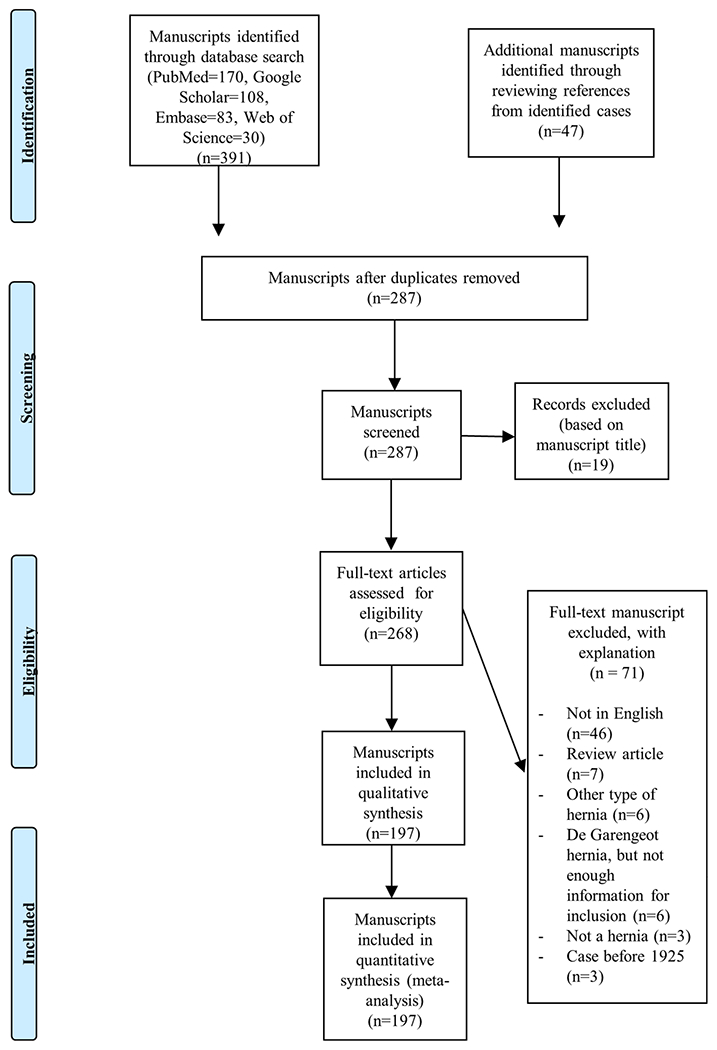
Methods: A systematic review was performed using PubMed, Google Scholar, Embase, and Web of Science for cases of De Garengeot hernias. Keywords searched included "De Garengeot hernia" OR "femoral appendicitis" OR "femoral hernia appendix" OR "crural hernia appendix." To facilitate review, a classification system was created based on the gross appearance of the appendix and related structures in the femoral hernia.
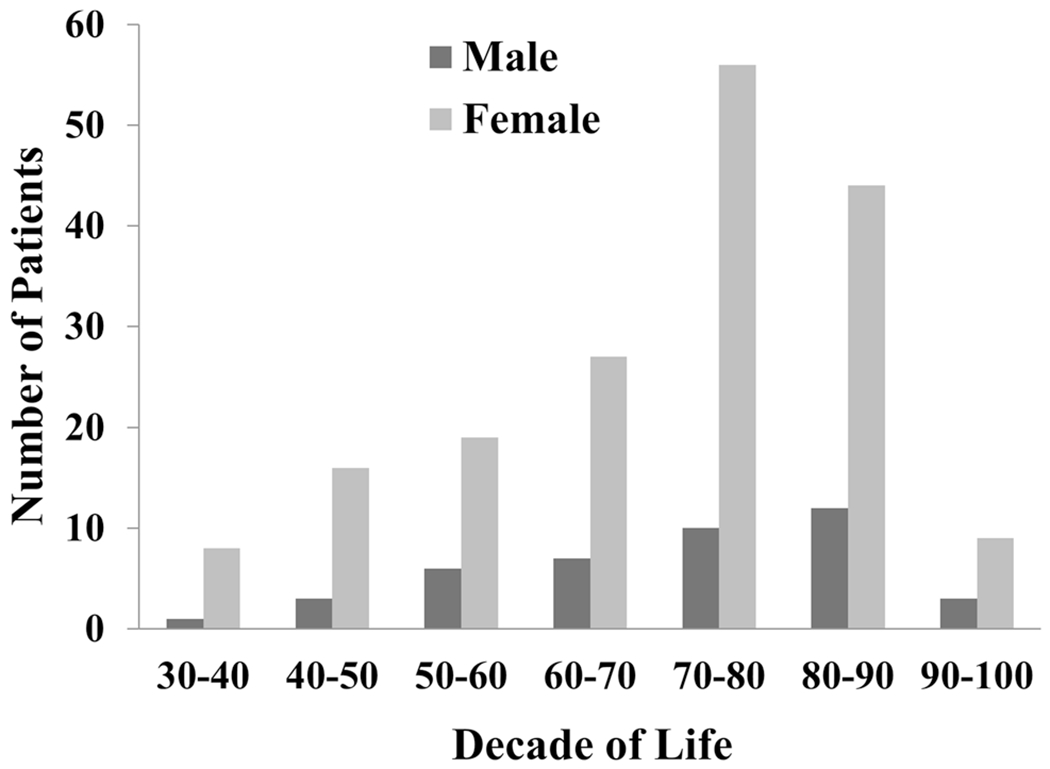
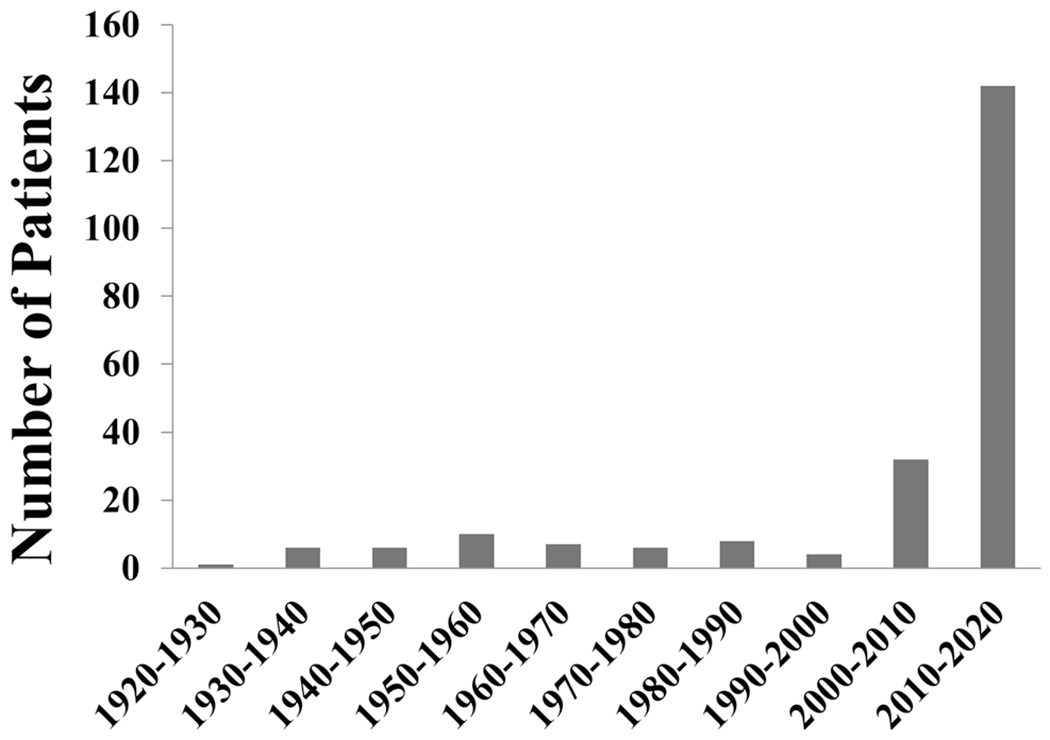
Results: Two hundred and twenty-two cases were identified in 197 manuscripts. Cases most commonly came from Europe but have been reported worldwide. There was a female predominance (n = 180, 81.1%) and the mean age at presentation was 69.8 years. The most common presenting symptoms were a groin bulge and groin tenderness (82.4%, n = 183 and 79.7%, n = 177, respectively). A groin bulge was observed on physical exam in 95.0% (n = 211) of cases, and erythema over the hernia was present in 33.3% (n = 74). A pre-operative diagnosis of a De Garengeot hernia was established with imaging in only 31.5% (n = 70) of cases. The most common surgical approach was through a groin incision. Complications occurred in 9.5% (n = 21) of cases, most commonly surgical site infections. The most common condition of the appendix was congested/inflamed, found in 44.1% (n = 98) of cases and corresponding to class 2A in the classification system devised.
Conclusions: Overall, De Garengeot hernias were found to be rare and clinically heterogeneous, as highlighted by our classification system. A systematic approach to categorizing this unique hernia may improve management decisions and help avoid complications.
Keywords: Crural hernia appendix; De Garengeot hernia; Femoral appendicitis; Femoral hernia appendix.
Conflict of interest statement
Figures
References
-
- De Garengeot RJC (1731) Traité des operations de chirurgie 1edn
-
- Amyand C (1735) VIII. Of an inguinal rupture, with a pin in the appendix coeci, incrusted with stone; and some observations on wounds in the guts. Philos Trans 39:329–342
-
- Hévin P, Simon J-F (1793) Cours de pathologie et de thérapeutique chirurgicales, chez Méquignon l’aîné
-
- Akopian G, Alexander M (2005) De Garengeot hernia: Appendicitis within a femoral hernia. Am Surg 71:526–527 - PubMed
-
- Carey LC (1967) Acute appendicitis occurring in hernias: a report of 10 cases. Surgery 61:236–238 - PubMed
