


Global vascular surgeons' experience, stressors, and coping during the coronavirus disease 2019 pandemic
- PMID: 32882345
- PMCID: PMC7457940
- DOI: 10.1016/j.jvs.2020.08.030
Global vascular surgeons' experience, stressors, and coping during the coronavirus disease 2019 pandemic
Abstract
Background: The coronavirus disease 2019 (COVID-19) pandemic has led to unprecedented challenges for health care systems globally. We designed and administered a global survey to examine the effects of COVID-19 on vascular surgeons and explore the COVID-19-related stressors faced, coping strategies used, and support structures available.
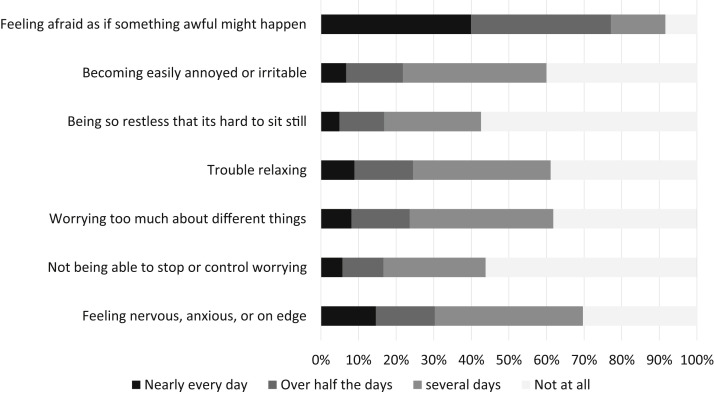
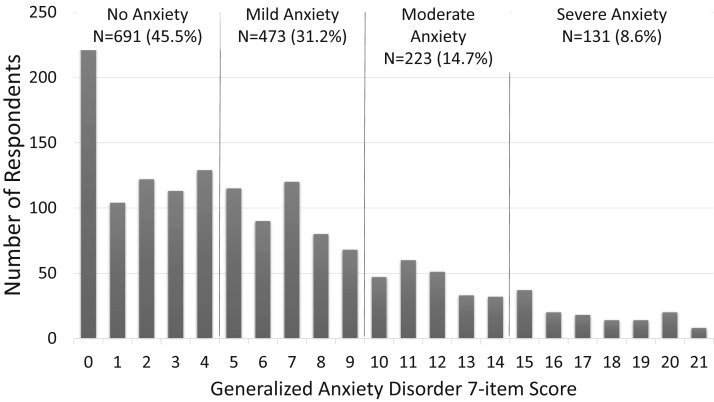
Methods: The Pandemic Practice, Anxiety, Coping, and Support Survey for Vascular Surgeons was an anonymous cross-sectional survey sponsored by the Society for Vascular Surgery Wellness Task Force. The survey analysis evaluated the effects of COVID-19-related stressors on vascular surgeons measured using the Generalized Anxiety Disorder 7-item scale. The 28-item Brief Coping Orientation to Problems Experienced inventory was used to assess the active and avoidant coping strategies. Survey data were collected using REDCap (Research Electronic Data Capture) from April 14, 2020 to April 24, 2020 inclusive. Additional qualitative data were collected using open-ended questions. Univariable and multivariable analyses of the factors associated with the anxiety levels and qualitative analysis were performed.
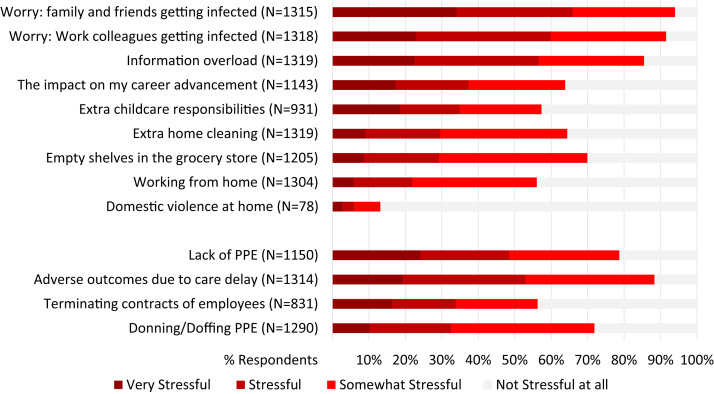
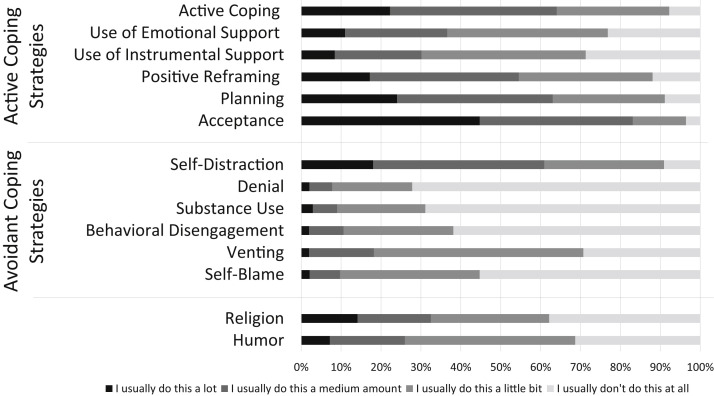
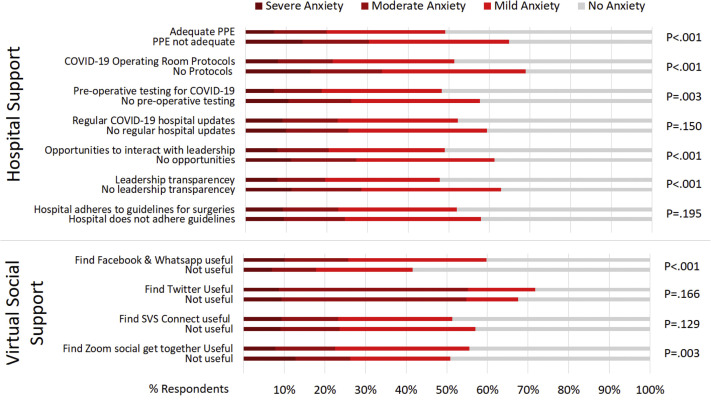
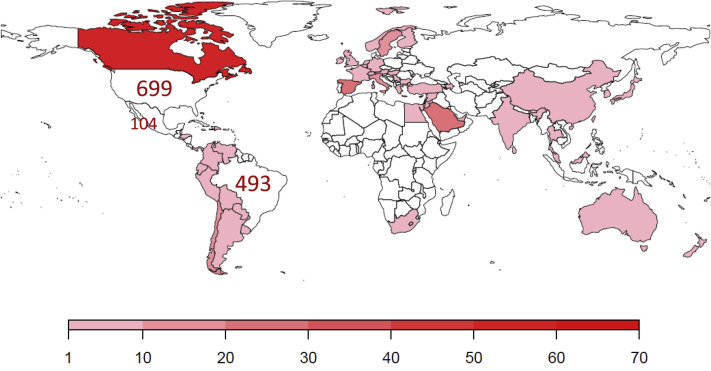
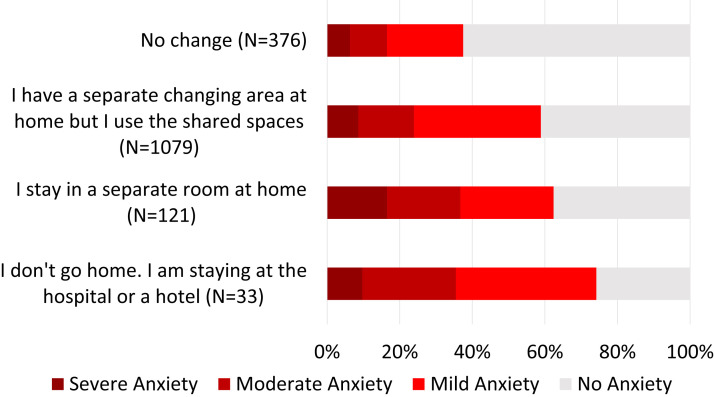
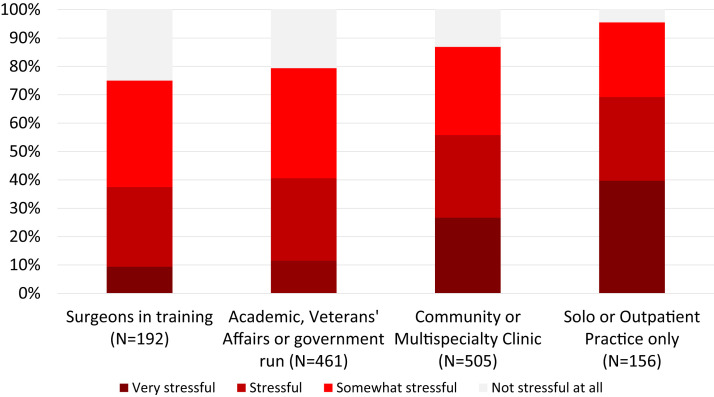
Results: A total of 1609 survey responses (70.5% male; 82.5% vascular surgeons in practice) from 58 countries (43.4% from United States; 43.4% from Brazil) were eligible for analysis. Some degree of anxiety was reported by 54.5% of the respondents, and 23.3% reported moderate or severe anxiety. Most respondents (∼60%) reported using active coping strategies and the avoidant coping strategy of "self-distraction," and 20% used other avoidant coping strategies. Multivariable analysis identified the following factors as significantly associated with increased self-reported anxiety levels: staying in a separate room at home or staying at the hospital or a hotel after work (odds ratio [OR], 1.39; 95% confidence interval [CI], 1.08-1.79), donning and doffing personal protective equipment (OR, 1.81; 95% CI, 1.41-2.33), worry about potential adverse patient outcomes due to care delay (OR, 1.47; 95% CI, 1.16-1.87), and financial concerns (OR, 1.90; 95% CI, 1.49-2.42). The factors significantly associated with decreased self-reported anxiety levels were hospital support (OR, 0.83; 95% CI, 0.76-0.91) and the use of positive reframing as an active coping strategy (OR, 0.88; 95% CI, 0.81-0.95).
Conclusions: Vascular surgeons globally have been experiencing multiple COVID-19-related stressors during this devastating crisis. These findings have highlighted the continued need for hospital systems to support their vascular surgeons and the importance of national societies to continue to invest in peer-support programs as paramount to promoting the well-being of vascular surgeons during and after the COVID-19 pandemic.
Keywords: Brief COPE Survey; COVID-19; Coping strategies; Financial stress; GAD-7 scale; Personal protective equipment.
Copyright © 2020 Society for Vascular Surgery. Published by Elsevier Inc. All rights reserved.
Figures
References
MeSH terms
LinkOut - more resources
Full Text Sources
Other Literature Sources
Medical
Miscellaneous
