


Core components of mental health stigma reduction interventions in low- and middle-income countries: a systematic review
- PMID: 32883399
- PMCID: PMC7503169
- DOI: 10.1017/S2045796020000797
Core components of mental health stigma reduction interventions in low- and middle-income countries: a systematic review
Abstract
Aims: To identify and categorise core components of effective stigma reduction interventions in the field of mental health in low- and middle-income countries (LMICs) and compare these components across cultural contexts and between intervention characteristics.
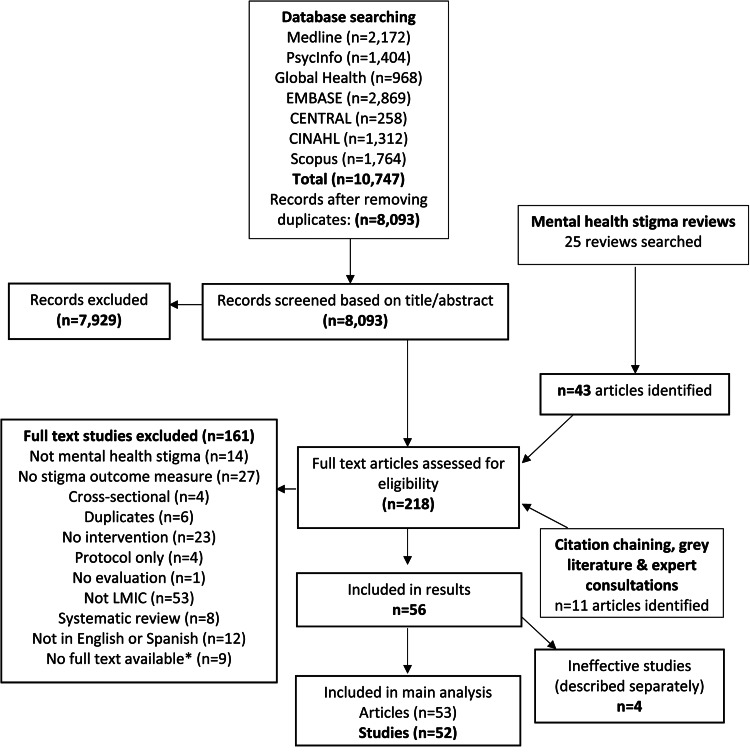
Methods: Seven databases were searched with a strategy including four categories of terms ('stigma', 'mental health', 'intervention' and 'low- and middle-income countries'). Additional methods included citation chaining of all papers identified for inclusion, consultation with experts and hand searching reference lists from other related reviews. Studies on interventions in LMICs aiming to reduce stigma related to mental health with a stigma-related outcome measure were included. All relevant intervention characteristics and components were extracted and a quality assessment was undertaken. A 'best fit' framework synthesis was used to organise data, followed by a narrative synthesis.
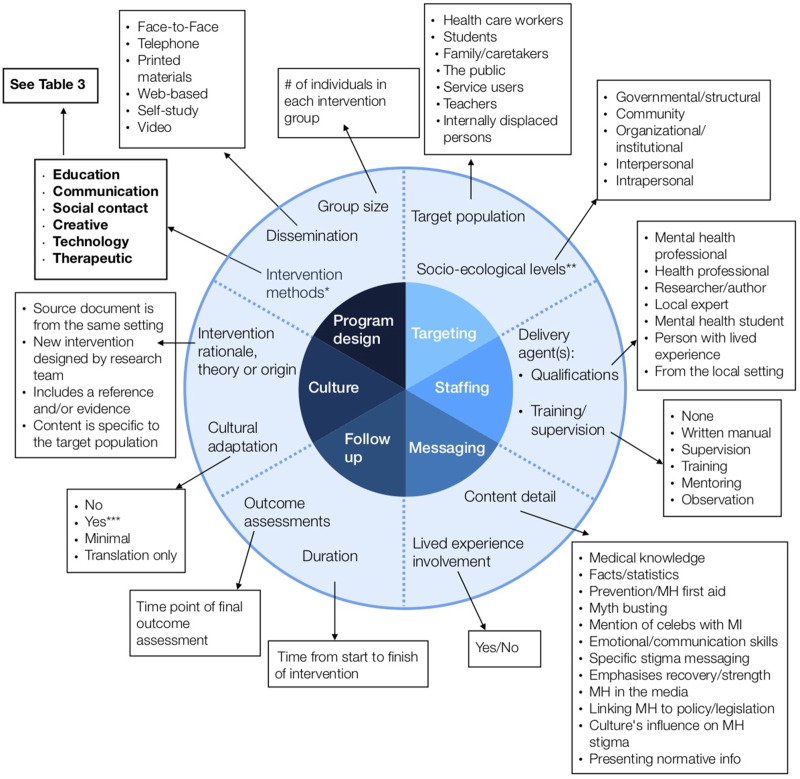
Results: Fifty-six studies were included in this review, of which four were ineffective and analysed separately. A framework was developed which presents a new categorisation of stigma intervention components based on the included studies. Most interventions utilised multiple methods and of the 52 effective studies educational methods were used most frequently (n = 83), and both social contact (n = 8) and therapeutic methods (n = 3) were used infrequently. Most interventions (n = 42) based their intervention on medical knowledge, but a variety of other themes were addressed. All regions with LMICs were represented, but every region was dominated by studies from one country. Components varied between regions for most categories indicating variation between cultures, but only a minority of studies were developed in the local setting or culturally adapted.
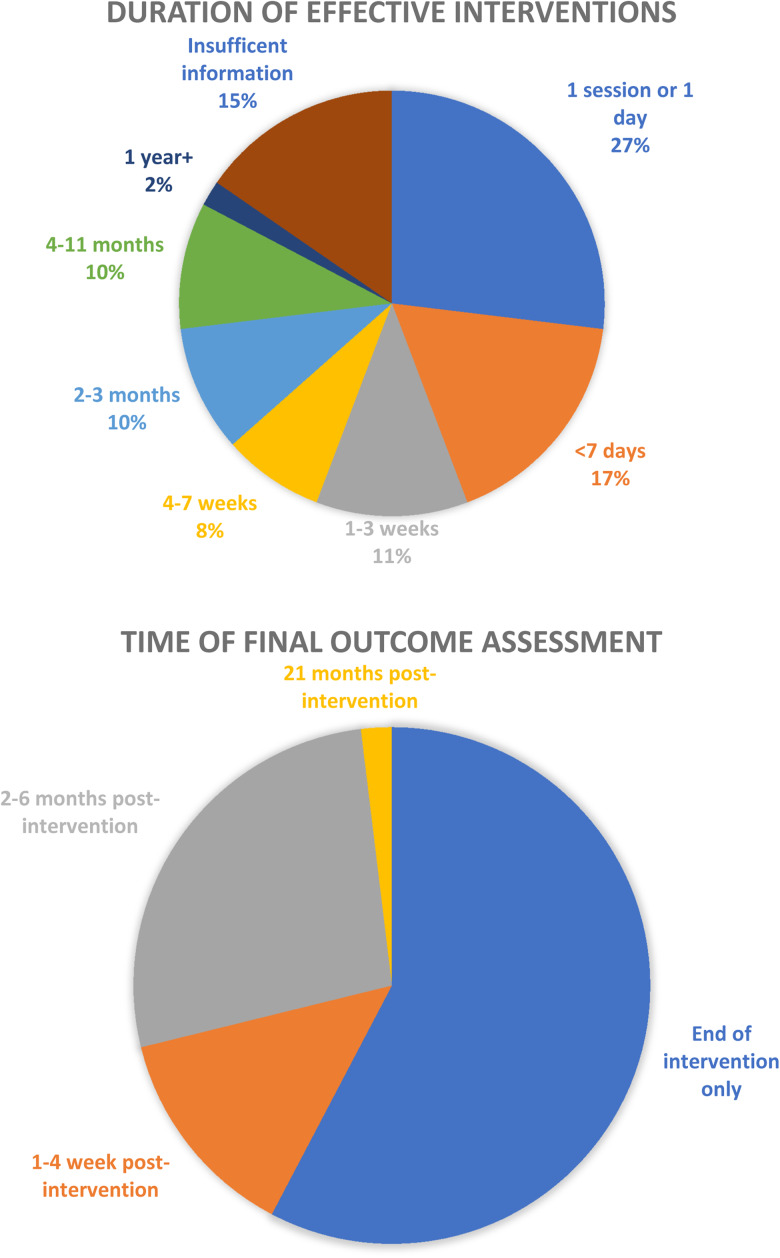
Conclusions: Our study suggests effective mental health stigma reduction interventions in LMICs have increased in quantity and quality over the past five years, and a wide variety of components have been utilised successfully - from creative methods to emphasis on recovery and strength of people with mental illness. Yet there is minimal mention of social contact, despite existing strong evidence for it. There is also a lack of robust research designs, a high number of short-term interventions and follow-up, nominal use of local expertise and the research is limited to a small number of LMICs. More research is needed to address these issues. Some congruity exists in components between cultures, but generally they vary widely. The review gives an in-depth overview of mental health stigma reduction core components, providing researchers in varied resource-poor settings additional knowledge to help with planning mental health stigma reduction interventions.
Keywords: Discrimination; mental health; mental illness stigma; systematic reviews.
Conflict of interest statement
None.
Figures
References
-
- Abayomi O, Adelufosi A and Olajide A (2013) Changing attitude to mental illness among community mental health volunteers in south-western Nigeria. Int J Soc Psychiatry 59, 609–612. - PubMed
-
- Adelekan ML, Makanjuola AB and Ndom, RJ (2001) Traditional mental health practitioners in Kwara State, Nigeria. East African Medical Journal 78, 190–196. - PubMed
-
- Ahuja KKD, Dhillon M, Juneja A and Sharma B (2017) Breaking barriers: An education and contact intervention to reduce mental illness stigma among Indian college students. Psychosocial Intervention 26, 103–109.
-
- Altindag A, Yanik M, Ucok A, Alptekin K and Ozkan M (2006) Effects of an antistigma program on medical students' attitudes towards people with schizophrenia. Psychiatry and Clinical Neurosciences 60, 283–288. - PubMed
-
- Alonso J, Liu Z, Evans-Lacko S, Sadikova E, Sampson N, Chatterji S, Abdulmalik J, Aguilar-Gaxiola S, Al-Hamzawi A, Andrade LH, Bruffaerts R, Cardoso G, Cia A, Florescu S, De Girolamo G, Gureje O, Haro JM, He Y, De Jonge P, Karam EG, Kawakami N, Kovess-Masfety V, Lee S, Levinson D, Medina-Mora ME, Navarro-Mateu F, Pennell BE, Piazza M, Posada-Villa J, Ten Have M, Zarkov Z, Kessler RC and Thornicroft G (2018) Treatment gap for anxiety disorders is global: results of the World Mental Health Surveys in 21 countries. Depression and Anxiety 35, 195–208. - PMC - PubMed
Publication types
MeSH terms
Grants and funding
LinkOut - more resources
Full Text Sources
Medical
Miscellaneous
