


New insights into the role of antinuclear antibodies in systemic lupus erythematosus
- PMID: 32884126
- PMCID: PMC8456518
- DOI: 10.1038/s41584-020-0480-7
New insights into the role of antinuclear antibodies in systemic lupus erythematosus
Abstract
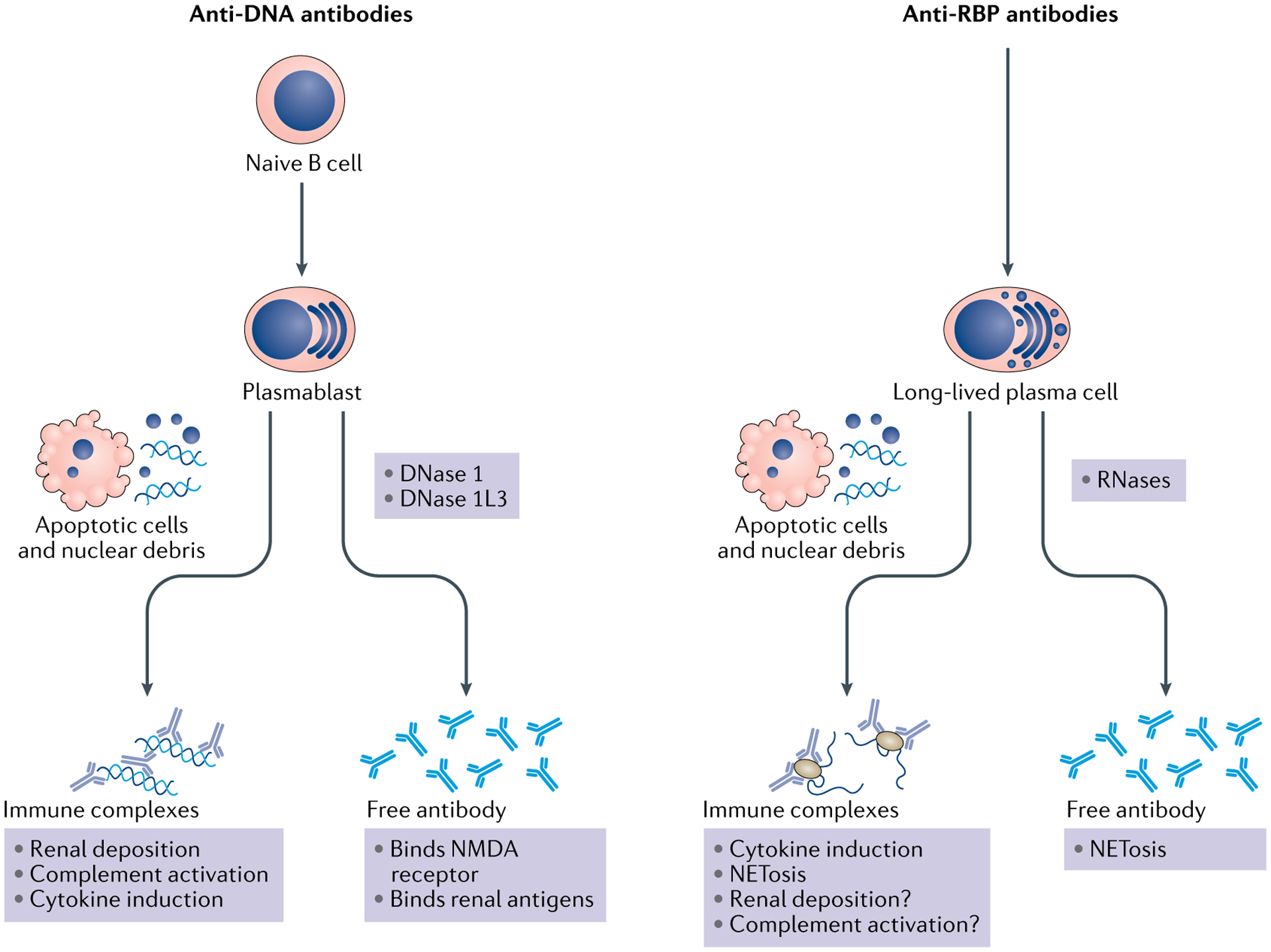
Systemic lupus erythematosus (SLE) is a prototypic autoimmune disease characterized by antinuclear antibodies (ANAs) that form immune complexes that mediate pathogenesis by tissue deposition or cytokine induction. Some ANAs bind DNA or associated nucleosome proteins, whereas other ANAs bind protein components of complexes of RNA and RNA-binding proteins (RBPs). Levels of anti-DNA antibodies can fluctuate widely, unlike those of anti-RBP antibodies, which tend to be stable. Because anti-DNA antibody levels can reflect disease activity, repeat testing is common; by contrast, a single anti-RBP antibody determination is thought to suffice for clinical purposes. Experience from clinical trials of novel therapies has provided a new perspective on ANA expression during disease, as many patients with SLE are ANA negative at screening despite previously testing positive. Because trial results suggest that patients who are ANA negative might not respond to certain agents, screening strategies now involve ANA and anti-DNA antibody testing to identify patients with so-called 'active, autoantibody-positive SLE'. Evidence suggests that ANA responses can decrease over time because of the natural history of disease or the effects of therapy. Together, these findings suggest that, during established disease, more regular serological testing could illuminate changes relevant to pathogenesis and disease status.
Conflict of interest statement
Competing interests
The authors declare no competing interests.
Figures
Comment in
-
Diagnostic role of anti-dsDNA antibodies: do not forget autoimmune hepatitis.Nat Rev Rheumatol. 2021 Apr;17(4):244. doi: 10.1038/s41584-021-00573-7. Nat Rev Rheumatol. 2021. PMID: 33462415 No abstract available.
-
Reply to: Diagnostic role of anti-dsDNA antibodies: do not forget autoimmune hepatitis.Nat Rev Rheumatol. 2021 Apr;17(4):245. doi: 10.1038/s41584-021-00574-6. Nat Rev Rheumatol. 2021. PMID: 33462416 No abstract available.
References
-
- Kaul A et al.Systemic lupus erythematosus. Nat. Rev. Dis. Prim 2, 16039 (2016). - PubMed
-
- Tsokos GC, Lo MS, Costa Reis P & Sullivan KE New insights into the immunopathogenesis of systemic lupus erythematosus. Nat. Rev. Rheumatol 12, 716–730 (2016). - PubMed
-
- Agmon-Levin N et al.International recommendations for the assessment of autoantibodies to cellular antigens referred to as anti-nuclear antibodies. Ann. Rheum. Dis 73, 17–23 (2014). - PubMed
-
- Pisetsky DS Antinuclear antibody testing: misunderstood or misbegotten? Nat. Rev. Rheumatol 13, 495–502 (2017). - PubMed
Publication types
MeSH terms
Substances
Grants and funding
LinkOut - more resources
Full Text Sources
Other Literature Sources
Medical
