


Good or not good: Role of miR-18a in cancer biology
- PMID: 32884453
- PMCID: PMC7451592
- DOI: 10.1016/j.rpor.2020.07.006
Good or not good: Role of miR-18a in cancer biology
Abstract
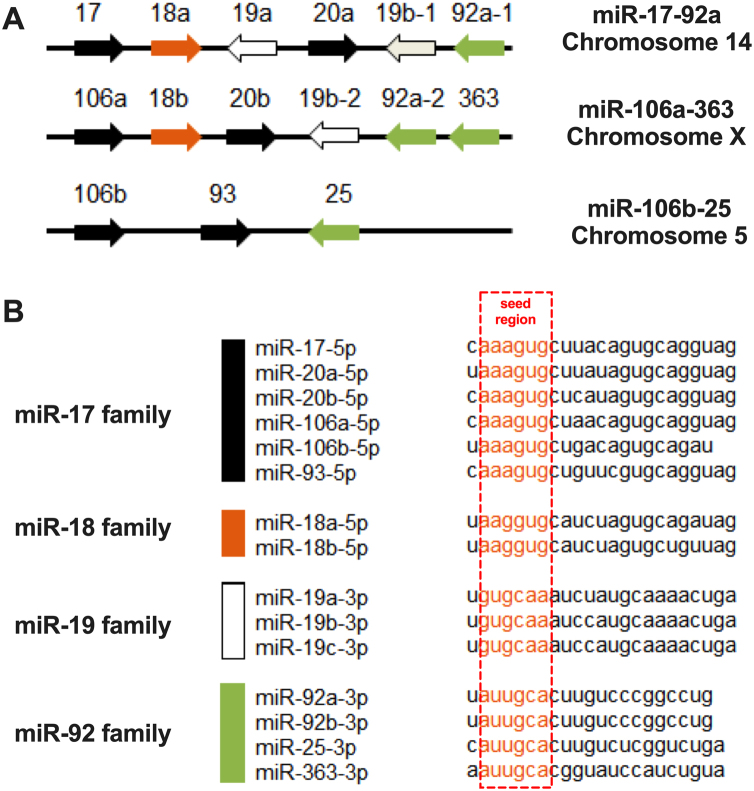
miR-18a is a member of primary transcript called miR-17-92a (C13orf25 or MIR17HG) which also contains five other miRNAs: miR-17, miR-19a, miR-20a, miR-19b and miR-92a. This cluster as a whole shows specific characteristics, where miR-18a seems to be unique. In contrast to the other members, the expression of miR-18a is additionally controlled and probably functions as its own internal controller of the cluster. miR-18a regulates many genes involved in proliferation, cell cycle, apoptosis, response to different kinds of stress, autophagy and differentiation. The disturbances of miR-18a expression are observed in cancer as well as in different diseases or pathological states. The miR-17-92a cluster is commonly described as oncogenic and it is known as 'oncomiR-1', but this statement is a simplification because miR-18a can act both as an oncogene and a suppressor. In this review we summarize the current knowledge about miR-18a focusing on its regulation, role in cancer biology and utility as a potential biomarker.
Keywords: 5-FU, 5-fluorouracyl; ACVR2A, activin A receptor type 2A; AKT, AKT serine/threonine kinase; AR, androgen receptor; ATG7, autophagy related 7; ATM, ATM serine/threonine kinase; BAX, BCL2 associated Xapoptosis regulator; BCL2, BCL2 apoptosis regulator; BCL2L10, BCL2 like 10; BDNF, brain derived neurotrophic factor; BLCA, bladder urothelial carcinoma; BRCA, breast cancer; Biomarker; Bp, base pair; C-myc (MYCBP), MYC binding protein; CASC2, cancer susceptibility 2; CD133 (PROM1), prominin 1; CDC42, cell division cycle 42; CDKN1, Bcyclin dependent kinase inhibitor 1B; COAD, colon adenocarcinoma; Cancer; Circulating miRNA; DDR, DNA damage repair; E2F family (E2F1, E2F2, E2F3), E2F transcription factors; EBV, Epstein-Barr virus; EMT, epithelial-to-mesenchymal transition; ER, estrogen receptor; ERBB (EGFR), epidermal growth factor receptor; ESCA, esophageal carcinoma; FENDRR, FOXF1 adjacent non-coding developmental regulatory RNA; FER1L4, fer-1 like family member 4 (pseudogene); GAS5, growth arrest–specific 5; HIF-1α (HIF1A), hypoxia inducible factor 1 subunit alpha; HNRNPA1, heterogeneous nuclear ribonucleoprotein A1; HNSC, head and neck squamous cell carcinoma; HRR, homologous recombination-based DNA repair; IFN-γ (IFNG), interferon gamma; IGF1, insulin like growth factor 1; IL6, interleukin 6; IPMK, inositol phosphate multikinase; KIRC, clear cell kidney carcinoma; KIRP, kidney renal papillary cell carcinoma; KRAS, KRAS proto-oncogene, GTPase; LIHC, liver hepatocellular carcinoma; LMP1, latent membrane protein 1; LUAD, lung adenocarcinoma; LUSC, lung squamous cell carcinoma; Liquid biopsy; MAPK, mitogen-activated protein kinase; MCM7, minichromosome maintenance complex component 7; MET, mesenchymal-to-epithelial transition; MTOR, mechanistic target of rapamycin kinase; N-myc (MYCN), MYCN proto-oncogene, bHLH transcription factor; NF-κB, nuclear factor kappa-light-chain-enhancer of activated B cells; NOTCH2, notch receptor 2; Oncogene; PAAD, pancreatic adenocarcinoma; PERK (EIF2AK3), eukaryotic translation initiation factor 2 alpha kinase 3; PI3K (PIK3CA), phosphatidylinositol-4,5-bisphosphate 3-kinase catalytic subunit alpha; PIAS3, protein inhibitor of activated STAT 3; PRAD, prostate adenocarcinoma; RISC, RNA-induced silencing complex; SMAD2, SMAD family member 2; SMG1, SMG1 nonsense mediated mRNA decay associated PI3K related kinase; SNHG1, small nucleolar RNA host gene 1; SOCS5, suppressor of cytokine signaling 5; STAD, stomach adenocarcinoma; STAT3, signal transducer and activator of transcription 3; STK4, serine/threonine kinase 4; Suppressor; TCGA; TCGA, The Cancer Genome Atlas; TGF-β (TGFB1), transforming growth factor beta 1; TGFBR2, transforming growth factor beta receptor 2; THCA, papillary thyroid carcinoma; TNM, Classification of Malignant Tumors: T - tumor / N - lymph nodes / M – metastasis; TP53, tumor protein p53; TP53TG1, TP53 target 1; TRIAP1, p53-regulating inhibitor of apoptosis gene; TSC1, TSC complex subunit 1; UCA1, urothelial cancer associated 1; UCEC, uterine corpus endometrial carcinoma; UTR, untranslated region; WDFY3-AS2, WDFY3 antisense RNA 2; WEE1, WEE1 G2 checkpoint kinase; WNT family, Wingless-type MMTV integration site family/Wnt family ligands; ZEB1/ZEB2, zinc finger E-box binding homeobox 1 and 2; ceRNA, competitive endogenous RNA; cncRNA, protein coding and non-coding RNA; lncRNA, long-non coding RNA; miR-17-92a; miR-18a; miRNA.
© 2020 Greater Poland Cancer Centre. Published by Elsevier B.V. All rights reserved.
Figures
References
-
- Bartel D.P. MicroRNAs: genomics, biogenesis, mechanism, and function. Cell. 2004;116(2):281–297. - PubMed
-
- Bueno M.J., Malumbres M. MicroRNAs and the cell cycle. Biochim Biophys Acta. 2011;1812(5):592–601. - PubMed
-
- Hummel R., Hussey D.J., Haier J. MicroRNAs: predictors and modifiers of chemo- and radiotherapy in different tumour types. Eur J Cancer. 2010;46(2):298–311. - PubMed
-
- Ul Hussain M. Micro-RNAs (miRNAs): genomic organisation, biogenesis and mode of action. Cell Tissue Res. 2012;349(2):405–413. - PubMed
Publication types
LinkOut - more resources
Full Text Sources
Research Materials
Miscellaneous
