


Study on the correlation between ambient environment-meteorological factors and the number of visits of acute otitis media, Lanzhou, China
- PMID: 32884558
- PMCID: PMC7451727
- DOI: 10.1016/j.joto.2020.01.002
Study on the correlation between ambient environment-meteorological factors and the number of visits of acute otitis media, Lanzhou, China
Erratum in
-
Erratum regarding missing Declaration of Competing Interest statements in previously published articles.J Otol. 2020 Dec;15(4):180. doi: 10.1016/j.joto.2020.10.001. Epub 2020 Oct 13. J Otol. 2020. PMID: 33293924 Free PMC article.
Abstract
To investigate the correlation between environmental-meteorological factors and daily visits for acute otitis media (AOM) in Lanzhou, China.
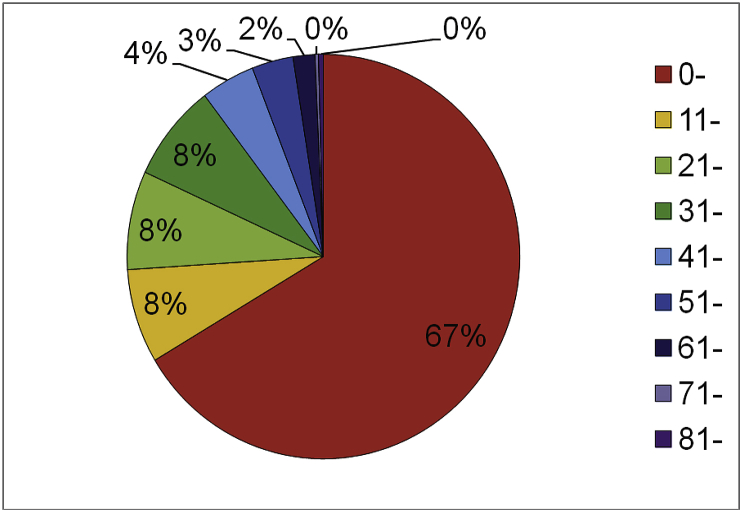
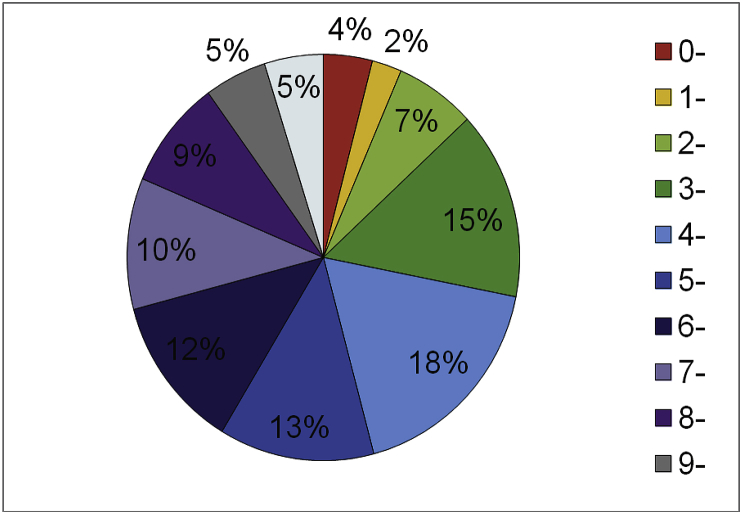
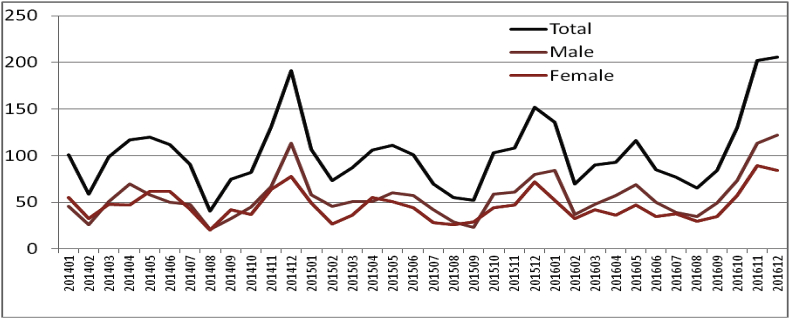
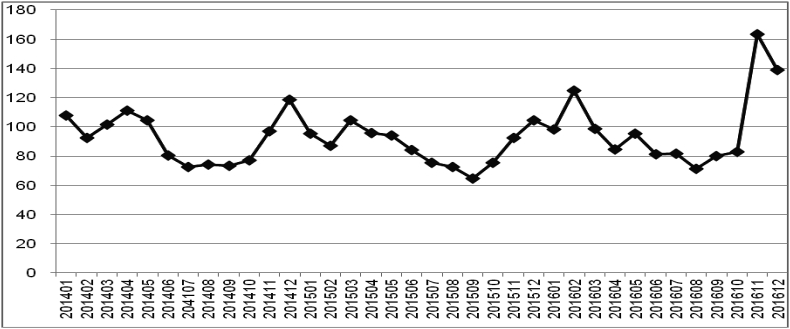
Methods: Data were collected in 2014-2016 by the Departments of Otolaryngology-Head and Neck Surgery at two hospitals in Lanzhou. Relevant information, including age, sex and visiting time, was collected. Environmental data included air quality index, PM10, PM2.5, O3, CO, NO2 and SO2, and meteorological data included daily average temperature (T, °C), daily mean atmospheric pressure (AP, hPa), daily average relative humidity (RH, %) and daily mean wind speed (W, m/s). The SPSS22.0 software was used to generate Spearman correlation coefficients in descriptive statistical analysis, and the R3.5.0 software was used to calculate relative risk (RR) and to obtain exposure-response curves. The relationship between meteorological-environmental parameters and daily AOM visits was summarized.
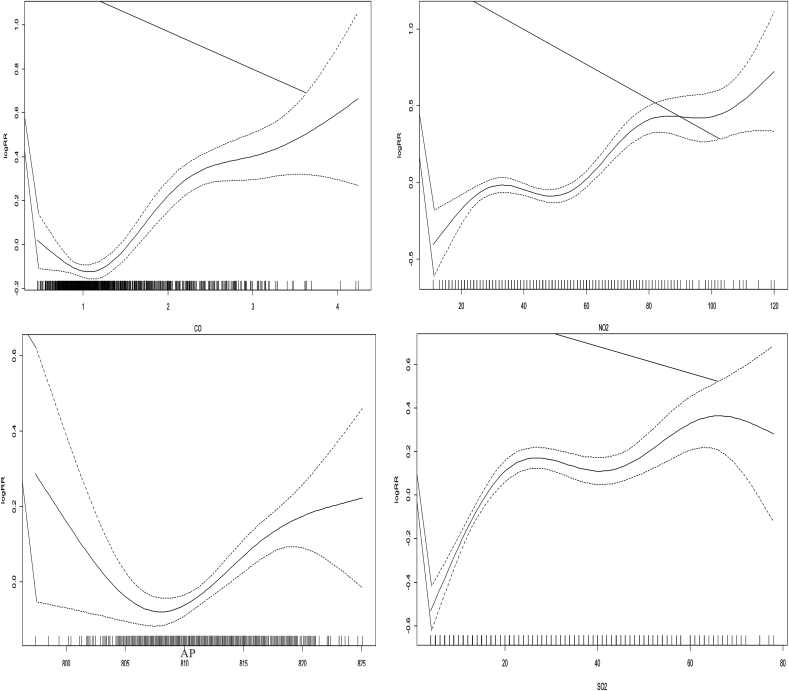
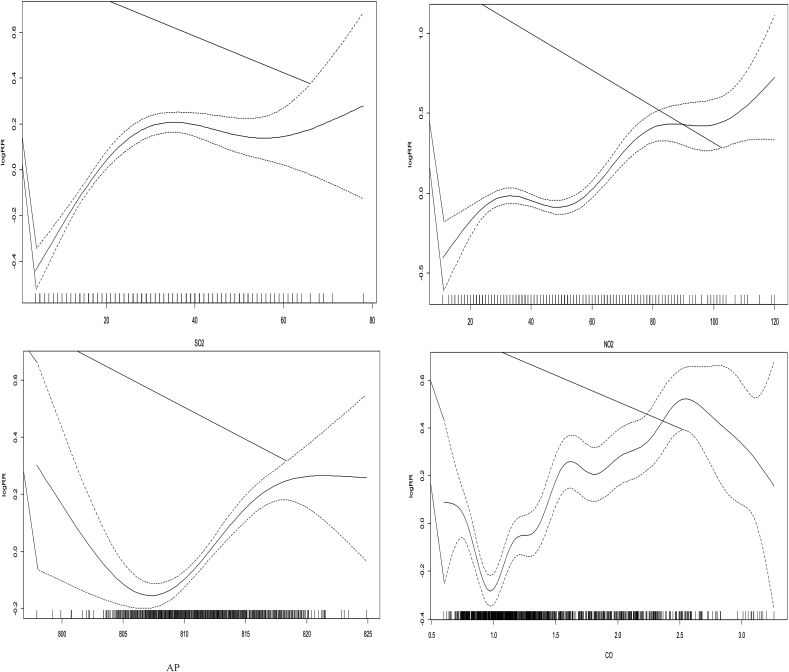
Results: Correlations were identified between daily AOM visits and CO, O3, SO2, CO, NO2, PM2.5 and PM10 levels. NO2, SO2, CO, AP, RH and T levels significantly correlated with daily AOM visits with a lag exposure-response pattern. The effects of CO, NO2, SO2 and AP on daily AOM visits were significantly stronger compared to other factors (P < 0.01). O3, W, T and RH were negatively correlated with daily AOM visits. The highest RR lagged by 3-4 days.
Conclusions: The number of daily AOM visits appeared to be correlated with short-term exposure to mixed air pollutants and meteorological factors from 2014 through 2016 in Lanzhou.
Keywords: Acute otitis media; Air pollution and meteolofical factors; Exposure-response curve; Non-parametric generalized additive model; Relative risk.
© 2020 PLA General Hospital Department of Otolaryngology Head and Neck Surgery. Production and hosting by Elsevier (Singapore) Pte Ltd.
Figures
References
-
- Bluestone C.D., Gates G.A., Klein J.O. Definitions, terminology, and classification of otitis media. Ann. Otol. Rhinol. Laryngol. Suppl. 2002;188(3):8. - PubMed
-
- Brauer M., Karr C., MacIntyre E. Woodsmoke and children’s health: findings from the border air quality study. Epidemiology. 2011;22
-
- Chen Y.J., Hsieh Y.C., Huang Y.C., Chiu C.H. Clinical manifestations and microbiology of acute otitis media with spontaneous otorrhea in children. J. Microbiol. Immunol. Infect. 2013 Oct;46(5):382–388. - PubMed
LinkOut - more resources
Full Text Sources
