


Investigation of Lipid Profile and Clinical Manifestations in SCA Children
- PMID: 32884585
- PMCID: PMC7455829
- DOI: 10.1155/2020/8842362
Investigation of Lipid Profile and Clinical Manifestations in SCA Children
Abstract
Introduction: Clinical complications in sickle cell anemia (SCA) are heterogeneous and involve several molecules. It has been suggested that SCA individuals present a dyslipidemic phenotype and that lipid parameters are associated with severe clinical complications, such as pulmonary hypertension. We sought to investigate associations between lipid parameters and clinical manifestations, as well as other laboratory parameters in a population of pediatric SCA patients.
Methods: Our cross-sectional evaluation included 126 SCA patients in steady state and who were not undergoing lipid-lowering therapy. Hematological and biochemical parameters were characterized, and previous clinical manifestations were investigated.
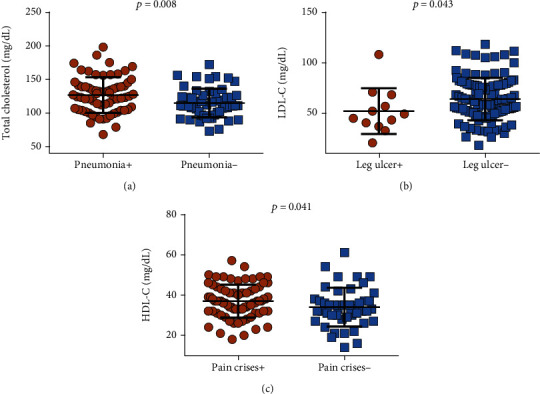
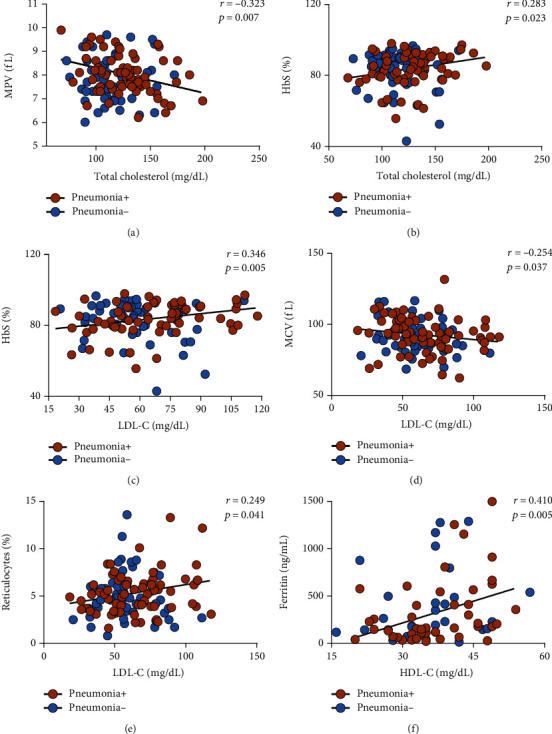
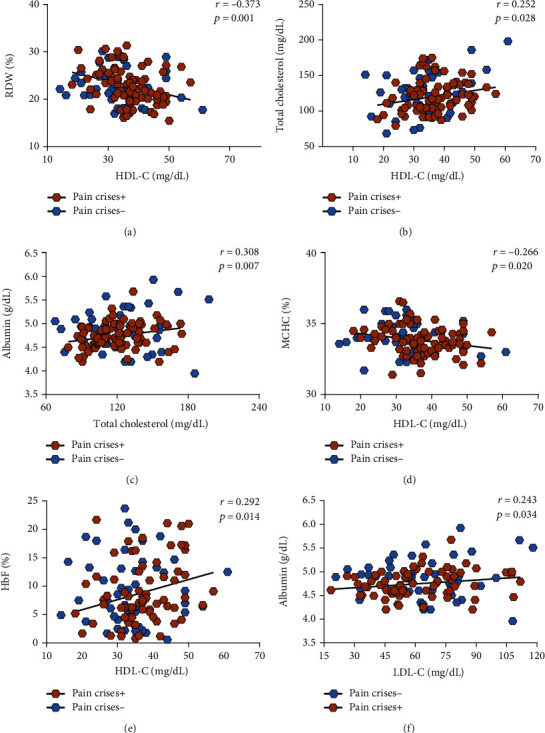
Results: Total cholesterol and low-density lipoprotein cholesterol (LDL-C) levels were increased in patients with a previous history of pneumonia, which also positively correlated with HbS levels. Decreased LDL-C levels were also associated with leg ulcers and anemia. Elevated high-density lipoprotein cholesterol (HDL-C) levels were associated with pain crises, increased viscosity, and decreased hemolysis. Several studies have determined that lipids play a role in the vascular impairment seen in SCA, which was corroborated by our findings.
Conclusions: In sum, our results suggest that total cholesterol, HDL-C, and LDL-C levels are associated with hemolysis and anemia markers and, most importantly, with clinical complications related to vasculopathy in SCA.
Copyright © 2020 Caroline Conceição da Guarda et al.
Conflict of interest statement
The authors have not received any funding or benefits from industry companies or otherwise to conduct this study.
Figures
References
MeSH terms
Substances
LinkOut - more resources
Full Text Sources
Medical
