


Mental health interventions for adolescents living with HIV or affected by HIV in low- and middle-income countries: systematic review
- PMID: 32886056
- PMCID: PMC7488323
- DOI: 10.1192/bjo.2020.67
Mental health interventions for adolescents living with HIV or affected by HIV in low- and middle-income countries: systematic review
Abstract
Background: Mental health difficulties and mental disorders are common in adolescents living with HIV or who are affected by HIV because of living in HIV-affected households in low- and middle-income (LMICs) countries, but little is known about the interventions that target these individuals and whether they are effective.
Aims: This systematic review aims to address these gaps by examining what has worked and what has not worked to support the mental health of adolescents living with HIV or affected by HIV in low- and middle-income contexts (PROSPERO Number: CRD42018103269).
Method: A systematic literature review of online databases from the year 2000 to 2018, using Preferred Reporting Items for Systematic Reviews and Meta-Analyses guidelines, included English-language publications of quantitative evaluations of psychosocial interventions aiming to improve mental health among adolescents living with HIV and adolescents from HIV-affected households (aged 10-24 years) in LMICs.
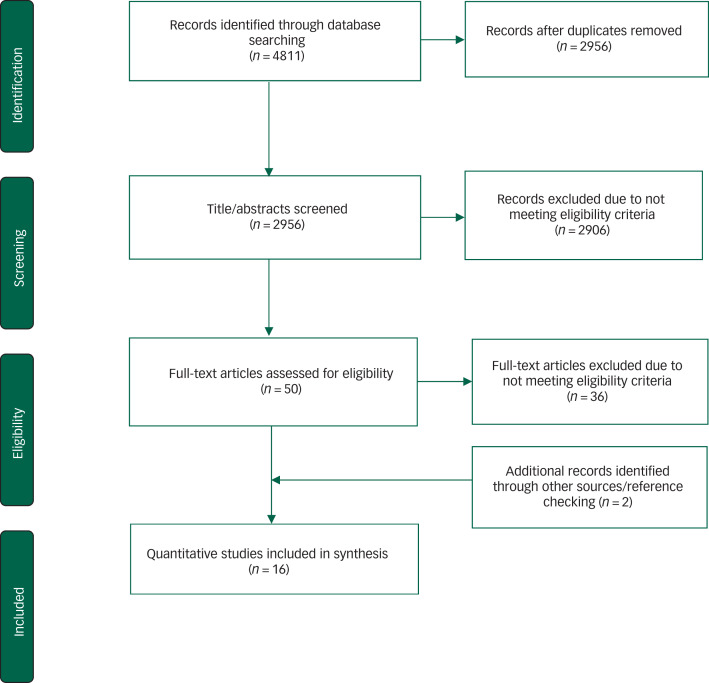
Results: Out of 2956 articles, 16 studies from 8 LMICs met the inclusion criteria. Thirteen studies focused on adolescents affected by HIV and only three studies on adolescents living with HIV. Only five studies included were from Sub-Saharan Africa. Interventions most often used a family-strengthening approach strengthening caregiver-adolescent relationships and communication and some problem-solving in groups or individually. Five studies reported statistically significant changes in adolescent and caregiver mental health or mental well-being, five among adolescents only and two among caregivers only.
Conclusions: Research on what works to improve mental health in adolescents living with HIV in LMIC is in its nascent stages. Family-based interventions and economic strengthening show promise.
Keywords: Adolescents living with AIDS; HIV/AIDS; interventions; mental health; systematic review.
Conflict of interest statement
None.
ICMJE forms are in the supplementary material, available online at
Figures
References
-
- Kieling C, Baker-Henningham H, Belfer M, Conti G, Ertem I, Omigbodun O, et al. Child and adolescent mental health worldwide: evidence for action. Lancet 2011; 378: 1515–25. - PubMed
-
- Patel V, Flisher AJ, Hetrick S, McGorry P. Mental health of young people: a global public-health challenge. Lancet 2007; 369: 1302–13. - PubMed
-
- UNICEF. Adolescent HIV Prevention Turning the Tide Againts AIDS will Require more Concetrated Focus on Adolescents and Young People. UNICEF, no date (https://data.unicef.org/topic/hivaids/adolescents-young-people/).
LinkOut - more resources
Full Text Sources
Miscellaneous
