


Socioeconomic inequalities in effectiveness of and compliance to workplace health promotion programs: an individual participant data (IPD) meta-analysis
- PMID: 32887617
- PMCID: PMC7650284
- DOI: 10.1186/s12966-020-01002-w
Socioeconomic inequalities in effectiveness of and compliance to workplace health promotion programs: an individual participant data (IPD) meta-analysis
Abstract
Background: This individual patient data (IPD) meta-analysis aimed to investigate socioeconomic inequalities in effectiveness on healthy behavior of, and compliance to, workplace health promotion programs.
Methods: Dutch (randomized) controlled trials were identified and original IPD were retrieved and harmonized. A two-stage meta-analysis was conducted where linear mixed models were performed per study (stage 1), after which individual study effects were pooled (stage 2). All models were adjusted for baseline values of the outcomes, age and gender. Intervention effects were assessed on physical activity, diet, alcohol use, and smoking. Also, we assessed whether effects differed between participants with low and high program compliance and. All analyses were stratified by socioeconomic position.
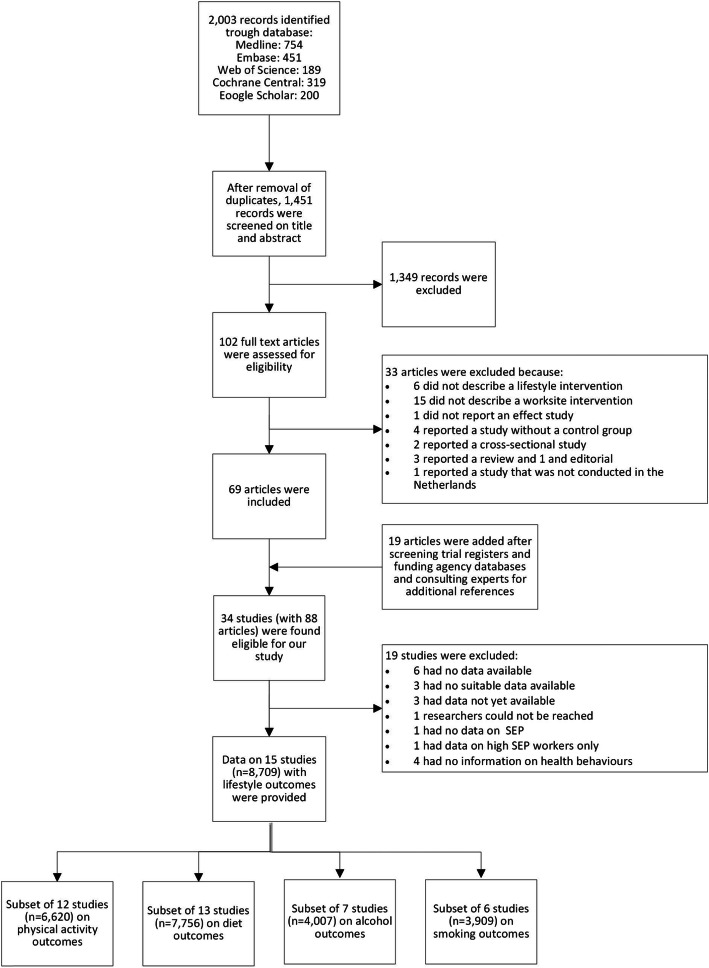
Results: Data from 15 studies (n = 8709) were harmonized. Except for fruit intake (beta: 0·12 [95% CI 0·08 0·15]), no effects were found on health behaviors, nor did these effects differ across socioeconomic groups. Only participants with high compliance showed significant improvements in vigorous and moderate-to-vigorous physical activity, and in more fruit and less snack intake. There were no differences in compliance across socioeconomic groups.
Conclusions: Workplace health promotion programs were in general not effective. Neither effectiveness nor compliance differed across socioeconomic groups (operationalized by educational level). Even though stronger effects on health behavior were found for participations with high compliance, effects remained small. The results of the current study emphasize the need for new directions in health promotion programs to improve healthy behavior among workers, in particular for those in lower socioeconomic position.
Keywords: Healthy lifestyle; Meta analysis; Risk reduction behavior; Workplace.
Conflict of interest statement
The authors declare no competing interests.
Figures
References
-
- Oude Groeniger J, Kamphuis CB, Mackenbach JP, van Lenthe FJ. Repeatedly measured material and behavioral factors changed the explanation of socioeconomic inequalities in all-cause mortality. J Clin Epidemiol. 2017;91:137–145. - PubMed
-
- World Health Organization. Preventing noncommunicable diseases in the workplace through diet and physical activity: WHO/World Economic Forum report of a joint event: World Health Organization; 2008.
-
- Cahill K, Moher M, Lancaster T. Workplace interventions for smoking cessation. Cochrane Database Syst Rev. 2008;4(2):CD003440. - PubMed
Publication types
MeSH terms
LinkOut - more resources
Full Text Sources
Medical
